 Dr. Fortyseven 🥃 █▓▒░
Yeah, don't step on the camera, Sylvie. 🤣
Geary Eppley
- 30 Followers
- 284 Following
- 93 Posts
Point Inside, Floodzilla, mountain biking, cooking, eating, Fire Swamp surving, urban achieving (he/him) #mtb #smalltech
 Carl T. Bergstrom
11. There is a lot of other great stuff in the paper as well.
There's a sophisticated discussion of more subtle issues around confounds, colliders, etc.; well-articulated critique of some commonly used algorithmic fairness criteria such as independence and separation; and detailed case studies.
I learned a ton from this paper. Tonight I read it for the third time, and urge anyone interested in fairness, bias, disparity, causal inference, and related issues to take the time to read it as well.
 Panoptykon
@kmic
1st world problem... nasz ulubiony argument, ździebko protekcjonalny, zwłaszcza podnoszony na hipsterskim medium, na którym właśnie dyskutujemy, ale niech będzie, odpowiemy na poważnie.
Problemy, które wynikają z profilowania - dezinformacja, manipulacja, bańki informacyjne - dotyczą wszystkich, wpływają negatywnie na wszystkich ludzi. Nie wszyscy jednak mają możliwość, żeby coś aktywnie z tym zrobić. Nie mają zasobów, wiedzy, czasu, i jest tyle innych problemów...
1/3
 JohnW
JohnWSo I did a bike ride today. This is cr 17 near Ouray, CO. It follows the Uncompaghre River almost all the way to Ridgway.
 Matthias Bürcher
Est-ce que la Haute Ecole de Musique est trop grande? La présidente du Conseil de fondation s'intéresse peu au sort d'une vingtaine d'étudiants. https://rts-aod-dd.akamaized.net/ww/14034766/c38d59bd-4cf8-3f8c-8a88-746e1138c1cc.mp3
 stux⚡️






 Cool Bike Art
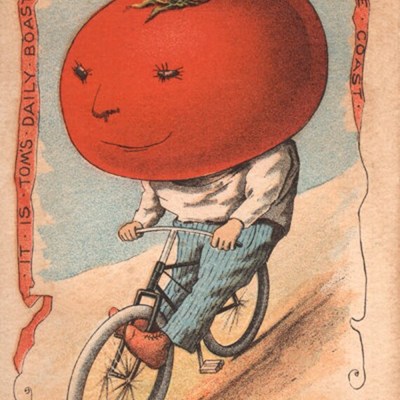
Born on this day, May 18, 1970:
Tina Fey, actress, comedian, writer, producer, and playwright.
Happy #BicycleBirthday, Tina!
#BOTD
Tina Fey, actress, comedian, writer, producer, and playwright.
Happy #BicycleBirthday, Tina!
#BOTD
 Guillem Leon
I have encountered more image descriptions on Mastodon in 24 hours than I have in Twitter in a couple of years. Seriously. I'm not exaggerating.
As a blind person, this means a lot to me. If you read this and you describe your images, thank you so, so, so much on behalf of all of us. If you don't, now you know you'll be helping random Internet strangers make sense of your posts by typing in a few more words than usual.
As a blind person, this means a lot to me. If you read this and you describe your images, thank you so, so, so much on behalf of all of us. If you don't, now you know you'll be helping random Internet strangers make sense of your posts by typing in a few more words than usual.
 Scott Hanselman 👸🏽🐝🌮
Lots of press around the Pythagorean Theorem this week, hearing that high school teenagers Calcea Johnson and Ne’Kiya Jackson have a new proof based on (mostly) trigonometry! But I couldn’t find the proof. Here it is in <5 min and it’s super cool! http://tiktok.com/t/ZTRcqqYhJ/
Number Knower Tim Ricchuiti on TikTok
New proof of the Pythagorean theorem! Not only that, it was the work of a couple high school students from New Orleans, Calcea Johnson and Ne’Kiya Jackson. Amazing! #pythagoras #pythagorastheorem #pythagoreantheorem #geometry #calculus #trigonometry #highschool #math #maths #mathematics
 The Public Domain Review
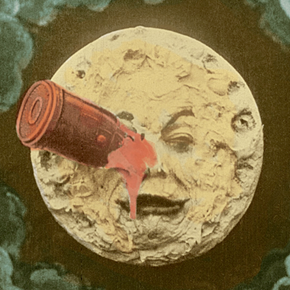
Arthur Conan Doyle, the creator of Sherlock Holmes, fell for one of the greatest hoaxes of the 20th century when he became convinced that the "fairy photographs", taken by two girls from Yorkshire in the 1920s, were real. Mary Losure explores: https://publicdomainreview.org/essay/sir-arthur-and-the-fairies #AprilFools #hoax #photography #fairies


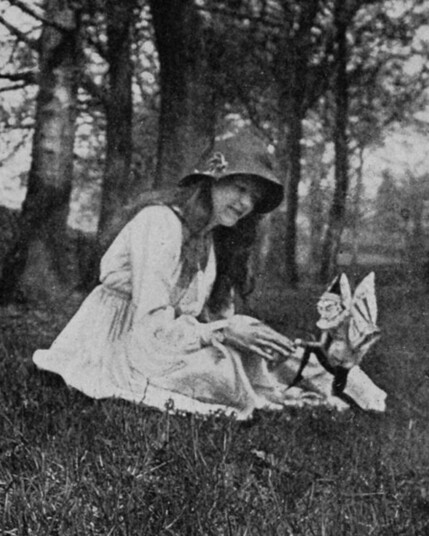


Sir Arthur and the Fairies
In the spring of 1920, at the beginning of a growing fascination with spiritualism brought on by the death of his son and brother in WWI, Arthur Conan Doyle took up the case of the Cottingley Fairies. Mary Losure explores how the creator of Sherlock Holmes became convinced that the 'fairy photographs' taken by two girls from Yorkshire were real.