Drew Scott Daniels

@drewdaniels@mastodon.online
103 Followers
187 Following
1.4K Posts
IT Manager. B.Sc. Computer Science. CISM. Winnipeg, Manitoba, Canada
Profile on LinkedInhttps://www.linkedin.com/in/drew-daniels-a8245327

Oh well that's fucking clever. A threat actor is sending out phishing emails pretending to be SendGrid, and explaining that all their emails will include "Support ICE" banners in order to trigger ragebait clicks through to the phishing kit.

#threatintel

https://www.linkedin.com/posts/simokohonen_ragebait-as-a-phishing-tactic-a-threat-activity-7415349853754638336-gcCu?utm_source=social_share_send&utm_medium=member_desktop_web&rcm=ACoAABIZhqYBjXCQuV7JX7N_3xlpxZY6alHZ77o

Many people are moral and care.

It’s maybe a small win, but look at how many people recycle.

Recycling is a practice that’s based on morality. The high participation gives me some faith of the abundance of goodness in people. 🙂

All this is not to say that business writing is bad, or the referenced books aren’t good. It’s just disappointing not to see more quality research in how to run businesses.
Yes, I’ve read management theory, and some big managment periodicals. Too many of those articles are case based too without researched advice when they give any.
Self referential (pointing to their website) often makes chunks of the books into self promotion. Many business writers are targeting getting executive consulting jobs more than imparting useful advice.
The quality of many references are usually of much lower quality than peer reviewed papers. Biographies have been the most interesting though.
Anecdotes is how Roman philosophers wrote. I’ve read that as people become more educated, they are more able to abstract ideas and rely less on examples. It feels business writing is largely behind in this regard. There are also lots of appeals to authority fallacies.
Many works self reference the author’s, or reference other books. Some form networks of relationships between books. It doesn’t make them good, just likely things the authors felt they had to include.

Steve Jobs biography lays some Apple examples as lacking or wrong.

Built to Last and others in the Good to Great series of books give many examples of success, and mediocrity.

The original Crossing the Chasm says it’s not data based. I’m hoping a newer edition has tested the theories.

Revenge of the Tipping point gives interesting example anecdotes.

I’m troubled by the lack of research, and the number of anecdotes, many of which can mislead.

Business writing can mislead when using examples.
“Apple did better because it doesn’t focus on one product. That allowed a company to make both computers & music players.” Steve Jobs came back & actually wanted fewer products, notably killing the Newton.
“Best Buy’s strategy of stores in a store helped it to survive when competitors were going out of business.” Meanwhile JCPenney faltered with the same concept.
Some details of “how”, and “why”, matter. These things happened, but why’d it work?
World Curling introduces Sweeping Technique Policy

World Curling, in consultation with the World Curling Athlete Commission, has introduced a new Sweeping Technique Policy aimed at determining the acceptable effects of sweeping and removing sweeping techniques that cause unacceptable effects on the stone. The acceptable effects of sweeping determined in this policy are “to make the stone go further and to hold … Continued

World Curling
It’s hard to justify Tahoe icons

Looking at the first principles of icon design—and how Apple failed to apply all of them in macOS Tahoe

tonsky.me
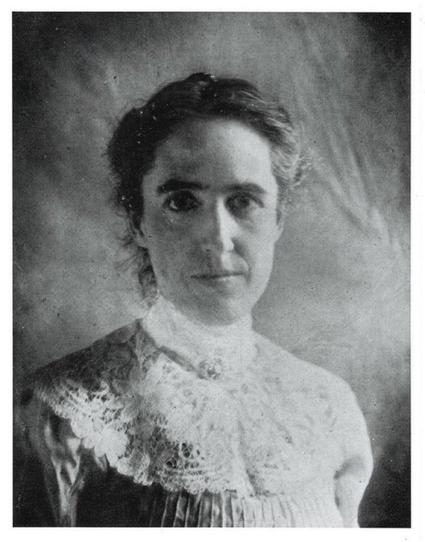
This important property of Cepheid variable stars was discovered by astronomer Henrietta Swan Leavitt. It makes them “standard candles” (a term she coined) that we can reliably use for establishing distances to cosmologically nearby galaxies. (13/n)