89 Followers
76 Following
515 Posts

toot toot ! This is my bio ...
Well that's enough about me..
One day this bio will be updated ,until then - here's some stuff

#Humour #Animals #Nature #Environment #Science #History #Mythology and #Stuff

Engineered Living Systems With Self‐Organizing Neural Networks: From Anatomy to Behavior and Gene Expression

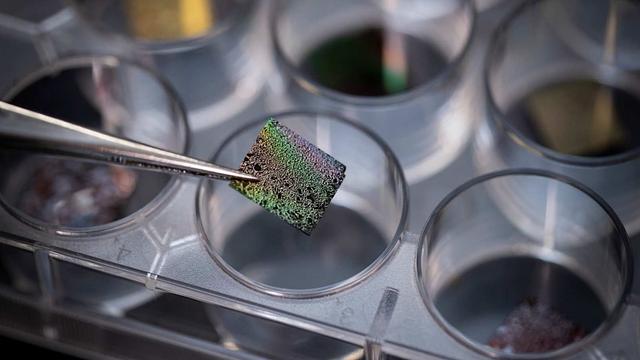
We show that neural precursor cells implanted in explanted Xenopus ectodermal tissue develop into mature neurons, extending processes both toward the surface and among each other.

These self-organized neurobots exhibit unique morphology, more complex movements, and different responses to neuroactive drugs compared to non-neuronal counterparts. Calcium imaging confirms neuronal activity in neurobots.

https://advanced.onlinelibrary.wiley.com/doi/10.1002/advs.202508967

@chestas This is wonderful.

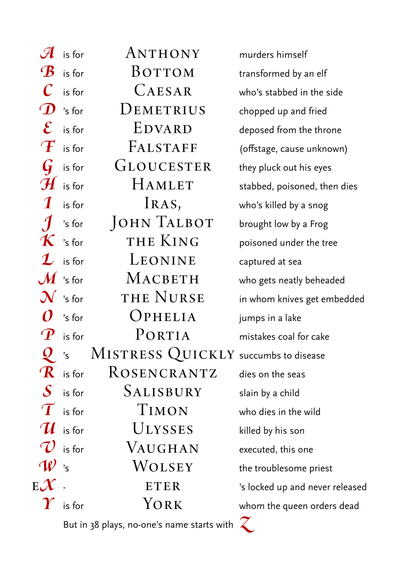
After so many years, I thought that this poem deserves a slightly nicer layout, don’t you think?

For many happy returns of Bard Day ☠️

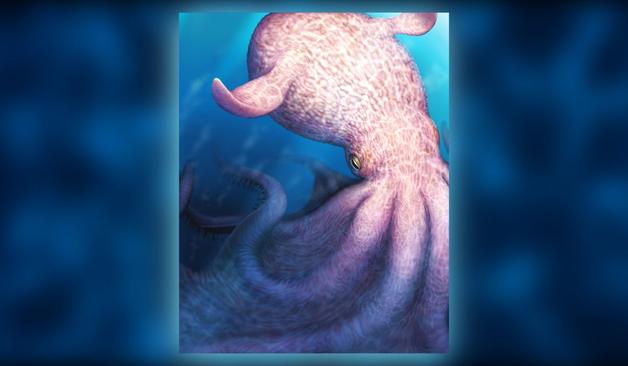
‘Kraken’ fossils show enormous, intelligent octopuses were top predators in Cretaceous seas

Move over, megalodon, there’s a new contender for most terrifying marine predator of all time.

An analysis of fossil jaws belonging to octopuses that lived between 100 million and 72 million years ago, during the Late Cretaceous period, shows that these creatures may have been the largest animals in the sea and smart to boot, rivaling sharks and marine reptiles in their powers of predation.

The findings challenge received wisdom about the role of soft-bodied organisms in marine ecosystems and hint at how large body size and intelligence evolved in the denizens of the ocean realm.

https://www.scientificamerican.com/article/kraken-fossils-show-enormous-intelligent-octopuses-were-top-predators-in-cretaceous-seas/?utm_source=flipboard&utm_medium=activitypub

‘Kraken’ fossils show enormous, intelligent octopuses were top predators in Cretaceous seas

Fossil jaws from colossal octopuses place them at the top of a prehistoric marine food chain

Scientific American

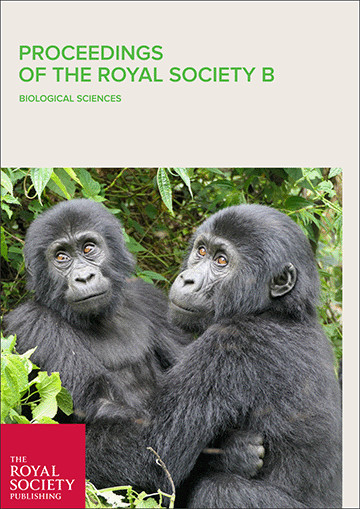
Stimuli that fit: a biology-aligned approach to numerical cognition research

Understanding the mechanisms underlying animal cognition requires experimental designs and analyses that respect the biological and perceptual constraints of the species being studied.

We address an ongoing debate regarding the role of visual spatial frequency in numerical cognition studies, using honeybees (Apis mellifera) as a model system.

Prior analyses that excluded the low spatial frequencies known to be fundamental to how these insects use their spatial vision may have introduced spurious correlations between visual features and numerical cues.

By recalculating stimulus properties while incorporating the biologically relevant spectrum of spatial frequencies perceivable by a bee, our results suggest that numerical cognition in honeybees is not driven by spatial frequency but instead reflects true numerosity processing.

This work highlights the necessity of aligning experimental design and analysis with the sensory and perceptual abilities of the studied species to ensure biologically meaningful conclusions.

https://royalsocietypublishing.org/rspb/article/293/2069/20253057/481408/Stimuli-that-fit-a-biology-aligned-approach-to

Stimuli that fit: a biology-aligned approach to numerical cognition research

Abstract. Understanding the mechanisms underlying animal cognition requires experimental designs and analyses that respect the biological and perceptual co

The Royal Society

Ancient regulatory evolution shapes individual language abilities in present-day humans

Language is a defining feature of our species, yet the genomic changes enabling it remain poorly understood. Despite decades of work since FOXP2’s discovery, we still lack a clear picture of which regions shaped language evolution and how variation contributes to present-day phenotypic differences.

Using an evolutionary stratified polygenic score approach, we find that human ancestor quickly evolved regions (HAQERs) are associated with spoken language abilities (discovery N = 350, total replication N > 100,000).

HAQERs evolved before the human-Neanderthal split, giving hominins increased binding of Forkhead and Homeobox transcription factors, and show evidence of balancing selection across the past 20,000 years.

Language-associated variants in HAQERs appear more prevalent in Neanderthals, and HAQER-like sequences show convergent evolution across vocal-learning mammals.

Our results reveal how ancient innovations continue shaping human language.

https://www.science.org/doi/10.1126/sciadv.aed5260

This Student Made Cosmic Dust In Her Lab. What She Found Could Help Us Understand How Life Started On Earth

Between about 3.5 and 4.56 billion years ago, Earth was bombarded by meteorites, micrometeorites and interplanetary dust particles originating from asteroids and comets. These objects are thought to have delivered vast amounts of organic material to the planet’s surface. Yet the origins of that material remain mysterious.

https://astrobiology.com/2026/02/this-student-made-cosmic-dust-in-her-lab-what-she-found-could-help-us-understand-how-life-started-on-earth.html

This Student Made Cosmic Dust In Her Lab. What She Found Could Help Us Understand How Life Started On Earth - Astrobiology

A Sydney PhD student has recreated a tiny piece of the Universe inside a bottle in her laboratory

Astrobiology

Investigating the ME/CFS experience through qualitative analysis of memorial entries

Themes emerged within four societal levels: systemic neglect and institutional failure; clinical neglect and failures; social disconnection and advocacy; and personal burden and quality of life.

Describing systemic neglect and institutional failure, entries recounted a lack of acknowledgement by health, insurance, and disability authorities, as well as a lack of investment in research and treatment of ME/CFS at the federal level.

Negative healthcare experiences included misdiagnosis and misattribution of symptoms, dismissal, inadequate knowledge and experience with treating ME/CFS, and the recommendation of unhelpful treatments.

https://journals.plos.org/plosone/article?id=10.1371/journal.pone.0343374

Investigating the ME/CFS experience through qualitative analysis of memorial entries

Myalgic encephalomyelitis/chronic fatigue syndrome (ME/CFS) is an impairing chronic condition characterized by exhaustion and worsening symptoms following exertion, often accompanied by pain, sleep issues, and cognitive issues. Historically, ME/CFS was not considered to be linked to mortality, however, more recent studies have questioned this assumption. The National Chronic Fatigue and Immune Dysfunction Syndrome (CFIDS) Foundation maintains a memorial list consisting of deceased individuals who had ME/CFS. This secondary qualitative thematic analysis analyzed 505 entries on the National CFIDS Foundation memorial list, inductively developing a codebook from the publicly available memorial records. Two coders independently coded each entry before meeting to develop themes that incorporated the understanding of each coder. Themes emerged within four societal levels: systemic neglect and institutional failure; clinical neglect and failures; social disconnection and advocacy; and personal burden and quality of life. Describing systemic neglect and institutional failure, entries recounted a lack of acknowledgement by health, insurance, and disability authorities, as well as a lack of investment in research and treatment of ME/CFS at the federal level. Negative healthcare experiences included misdiagnosis and misattribution of symptoms, dismissal, inadequate knowledge and experience with treating ME/CFS, and the recommendation of unhelpful treatments. The disbelief and misattribution by acquaintances described in the entries contributed to feelings of social isolation, leading some to turn to advocacy work and support groups. Entries also described the individual impact of the condition, including functional impairments, the impact of symptoms, management strategies, financial stress, and mental health symptoms. Some deaths were directly and indirectly attributed to ME/CFS by individuals with ME/CFS and their acquaintances. This analysis provides a glimpse of the lived experience as well as death of individuals with ME/CFS through the lens of acquaintances of the deceased, emphasizing the substantial impact of the condition.

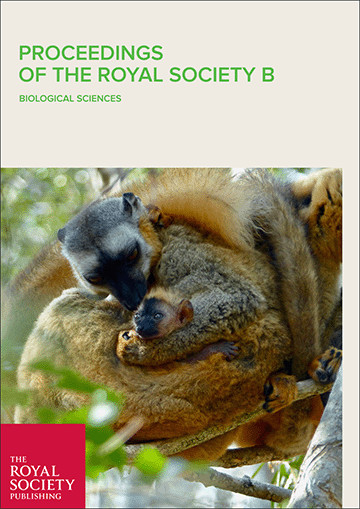
What can we learn from bonobos and bottlenose dolphins about the evolution of between-group cooperation?

Cooperation between unrelated individuals across social groups is a hallmark of human societies, underpinning our species’ unique capacity for cultural transmission and large-scale cooperation.

Although long considered rare among non-human animals, recent findings from bonobos and Indo-Pacific bottlenose dolphins demonstrate that members of both species will provide costly help to unrelated out-group conspecifics with no immediate return, revealing that such cooperation can also arise outside the human lineage.

In this review, we synthesize current knowledge on the occurrence, mechanisms and drivers of between-group cooperation in these two species.

https://royalsocietypublishing.org/rspb/article/293/2067/20252812/481093/What-can-we-learn-from-bonobos-and-bottlenose

What can we learn from bonobos and bottlenose dolphins about the evolution of between-group cooperation?

Abstract. Cooperation between unrelated individuals across social groups is a hallmark of human societies, underpinning our species’ unique capacity for cu

The Royal Society

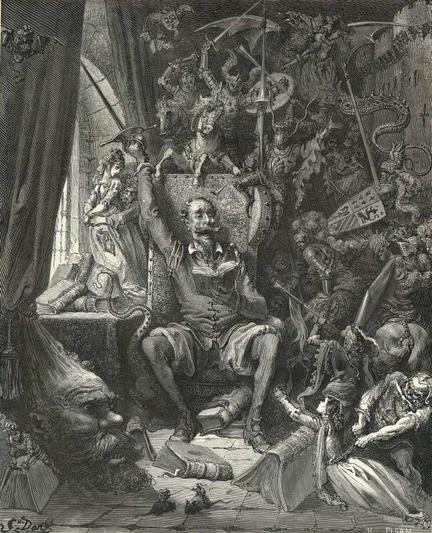
Gustave Doré’s depiction of Don Quixote amid his fantasies of chivalric romance: frontispiece to a 1863 edition of the 17th-century masterpiece of Miguel de Cervantes, who died #onthisday in 1616.

More on the imagery of Don Quixote here: https://publicdomainreview.org/essay/picturing-don-quixote #otd

Frontiers | On the origin of our fascination with crystals

Our results suggest that enculturated chimpanzees can identify and distinguish crystals from other types of stones. We found that transparency and geometric shape were the two attractors guiding chimpanzees.

These properties are notably salient in the natural environments of both chimpanzees and hominins. Furthermore, the crystals elicited exploratory behaviors in the enculturated chimpanzees, who engaged in voluntary and intentional actions to investigate crystalline transparency and compare shape.

We discuss the relevance of these findings for understanding hominin behavior, proposing that similar responses to crystals in hominins and non-hominin apes could reflect a shared cognitive predisposition.

Our study provides insights into the potential role of crystal collection in cognitive evolution and highlights the significance of material properties in shaping early symbolic behaviors.

https://www.frontiersin.org/journals/psychology/articles/10.3389/fpsyg.2026.1633599/full

Frontiers | On the origin of our fascination with crystals

Crystals are fascinating structures of solid or liquid matter where atoms, molecules, and/or ions are, on average, arranged in a highly ordered lattice. It i...

Frontiers