| https://twitter.com/darkdragon001 | |
| Github | https://github.com/darkdragon-001 |

darkdragon
- 19 Followers
- 223 Following
- 22 Posts
Open source enthusiast working towards a better world.
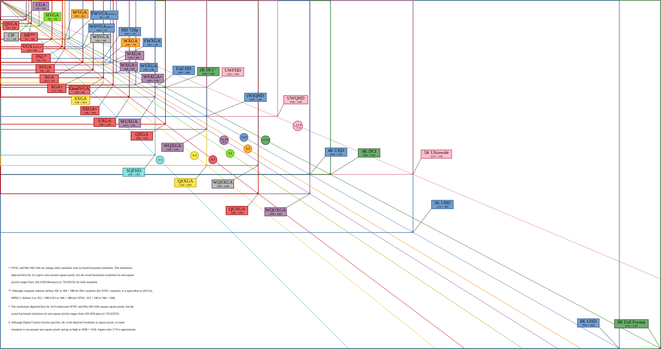
@martijnbraam Even though this is a big mess, I like the Wikipedia chart to visualize this in 2D where a given aspect ratio lies on the same line: https://en.wikipedia.org/wiki/Display_resolution#/media/File%3AVector_Video_Standards8.svg
@Lilith @ecb @EUCommission This could be extended to card payments (the chip signing the request).
It would also be much simpler and therefore easier and faster to implement than the current plans about the Digital Euro (https://www.ecb.europa.eu/euro/digital_euro/html/index.en.html).
It would also be much simpler and therefore easier and faster to implement than the current plans about the Digital Euro (https://www.ecb.europa.eu/euro/digital_euro/html/index.en.html).

@Lilith @ecb @EUCommission What do you think about creating SEPA Instant Direct Debit in addition to SEPA Instant Credit Transfer (SCT Inst)?
Most of the SEPA infrastructure around actually moving money could be reused. It would only require a request and approval scheme similar to what banks already implement for 3D Secure (VISA Secure, MasterCard Identity Check).
It would also be more secure if the account holder actually has to approve direct debit mandates.
Most of the SEPA infrastructure around actually moving money could be reused. It would only require a request and approval scheme similar to what banks already implement for 3D Secure (VISA Secure, MasterCard Identity Check).
It would also be more secure if the account holder actually has to approve direct debit mandates.
@phosh @NGIZero when building a UI for managing SIM cards into Phosh/GNOME, consider also integrating eSIM management functionality like https://lucaweiss.eu/post/2024-06-24-esim-manager-for-mobile-linux/ from @z3ntu
An eSIM manager for Mobile Linux - Luca Weiss
For a while eSIM management on Mobile Linux, such as postmarketOS, was just a dream. Now it’s real! Background Nowadays many smartphones and other devices have a so-called eSIM - or eUICC - built-in to the device. This eSIM is essentially a chip on the PCB of the device that allows an end user to download a SIM profile - essentially all the data of a SIM card - to said chip and then the modem of the device can use that chip the same way as it would use any physical SIM card you insert.
@Lilith Habe gerade von der Berlin Group (Europäische Banking Standards) erfahren, die so etwas ähnliches bereits vorgeschlagen hat: https://www.berlin-group.org/sct-inst-for-cards
@meanmicio @chasalin @rikviergever Thanks. SMS are insecure and expensive compared to using a TPM but it might be an acceptable tradeoff when this allows using /e/OS or even Linux smartphones which is often otherwise not possible.
@rikviergever @pojntfx Yes, please! Take a look at the following related thread: https://mastodon.social/@pojntfx/116147290004033654
Note my comments in that thread with references to legal requirements and example APIs of BaaS providers.
Note my comments in that thread with references to legal requirements and example APIs of BaaS providers.
@pojntfx They do seem to use device fingerprinting, so a passkey moving between devices does not seem to be allowed for use with their API: https://docs.solarisgroup.com/guides/kyc/device-monitoring
@pojntfx This device key can then be used to sign requests (SEPA money transfer and VISA 3D secure): https://docs.solarisgroup.com/guides/authentication/strong-customer-authentication