Still obsessed with Patrick Wolf's new work.

Christian Bokhove
@cbokhove
- 355 Followers
- 415 Following
- 470 Posts
Prof Maths Education, Director of Research SEdS at UoS, @MSHEsoton, TIMSS+PISA, Research Methods, R, School Maths Project, Destiny is All, Improving Science
Interesting read by @[email protected] - some critical comments follow - What Progressive Educators Get Wrong About Creativity https://quillette.com/2023/01/30/the-perils-of-progressive-education/

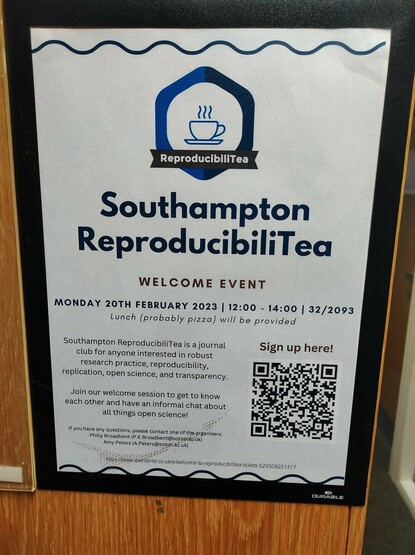
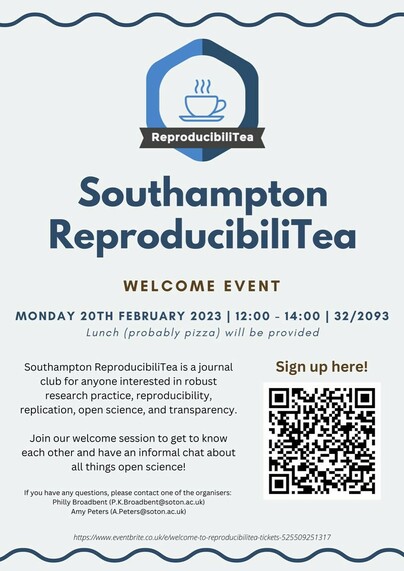
On Monday 20th February, we're hosting an in-person Welcome to ReproducibiliTea Southampton session. Join us for an informal chat about open science over lunch! Sign up here: https://www.eventbrite.co.uk/e/welcome-to-reproducibilitea-tickets-525509251317
🐦🔗: https://twitter.com/ReproTeaSoton/status/1620025103487741952
#HappyValley amazing as always but wtf kind of game is Ryan supposed to be playing at the end of the episode with those graphics?? The alpha version of Goldeneye…?? This is set in 2023 right…?
🐦🔗: https://twitter.com/JoshNewbury/status/1619820357258739712
Given the crappy graphics of the console game in #HappyValley the story must be situated at least 20 years ago.
🙌
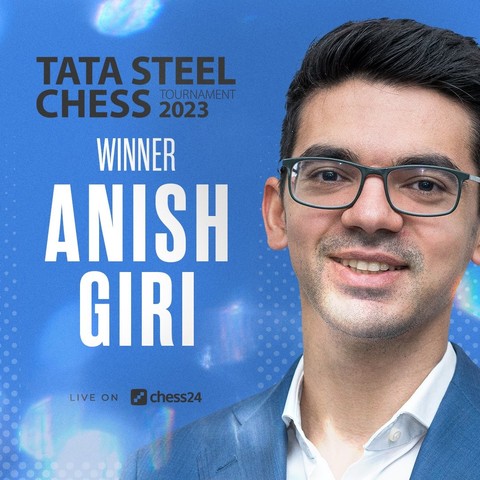
Congratulations to @[email protected] on finally winning his home supertournament #TataSteelChess after finishing 2nd five times, twice after a playoff!
https://chess24.com/en/watch/live-tournaments/tata-steel-masters-2023/13/1/1
#c24live
🐦🔗: https://twitter.com/chess24com/status/1619727277604114434

Interesting paper. Supports reciprocal effect self-concept and achievement. - How Strong Is the Evidence for a Causal Reciprocal Effect? Contrasting Traditional and New Methods to Investigate the Reciprocal Effects Model of Self-Concept and Achievement https://link.springer.com/article/10.1007/s10648-023-09724-6

How Strong Is the Evidence for a Causal Reciprocal Effect? Contrasting Traditional and New Methods to Investigate the Reciprocal Effects Model of Self-Concept and Achievement - Educational Psychology Review
The relationship between students’ subject-specific academic self-concept and their academic achievement is one of the most widely researched topics in educational psychology. A large proportion of this research has considered cross-lagged panel models (CLPMs), oftentimes synonymously referred to as reciprocal effects models (REMs), as the gold standard for investigating the causal relationships between the two variables and has reported evidence of a reciprocal relationship between self-concept and achievement. However, more recent methodological research has questioned the plausibility of assumptions that need to be satisfied in order to interpret results from traditional CLPMs causally. In this substantive-methodological synergy, we aimed to contrast traditional and more recently developed methods to investigate reciprocal effects of students’ academic self-concept and achievement. Specifically, we compared results from CLPMs, full-forward CLPMs (FF-CLPMs), and random intercept CLPMs (RI-CLPMs) with two weighting approaches developed to study causal effects of continuous treatment variables. To estimate these different models, we used rich longitudinal data of N = 3757 students from lower secondary schools in Germany. Results from CLPMs, FF-CLPMs, and weighting methods supported the reciprocal effects model, particularly when math self-concept and grades were considered. Results from the RI-CLPMs were less consistent. Implications from our study for the interpretation of effects from the different models and methods as well as for school motivation theory are discussed.
How I started the chess boom by losing to 8yo Hikaru https://twitter.com/gmhikaru/status/1618747202117177344 https://twitter.com/natesolon/status/1619040520726249478/video/1
🐦🔗: https://twitter.com/natesolon/status/1619040520726249478
@[email protected] #fridayfive
1/ The Pearl Fishers Duet - Jussi Björling and Robert Merrill
2/ Arrow - The Irrepressibles
3/ Micro Cuts - Muse
4/ Farmer in the City - Scott Walker
5/ Crossing the Bar - The Longest Johns
Awesome event with a focus on open research - sign up via
https://www.eventbrite.co.uk/e/welcome-to-reproducibilitea-tickets-525509251317
https://www.eventbrite.co.uk/e/welcome-to-reproducibilitea-tickets-525509251317