Boris Smus

@borismus
169 Followers
207 Following
1.5K Posts
study the old & create the new
wwwhttps://smus.com
Just finished The Immense Journey by Loren Eiseley. We're "walking sacks of seawater" carrying a Precambrian tide pool in every cell. Half evolutionary philosophy, half poetic memoir. "Here time becomes space." Best read outdoors, slowly. https://smus.com/books/the-immense-journey-by-loren-eiseley/
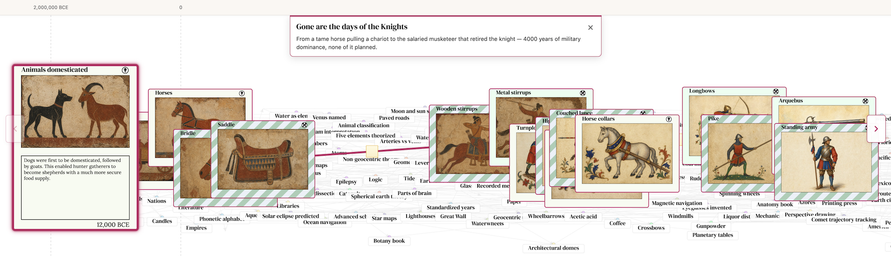
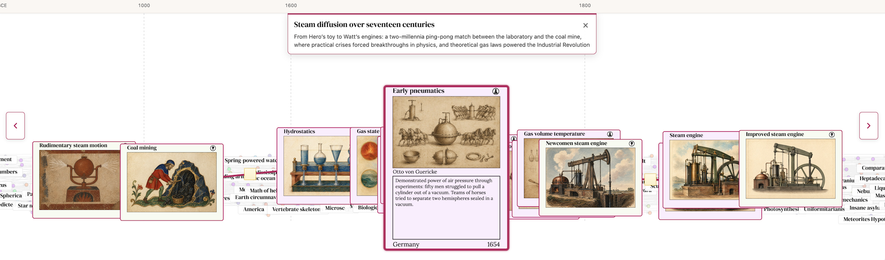
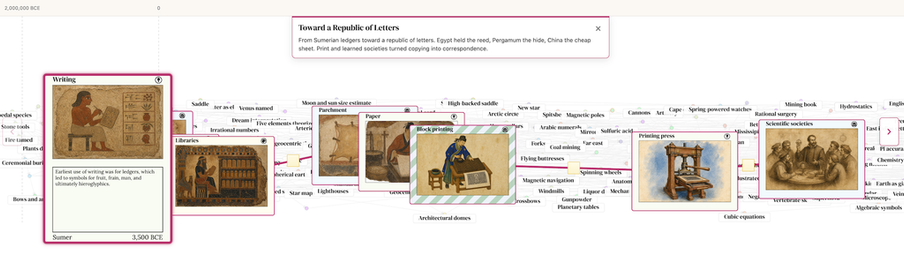
New on invention.cards: Stories are branches inside the full tech tree — follow a curated chain of discoveries without losing the surrounding context. Plus 1,500 new era-styled images and a mobile swipe UI. https://smus.com/invention-cards-3-stories/
E-ink isn't nostalgia but a line of defense for cognitive sovereignty against feeds and AI overreliance. I just open-sourced supernote-cli to pipe distraction-free thinking from Supernote straight into digital workflows. https://smus.com/notes/2026/supernote-cli-pen-paper-and-a-pipe/
supernote-cli: pen, paper, and a pipe

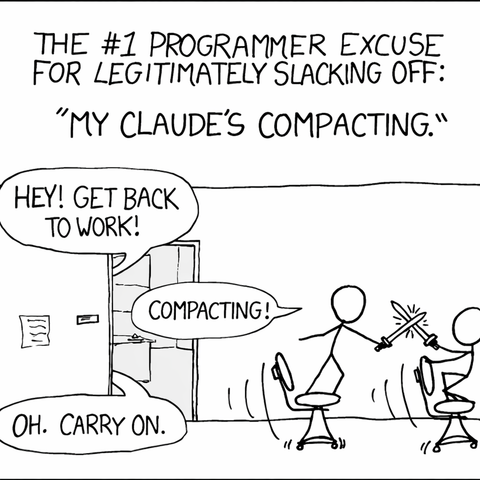
A recent  NYT piece  argued we need a mental fitness revolution to combat the cognitive decay caused by algorithmic feeds and generative AI. It's an efficient one-two punch. If you're not brainrotting on short form video content, you're outsourcing all of your thinking to an LLM. The result is a kind of cognitive strip-mining. What's left requires active defense. For me, one way of defending that capacity for deep work is with a pen on e-ink. Whether it's annotating a paper or starting a sketch from scratch, I'm intentionally making room for focused thought. My army of clawed Claudes and Codexes will just have to wait.

Introducing Alloy, a local-first AI workbench app for macOS.

• Own your history & memory: plain text files you control.
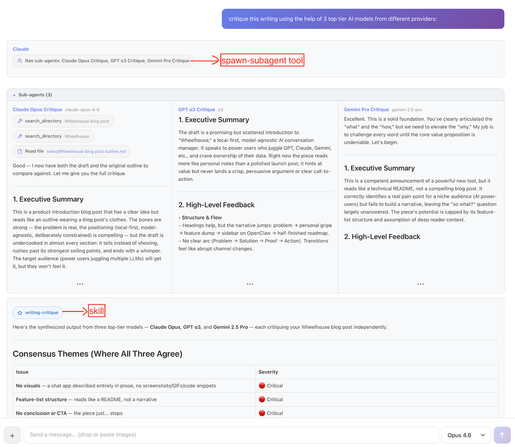
• Orchestrate: parallel agents, swap models mid-thread.
• Flow: riff to co-create with an AI & triggers as proactive monitors.

No lock-in, BYO-keys. https://smus.com/alloy-local-first-ai-workbench/

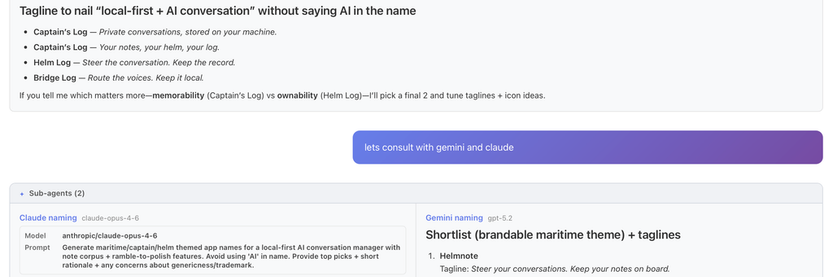
my little agent orchestrator is growing up. just playing around with some names now. wdyt?
updated for 2026
Built a NetHack-style roguelike and got an LLM to play it. LLMs are terrible at parsing ASCII maps. Solved it by converting FOV to explicit directions — "NEW: N, E" vs "VISITED: S" vs "BLOCKED: W". Once it knows what's novel vs explored, it actually navigates.

My e-ink tablet's built-in handwriting recognition has a 27% error rate. So I benchmarked local VLMs against cloud models:

Claude Opus 4.5: 3% error, 6 seconds
qwen3-vl:8b (local): 5% error, 74 seconds

A 2% accuracy hit to keep my journal entirely on-device? I'll take that trade.
https://smus.com/notes/2025/local-e-ink-handwriting-recognition-with-on-device-vlms/

Local e-ink handwriting recognition with on-device VLMs

For decades, I've carried a Field Notes notebook and a pen. I mainly used them to capture ideas on the go, but it would also be great to sketch out a diagram, or to journal a little bit, especially while traveling. Fast note-taking via the iPhone's action button has alleviated a lot of my need for quickly capturing ideas. But nothing can replace pen and paper for long form stream-of-consciousness writing or diagramming. I wanted to give my writing a digital life alongside the rest of my notes. So a year ago, I bought an A5 e-ink writer called Supernote. I really like it so far: it's a good size, input latency is reasonable, and the overall writing experience is fine. The device provides real-time text recognition on-device and a modest cloud syncing service. I've been using their unofficial API to sync notes and bring them into my Obsidian inbox. But then something happened...

typography revealed
love that my TTS reader pronounces Xi (in Xi Jinping) as “roman eleven”. something very fitting about that