Binary Ninja

1.3K Followers
783 Following
472 Posts
Makers of fine reverse engineering tools and technologies.
Webhttps://binary.ninja/
Twitterhttps://twitter.com/vector35
YouTubehttps://youtube.com/@Vector35
In Sidekick 26.0, Indexes give you a persistent work queue for reverse engineering! Create one from a BNQL query, then keep adding as you find more. Sidekick can also write to indexes during analysis. Later, use the index to filter down, pin what matters, and jump straight to each location. https://docs.sidekick.binary.ninja/guide/indexes.html

The Notebook in Sidekick 26.0 is where you turn chat work into something that sticks. It is a persistent workspace where you track analysis goals and record outcomes. Sidekick reads it as context in Chat, so it can build on what you already established across turns and sessions. https://docs.sidekick.binary.ninja/guide/notebook.html
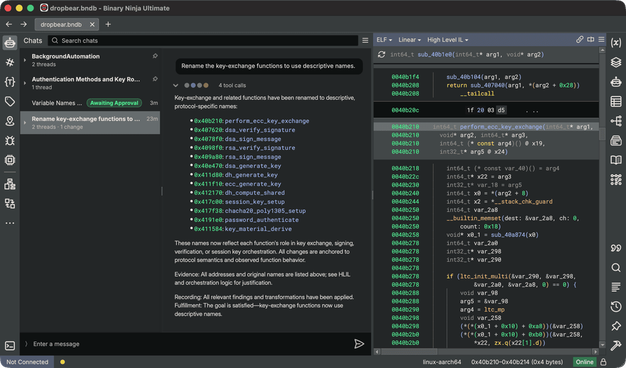
In Sidekick 26.0, Chat is where most binary analysis starts. Ask a question and Sidekick uses its tools to query the binary, then the thread builds as you dig deeper. The sidebar keeps it transparent. You get a thread list with live status, changes, findings, and any approvals waiting. Open a thread to see the full conversation plus grouped tool calls so you can audit what ran. https://docs.sidekick.binary.ninja/guide/chat.html
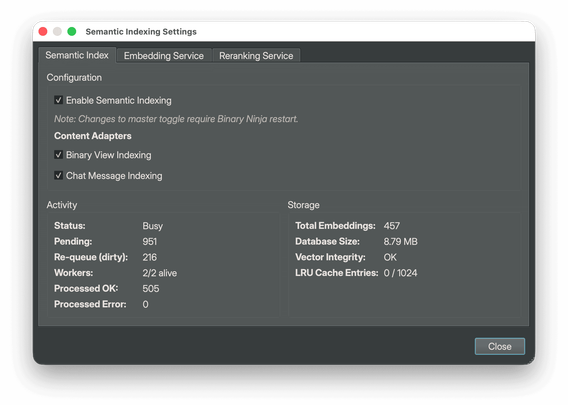
Semantic indexing in Sidekick 26.0 lets you search by what code does instead of what it is named. It builds a local vector index for your binary. Then concept() in BNQL or the Python API can surface matches for things like TLS handshake even when everything is still default named. The index stays local, no binary content goes to the cloud. https://docs.sidekick.binary.ninja/guide/semantic_indexing.html
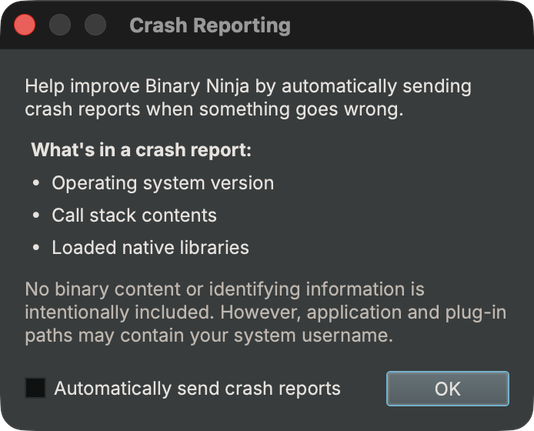
To help us track down bugs faster, 5.3 introduces opt-in crash reporting. This feature is disabled by default in paid versions and enabled by default in our free version. Either way, you can change the setting whenever you want. Details in our latest blog post: https://binary.ninja/2026/04/13/binary-ninja-5.3-jotunheim.html#crash-reporting
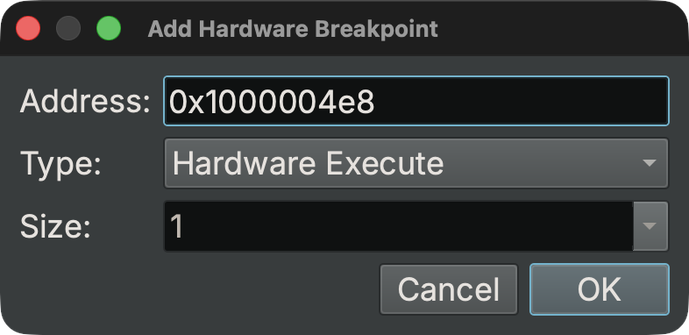
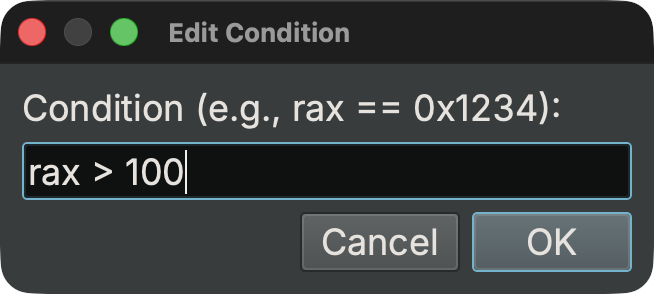
The debugger got some real love in our latest update. Hardware breakpoints and conditional breakpoints have both landed, and the new debug adapters make things faster and more reliable across a range of workflows. Read more from the latest blog: https://binary.ninja/2026/04/13/binary-ninja-5.3-jotunheim.html#debugger
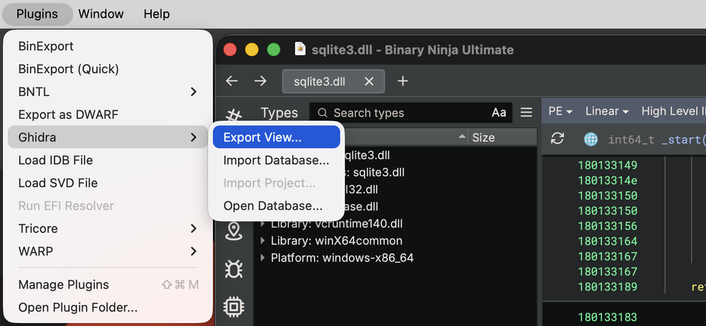
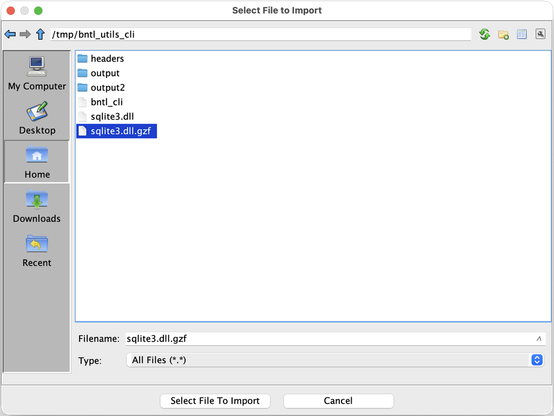
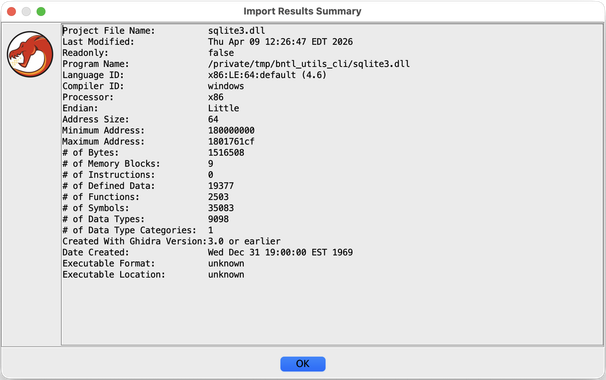
Our latest release makes it much easier to move analysis between tools. With new Ghidra Export support and a major overhaul to IDB import, more of your work carries over cleanly and more IDA databases work better in Binary Ninja. https://binary.ninja/2026/04/13/binary-ninja-5.3-jotunheim.html#interoperability
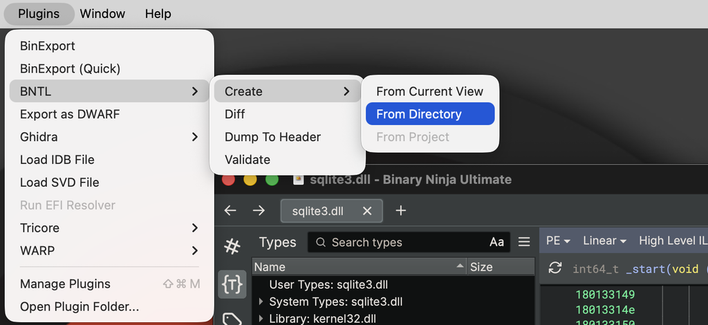
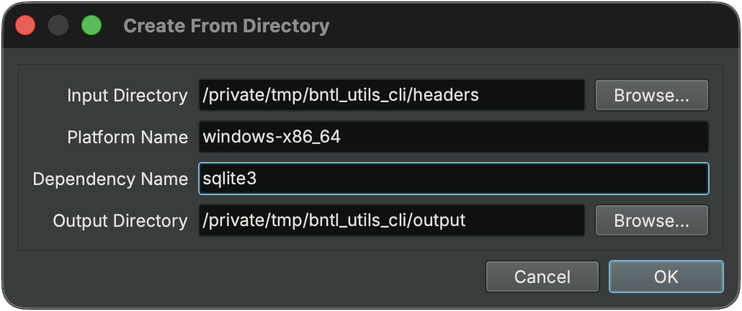
Binary Ninja 5.3 adds new BNTL utilities for easier type library workflows in both the UI and headless environments. WARP also gets a cleaner server experience, with bundled Linux signatures helping complete the shift away from SigKit. https://binary.ninja/2026/04/13/binary-ninja-5.3-jotunheim.html#types--signatures
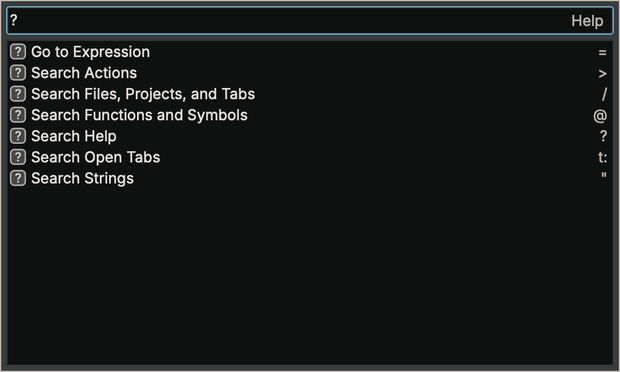
A lot of practical UI work landed in Binary Ninja 5.3. We replaced the old MachO slice selection flow with a dedicated picker, expanded Container Browser coverage across a wide range of container formats, and significantly extended command palette behavior. https://binary.ninja/2026/04/13/binary-ninja-5.3-jotunheim.html#ui
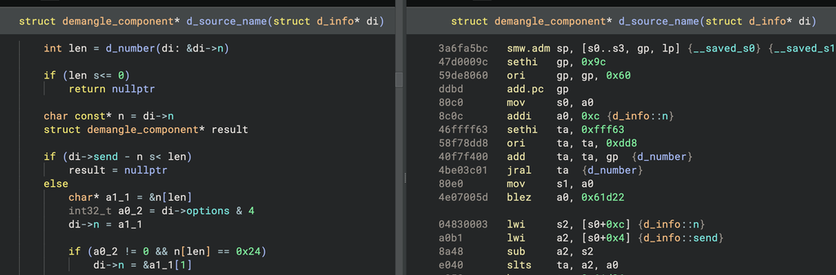
Binary Ninja 5.3 (Jotunheim) adds new architecture APIs for full function level lifting. We are already using them for upcoming TMS320C6x work, and plugin authors should be able to put them to good use too. Also new: NDS32 and AArch64 ILP32 ABI updates. Check out the latest blog: https://binary.ninja/2026/04/13/binary-ninja-5.3-jotunheim.html#architecture--platform