Can’t wait for R U Ok day to talk about getting a court summons from my employer for an unpaid parking fine 💝
| Google Scholar | http://bit.ly/1jJCPbw |
| ANU profile | https://crawford.anu.edu.au/people/academic/rebecca-colvin |
| Google Scholar | http://bit.ly/1jJCPbw |
| ANU profile | https://crawford.anu.edu.au/people/academic/rebecca-colvin |
Today I am overcome with pride: Congratulations to the excellent Nic Badullovich who is now officially Dr Nic!
Nic's PhD at the Crawford School of Public Policy examined how framing in climate change communication can be used to forge connections and bridge divides. During his PhD Nic did all the right things - he published and presented his work - but also went well beyond in the good things too: brightening spaces and uplifting others wherever he went.
Nic is now postdoccing at the Center for Climate Change Communication at George Mason University, where I know he will be continuing his important research and spreading kindness.
Well done Dr Nic, you absolute legend!

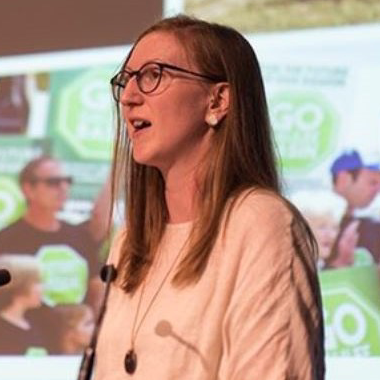
A couple of weeks ago I had my turn in the armchair speaking with the brilliant Gabrielle Chan for the Powerhouse Museum’s 100 Climate Conversations series.
Our conversation on the role of social science, ingroups and outgroups, and how to bridge divides lives online here: https://100climateconversations.com/bec-colvin/
@anathema_device 😂 The academic publishing business model is ridiculous!
Under normal circumstances, in many journals authors can publish for free, but then readers have to pay to access the articles (a 'paywall'), or access via a subscription paid by an institution like a library.
Alternatively, to increase open access to knowledge, authors could pay a publishing fee (separate to the peer review process) that would remove the paywall so readers could freely access the papers.
Both approaches ensure the corporate publishes profit greatly from the institution of peer review and knowledge creation...
Under this new agreement, neither authors nor readers will have to pay. Big win!