'The Lost Parsi Fire Temple Of Kolkata's Ezra Street'
https://www.indiatimes.com/news/india/the-lost-parsi-fire-temple-of-kolkatas-ezra-street-596349.html

The Lost Parsi Fire Temple Of Kolkata's Ezra Street
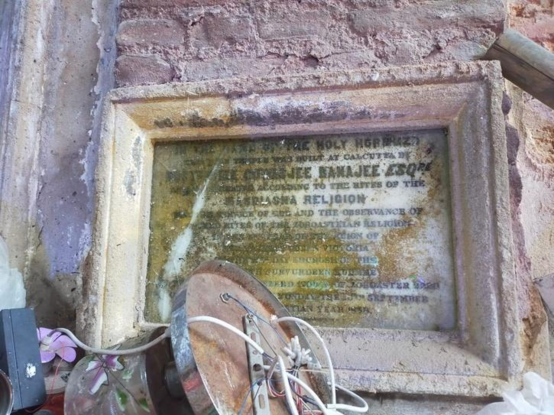
Kolkata is home to many religious minorities. Being a port city, it was easier for many communities to settle in Kolkata. And today, Kolkata is home to some of history’s greatest masterpieces, one of which is the iconic Fire Temple on Ezra Street of the Parsi Community, who practice Zoroastrianism. Ishita RoyHistory of Kolkata’s Parsi CommunityThe Parsi community’s connection with Kolkata dates back to more than 240 years. Relying on the written records, in 1767, Dadabhai Behramji became the first Parsi who settled in Kolkata. He was friends with John Cartier, who was appointed as the Governor of Bengal back then. Many give Rustomji Cowasji Banaji the credit for the first pioneering Parsi, who was Behramji’s nephew. Prochy N Mehta, in her book, also writes, “Rustomji Cowasji Banaji played a major role in the making of the modern city of Kolkata. He was the first Parsi to bring his entire family, including women and children to the city…. He was the first Indian to venture into a partnership with the British…. Rustomji was a close friend of Dwarkanath Tagore, the grandfather of Rabindranath Tagore.”Ezra Street’s Fire Temple Ishita RoyLike any other community, the Parsis, too, needed a prayer hall to offer worship. Rustomji in 1839 thus built the Fire temple at Ezra Street. Today, the Fire Temple remains in shambles, and the details are hardly visible on the Temple’s plaque. The structure known as the Ervad Dhunjeebhoy Byramjee Mehta Zoroastrian Anjuman Atash Adaran is today the center of the Parsi community in Kolkata. The prayer hall has a Faravahan- a symbol of the Zoroastrianism faith, a fire altar, and a painted glass door- a typical architectural design of Parsi structures. Parsi Temple- a Heritage Building Ishita RoyThe board, which is now moved to the side from the main entrance, still reads that Ezra Street’s Parsi temple is a declared Heritage Building under the Heritage Commission Act 2001 by Calcutta Municipal Corporation. Despite its heritage status, the building today remains in ruins. Ishita RoyToday, Ezra Street is known not for the Parsi Temple but for its electronic market, which has encroached on the temple's premises. The by-lane from the Beth-El Synagogue- also a lost heritage, leads to the Parsi Temple, but it is almost unnoticeable. The entire place is lit with lights, whether it is LEDs, fairy lights, etc. One has to have a keen eye to look for the temple’s entrance, which is encroached upon by the light market. Ishita Roy Ishita Roy Ishita RoyThe entire premise of the temple is today the light market. While the building is shattering. The glasses are tinted with a thick layer of brown dust, and the wooden columns are on the verge of falling down with one strong hit. The architectural marvel’s ornate plaster too, is now defunct. It is very similar to Delhi’s light market in Chandni Chowk’s Bhagirath Palace, which now remains encroached to, and in ruins. The place that once lit the holy fire today is lit with various lights and calls for dire attention.