1st 2 chapters of my book still free from Oxford UP. The book is expensive so if you know someone who would be interested in an emiprical-philosophical account of agency, attention and their relation, point them to the free download (soon gone):
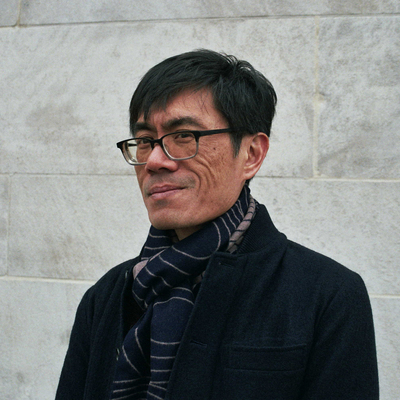
Wayne Wu
- 86 Followers
- 19 Following
- 41 Posts
Faculty in Philosophy and in the Neuroscience Institute at Carnegie Mellon University...recovering biochemist

Want to see if attention gates consciousness? Come to the discussion in 20 minutes links below. Some great work by Ian Phillips, Chaz Firestone, Howard Egeth and of course, Makaela Nartker who is the first author. I will critically discuss.
Neural Mechanisms Online
(website)
Friday 22 March 2024
Webinar
h16-18 CET / h15-17 GMT
(check your local time here)
Join at:
https://unito.webex.com/unito-en/j.php?MTID=ma911783f207e76a9f136cf1126e5fca8
the link will be activated 10 mins before the talk
Ian Phillips
(Johns Hopkins)
Awareness survives inattention
(https://drive.google.com/file/d/1-pOI52J4KijXVuIpn5YudxENb9EtEA8Q/view?usp=drive_link)

It's working now, finally (I hope). It says "free" on the oup website, just chp. 1 of my book Movements of the Mind (entire intro is also available on google books). Link here:

Um, the ENTIRE book seems to be available for free right now. This is my book, Movements of the Mind, a theory of agency, attention and intention.
https://academic.oup.com/book/46088?searchresult=1
Come discuss at https://philosophyofbrains.com/2024/03/11/wu-movements-of-the-mind-post-1-the-structure-of-agency.aspx
For those of you in NYC, I've organized this two hour event with Raphael Rosenberg and Jackie Gottlieb on art, attention and neuroscience
If that sounds of interest to you or any friends, colleagues, please come (you need to register, but it's free).
https://italianacademy.columbia.edu/events/attention-and-attunement-art-neuroscience-and-philosophy
Attention and Attunement: Art, Neuroscience, and Philosophy | The Italian Academy
Italian Academy Fellows from this year—Raphael Rosenberg, who gathers data on eye movements and art, and Wayne Wu, whose philosophical work addresses attention and attunement as elements of mind—will speak, along with Jacqueline Gottlieb, who will present her research on the neural mechanisms of attention and information gathering. David Freedberg will moderate.
My paper, "We know what attention is!" is published now in Trends in Cognitive Science. It argues that given shared methodology, we all commit to a common conception of what attention is. This answers widespread skepticism about attention by using our present beliefs. The link provides free access for the next 40 some days. Have a look!
Learn about what it is to be an agent at a discount!
I wrote a book on what it is to be a human agent.
Amazingly, it's on discount at 40% off with free shipping in the US (though not released here yet) and in the UK (not sure if free shipping applies there).
This is a crazy deal for an academic publisher. Until 7/1.
You can read the introduction for free on Google Books:

Movements of the Mind
Movements of the Mind is about what it is to be an agent. Focusing on mental agency, it integrates multiple approaches, from philosophical analysis of the metaphysics of agency to the activity of neurons in the brain. Philosophical and empirical work are combined to generate concrete explanations of key features of the mind.
Theorists of attention seem ok with proliferation. Some groups say attention is X, other that it is Y, other that it is Z etc.
So, yay, polysemy!!
Proliferation is NOT warranted, however, and here’s why
First, to assert as a scientist that A=X is to make a strong claim with modal implications. The identity relation implies necessitation.
Thus, it typically requires really good theoretical argument or evidence.
Second, if you say that this is how you want to use the term, “attention”, then sure, it’s still a free country, but then you’re making a linguistic point, not a scientific one.
Of course, you do intend a scientific one, you claim that your X, Y, Z etc. is attention.
But what is your argument? You don’t get identity for free in science.
Here’s the challenge. Much of the evidence you cite is always going to also be evidence for weaker claims, say that X is correlated with attention or that X explains attention. But this might be true even if X ≠ attention.
What you have to produce, then, is an argument to the stronger claim.
We’ve let each other off the hook when one person makes a claim about the world using identity.
This is not a linguistic point, but a logical one, about good scientific inference.
What I'm struck by is that people don't seem to care about the logical issue.
The empirical paradigms used to study attention all imply the same answer to what attention is, viz. what James said in his description of attention: a subject's (visually, cognitively, auditorily...) selecting a target to deal with (i.e. act on).
Which is to say, we all know what attention is. There's no reason for skepticism about it.
youtu.be/YLv3vzoTjqs
I've uploaded part of my talk at the phiVis 3: Philosophy of Vision Science Workshop at @VSSMtg
May 23 at 12:30. This is to spur more discussions at the meeting and here. I argue that we all know what attention is!
https://youtu.be/YLv3vzoTjqs via @YouTube
One highlight: I argue that the theory of attention is logically inconsistent.
