 Christian Ready
The star #Fomalhaut has not one, not two, but THREE asteroid belts? Way to go JWST! https://youtu.be/TnH8jgkDqwY (and thanks to @andrasgaspar and team!)


| Website | http://merope.as.arizona.edu/~agaspar/ |
Our Fomalhaut image made Astronomy Picture of the Day!
THIS IS A JWST IMAGE OF A NEARBY PLANET-FOMRING SYSTEM
LOOK AT IT
LOOOOOK AT IIIIIIIITTTTTTT
(also click the link please)
https://badastronomy.substack.com/p/jwst-sees-an-asteroid-belt-around
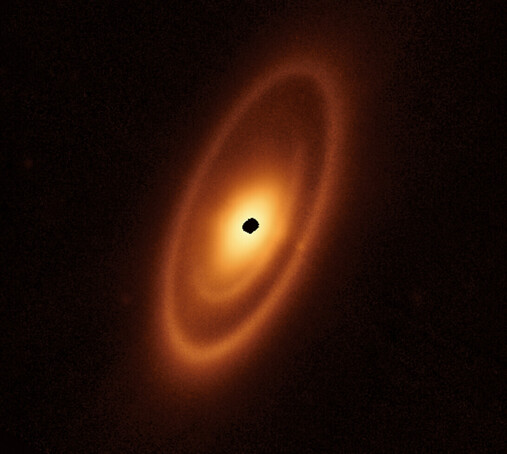
So, I have to say at this point that it's pretty freaking cool to get to have your theoretical prediction confirmed in your lifetime in astronomy. (And others also independently had this prediction, it's not just me). But yeah, that feels pretty good.
Here's a Sky & Telescope article (where I got to be very excited about the new images): https://skyandtelescope.org/astronomy-news/the-james-webb-space-telescope-reveals-fomalhauts-disk-in-unprecedented-detail/
I think I'm also quoted in Nat Geo (but paywalled so I'll wait until I get get it from my library): https://www.nationalgeographic.com/premium/article/nasa-photo-of-planetary-debris-unlike-anything-seen-before
In light of the really impressive JWST observations of Fomalhaut that were released yesterday, I wanted to share my view of the Fomalhaut system. Story time!
Fomalhaut is a bright nearby star that has been known for decades to have a debris disk, a belt of dust caused by asteroids crashing into each other. Sounds very dramatic, but we see them all over the place! Our own Kuiper Belt and asteroid belt are extremely faint/low mass versions of debris disks we observe around other stars.
Hi @sundogplanets ! Did you see you S&T quotes?
Do read the NASA press release:
https://webbtelescope.org/contents/news-releases/2023/news-2023-109
As well as the original Nature Astronomy paper: https://nature.com/articles/s41550-023-01962-6
 Phil Plait
 Prof. Sam Lawler
