After working with a few weird SOCs, my love for Raspberry Pi is growing, because I can actually see their kernel patches (if any) as git commits and they regularly rebase to latest stable. What other SOCs are good at upstream kernel work?
We're a hunter gatherer society. We hunt for work and gather groceries.
But with the push for age verification and other intrusions being tied to "accounts" I'm ready to say that accounts haven't made sense on most devices for decades now. Processes and their descendants should have privileges, or not, but individual user accounts tied to identities on computers are irrelevant since you have to also authenticate to whatever web services to do anything useful.
Of course, shell is not the only way one gets enough unprivileged access to leverage an exploit to get more access. I get that.
I've been wondering all day if there are systems I have shell access to that I don't also have root on already, or couldn't already easily give myself root on. I can't think of any. I know they exist, but for me the days of multi-user systems are a distant memory.
Don't use Axera SOCs. I've got a fairly recent one (a network KVM) that's really quite nice except that it runs a 4.9 kernel, built with an old Arm GCC 9 compiler, and includes proprietary (disclosed source) kernel code.
It's probably possible to patch a generic modern kernel for it, but a much bigger lift than most I've looked at.
Why are all of the batteries on the UN3481 label standard alkaline sizes instead of common lithium sizes?
Given enough tokens, all bugs are shallow.
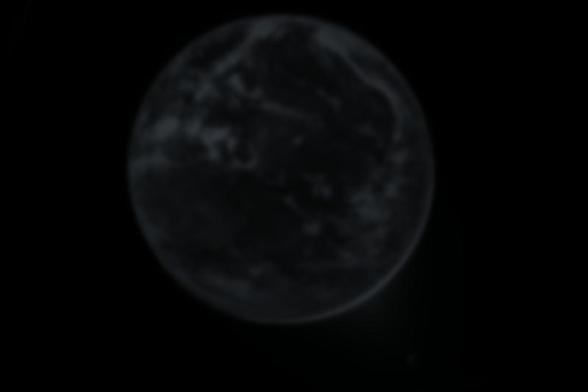
To be clear, it's not that NASA doctored the photo. It looks like it's basically straight off the camera. It's that a Nikon has a way better sensor than you do.
NASA posted an impressive image of Earth taken from Artemis II, but it's taken with settings that suggest reality was extremely dark, so I had Gemini build me a script that applied all the science we could account for to modify the image to be more like what the astronauts probably saw with their eyes.
Original image from https://www.nasa.gov/image-detail/fd02_for-pao/
Possibly completely wrong script at https://gist.github.com/ajorg/777521a54f7f7875582b69ceda15f798