Andrew Goldstone

5 Followers
2 Following
24 Posts

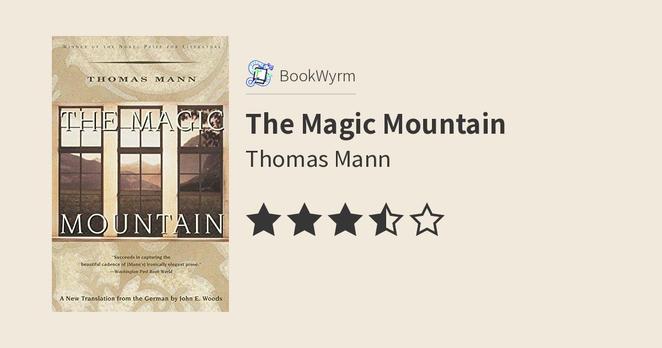
After a bunch of SF, I decided to relax with some doorstopper fantasy. What a disappointment when it turned out that (SPOILER) this so-called "Magic" Mountain didn't have any magic in it!

Dumb jokes aside, this is a great novel. It's also very clearly a modernist fiction of autonomy, so people who purport to know about those maybe should have had something to say about it thirteen years ago. But I just don't have the German, or the sense of the German literary field, to do it right. Offhand, however, it's clear that the Sanatorium Berghof is a way of exploring relative autonomy from historical time. So clear that it's almost parodic, just as the opposition is comically exaggerated between the plodding hyper-steoretypically Hamburg "flatland" life Castorp is escaping and the intellectualized, cosmopolitan, and transgressively erotic (not only heterosexually) realm of the sanatorium. And so too is the lesson about the limits of this autonomy all too clear, not only in the explosive ending but well before. On the last page the garrulous narrator literally tells us the story is "hermetic," "told for its own sake."

Otherwise, I was particularly moved by the tour-de-force snow chapter, and the evocation of listening obsessively to a recording of Schubert. I wonder if Fischer-Dieskau deliberately followed Mann's description of the record Castorp loves so much.

(comment on The Magic Mountain)
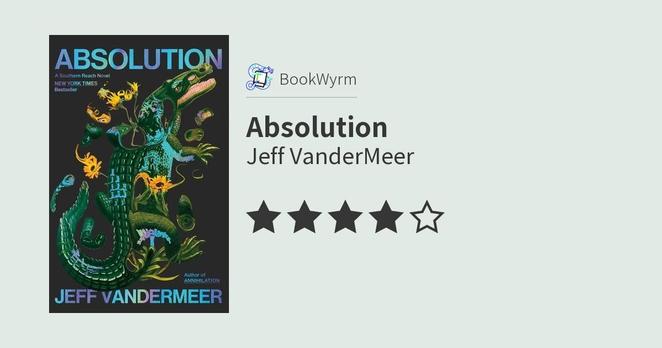
After teaching Annilihation once again and finding it improves on re-reading and re-teaching, I decided to go read this late fourth installment of the trilogy. I read Authority and Acceptance ten-ish years ago and remember them only vaguely as somewhat disappointingly un-weird. Perhaps VanderMeer felt the same, since Absolution is aggressively weird. The first half is quite good and recaptures some of that "surrender to the weird" magic of Annihilation. The second half is more one-note, and though I like sweary monologue as much as the next manchild, it got a bit tiring. I did not have a great sense of what was going on, or if the first three volumes were being explained or rewritten or what. Leaning on time travel was a bit disappointing to me.

The climate politics? I think its climate politics is that ecosystems are precious and fragile and domestic spying agencies should be more professionally run? Hard to tell really.

(comment on Absolution)

It's a shootout in a mall. In space.

(comment on Exit Strategy)

Actually I read the digital version of this second edition, which, along with a remarkable library of other titles in Classics, is available free from the Center for Hellenic Studies. Greg Nagy's books are (all?) there: don't miss Comparative Studies in Greek and Indic Meter!

Anyway, Lord/Parry is one of those books I've imbibed the general idea of from references in other books (like Nagy's, or Watkins's How to Kill a Dragon). In short, oral epic composition is based on the use of "formulas" (meaning, generative templates that fit the meter). Observing and recording Yugoslavian epic singers at first hand, the authors believed they were witnessing the very same process that produced the Iliad and the Odyssey (and, Lord adds, many other European/Near Eastern epics from Gilgamesh to Beowulf). At the level of comparative poetics, what is most powerful is the argument that, through the mechanism of formula, composition and performance can be the same thing, that there is no "original" but instead the changing same of tradition which the individual singer both continues and authors anew each time.

I think this remains a very useful model of creativity to think with, and not only in the "oral epic" setting but anywhere generic creation might make use of a set of reusable templates. In fact I got to this digital text through a chain of links from a citation in discussions of (sigh) large language models, which, say people like Henry Farrell and Cosma Shalizi, might be thought of as models of "tradition" in the specific sense described here. I guess the idea is that training the big model is like finding the mnemonic units of the internet-tradition. However, I'm pretty skeptical of that particular connection. It's clear that for Lord, the compositional act is governed by higher-level abstractions ("themes" and even "myths") as well as by the particulars of the social situation of the performers—how they acquire tradition, how they perform it, to whom.

I found the opening chapters most compelling, and it was fun to get a glimpse into those Yugoslavian epics (quotations are given in original and translation—and digitizations of the field recordings are included!). There are even pages with Bartók's transcription of the singing and accompaniment.

The later, comparative chapters, including two long ones on Homer, are kind of a letdown, at least to me. They revert to what sound to me like late-Victorian speculations about how it "must" have been for the great Homer to dictate his songs. Then there are Golden-Bough-esque assumptions about the kernel of "myth": that the "return song" is deeply about the "revived god." That just sounds silly. Still, I'm very glad I read it for the first three chapters alone.

(comment on The singer of tales)

Awake in the middle of the night and needing something emphatically not related to literature to read, I pulled this book off my shelf, which had migrated there from my parents' shelves. The author is a family friend, so the form of this book, which combines explanation-for-laypeople with memoir, is entertaining for me. Guth's infant son (infant at the time of the discoveries he recounts) is a recurrent character—but to me Larry is the impossibly accomplished older fellow faculty brat. (My dad also has a couple of cameo appearances, including one astonishing scene in which he is on the other end of the phone when Guth called up MIT to suggest they should make him a job offer. That was a different world.) This is popular science narrative in which the protagonists are actual people whose collaborations are threaded with snark and competition, and who are sometimes pulled back to earth by family responsibilities, problems with the contractors working on the house, illness, and so on.

Guth's exposition of the history of cosmology up to the invention of inflation is entertaining on the missed opportunities and persistent errors, and he is unlike most popular-physics writers I can remember in paying detailed attention to the empirical confirmation or discomfirmation of theory by astronomical measurements. Guth follows the popular science rule forbidding equations, but he includes graphs (lovingly LaTeX'd: this was 1997, and they still look good to me) with actual measurements and uncertainty bars.

As for inflation, I guess I now have a slightly less vague idea of what it is and why it's significant. A little hurried wikipedia-reading suggests it remains the best very-early-cosmological game in town. I wonder why inflation hasn't really filtered into the kids'-guides-to-the-universe I have recently been, um, co-reading.

(comment on The inflationary universe)

At some point I decided it was safe to mix a little modernism into my recreational reading diet now and then, figuring that my research is now far enough from modernism that it won't normally make me start anxiously thinking about whether I need to address it professionally. On the one hand, this didn't give me agità. On the other hand, meh. Enjoyed the downtown local color, but not so much the sense of reading a second-tier Sister Carrie rendered in montage. Brief glimpse of deported reds singing the Internationale is relevant, I guess.

(comment on Manhattan Transfer)

I went on from Asimov to this robot story (at least Wells doesn't suffer from engineer-ism). It's fine, though the TV-episode-formula quality has intensified. I already can't remember any of the human characters. There are bad ones and good ones, and Murderbot saves the good ones from the bad ones.

(I always make up the "finished reading" dates. This isn't a performance chart.)

(comment on Rogue protocol)

I needed something bite-sized to read and for some reason drifted over to this, bought ten years ago. I'd never actually read it all: I've taught "Reason" and "Runaround" many times, but this time I soldiered through the whole thing, including the frame story about Susan Calvin. Those early stories are far, far better than any that came later—funnier, more surprising, unencumbered by the "Three Laws" as the main object of interest (which is a problem because they're not interesting). There's something heroic about Asimov attempting to make Susan Calvin into a character, but she's just a cardboard cut-out of the Brainy Woman.

As for the Three Laws, it's truly bizarre that they have had such staying power. I guess people really want to confound "is" and "ought": Asimov wants you to imagine robots as beings for whom moral imperatives really are natural laws. As a corollary, engineers (and "mathematicians") can take over moral authority. May all the non-existent gods help us. The novel culminates in the takeover of earthly affairs by a benevolent robotic "World Controller" who knows exactly how to make the planned economy work.

Meanwhile, back in reality, the boneheads who absorbed this stuff at third remove have given us ChatGPT. Thanks for nothing, Asimov.

(comment on I, Robot)

Review of "The sources of social power": Well, here we are

https://bookwyrm.social/user/agoldst/review/9015148

Through some administrative oversight I was allowed to offer an undergraduate seminar entirely focused on Ursula Le Guin this semester. I thought it would be clever to mix in her version of the Daodejing, so I finally read it straight through instead of dipping into it. My students rightly suggested we look at the book as Le Guin’s self-conscious effort to popularize Laozi: obviously you should go elsewhere for Sinological rigor. Le Guin’s annotations and the presence of her own voice in the text clearly signal her desire to make Laozi applicable for a late-20th-c. US audience that wants gender equality, peace, and less wreckage of the environment…and for a mid-to-late-20th-c. genre writer committed to ideals of art as conveying deep “truth” in ambiguous or elusive form.

Le Guin is vocal about her distaste for the “manual for princes” interpretation of this text—that is, the scholarly consensus that the Laozi belongs to philosophical debates about social order and political rule in the Warring States period. But this may be symptomatic, considering how much her own writing is itself not-so-secretly a manual for non-princes. She takes liberties that are philologically unacceptable, and her general editorial / translational tone clearly owes a lot to the nineteenth-century amateur tradition. Her acknowledgments led me to learn a little about the fascinating oddball Paul Carus, whose zinc-magnate family set up a syncretic religious publisher, Open Court. Carus produced, inter alia, a character-by-character gloss of “Lao-Tze’s Tao-Teh-King” (1898), which Le Guin says was her first Daodejing, found on her father’s shelves.

(comment on Tao Te Ching)

Ursula K. Le Guin: Science Fiction, Fantasy, Literature, Spring 2025 · Andrew Goldstone

Andrew Goldstone