My team is hiring a Lecturer in Cultural Analytics and Knowledge Systems at UCL (London).
£52-61k permanent.
We are looking for someone working with text at scale in humanities contexts. Deadline 19 December.
My team is hiring a Lecturer in Cultural Analytics and Knowledge Systems at UCL (London).
£52-61k permanent.
We are looking for someone working with text at scale in humanities contexts. Deadline 19 December.
Work with me at UCL. 1 year leave cover (2025)
Lecturer (teaching) information studies.
Full time £52,487-61,534
Please share with friends
Work with me at UCL. 1 year leave cover (2025)
Lecturer (teaching) information studies.
Full time £52,487-61,534
Please share with friends
Our research features in Time this morning. 'King of Kebabs'. New data about the internationally varied dining habits of George III and IV.
A project my friend Arthur Burns helped kickstart with the Georgian Papers Programme.
🌟Job Alert 🌟in my team at UCL East.
Lecturer in Archives and Record Management.
* F/T open ended contract.
🏛️Support our great new 'Information in Society BSc' programme.
https://www.jobs.ac.uk/job/DDD820/lecturer-in-archives-and-records-management
📣 Job Klaxon (Permanent):
Lecturer in Archives and Record Management. Contributing to the MA Archives, and BSc Information in Society programmes at UCL.
Please share with interested colleagues.
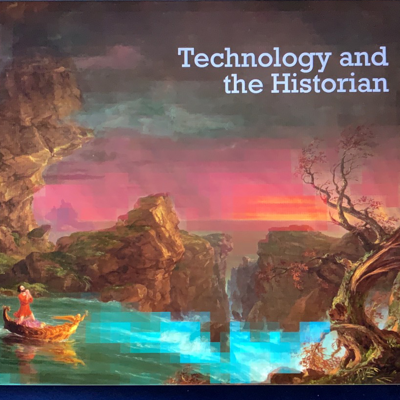
If you're teaching #historiography, I hope you'll consider sharing my book "Technology and the Historian" with students.
I wrote it to help them see how their discipline is evolving.
It's not just for 'digital' students!
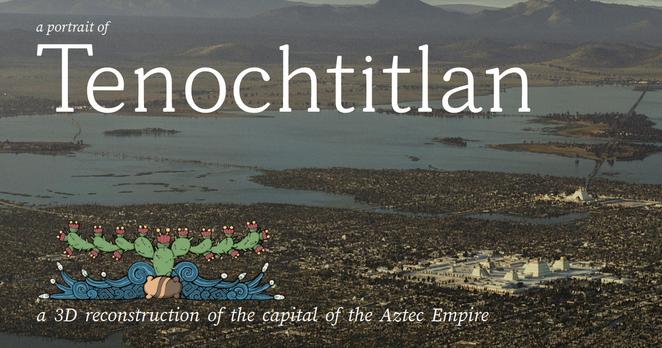
A stunning reconstruction of Tenochtitlan, the Aztec Empire capital, by Thomas Kole. Nowadays Mexico City. This should be used in schools and other places. #history #archeology #aztec #Tenochtitlan #Mexico #MexicoCity #blender #3D


"Technology is global, but our use of it is subtly local." 🌍
New Open Access Article: "Measuring #digitalhumanities learning requirements in Spanish & English-speaking practitioner communities"
TLDR: where we live affects what DH skills we want to learn. If you build learning resources in DH, you should be aware of those differences.
https://link.springer.com/article/10.1007/s42803-023-00066-x

Technology is global, but our use of it is subtly local. Digital scholarship in the humanities is no different. Where one is doing digital scholarship affects the types of methods and tools one will find most fruitful for humanities research. This paper considers global variations in digital humanities tool demand, by comparing broad patterns in digital skill-seeking through Programming Historian tutorial web traffic data. Programming Historian is a multilingual open learning resource publishing digital humanities tutorials in four languages. Its tutorials have played an important role for scholars seeking to learn about new tools and skills in digital humanities. Drawing on a unique dataset of 3.7 million visitors to Programming Historian between May 2019 and May 2022, this paper looks for patterns of regional use to identify skills most and least in demand in certain parts of the world. It does so through a pair of case studies that look at the top three national sources of anonymised web traffic to the English-language publication (United States, India, United Kingdom) and Spanish-language publication (Spain, Mexico, Colombia). The resultant conclusions identify key differences in skill-seeking both across the language divide (English / Spanish) and in different countries, some of which can be explained by cultural, economic, and bureaucratic factors. The paper concludes that while the specific variations of need will evolve, they will continue to exist, and digital humanities educators should adopt practices that acknowledge those differences and make space for local experts to define and best serve those needs.


 Gabi Wong

 malducin