Last preparations for the DiMEN Fellowship Lecture 2023 today. Edmund Terem Ugar is going to talk about the significance of african relational moral theories for digital medical ethics.
This is gonna be awesome!
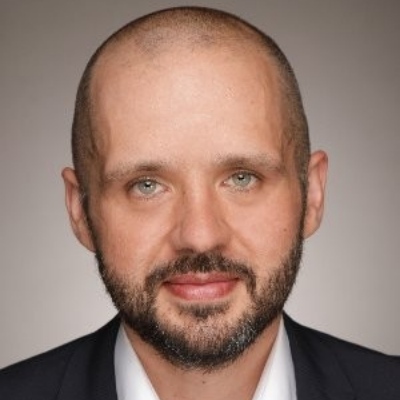
Joschka Haltaufderheide
- 362 Followers
- 535 Following
- 36 Posts
Philosopher and medical ethicist. Bio- and health technologies. Coordinator of AEM working group Health & Digitization. University of Potsdam | FGW Brandenburg
#Bioethics community, please welcome Niklas Ellerich-Groppe @ellerich-groppe.bsky.social
Nice, having you here, Niklas. Check Out this list of feeds to connect to the science community

BlueSky Science-Related Feeds
Sheet1 Likes,Name (Click to visit feed),Tags,Contact to ask to be added to contributor list 11,<a href="https://bsky.app/profile/did:plc:ftnzzw4cnon2pzpw7i5m2xu7/feed/aaaiqnkwsgsz6">#AI&HCI</a>,#HCI, #ArtificialIntelligence, Artificial Intelligence, Human-Computer Interaction 22,<a href="https:/...
Die Tuskegee Syphillis Studie ist wahrscheinlich eines der häufigsten (und schockierendsten) Beispiele die auch in der medizinethischen Lehre immer wieder verwendet werden. Die Studiendokumente sind nun online verfügbar:
https://www.cdc.gov/tuskegee/index.html
📣📣 DiMEN Fellowship 2024 Call
❓ You are a phd-candidate or post-doc
❓ You work on ethical questions and digital health
❓ You have this cool project in mind
Apply for the DiMEN Fellowship 2024
✅ 1 - 3 month
✅ fully funded
✅ in Potsdam or Tübingen
http://fellowship.digitalmedicalethics.net
#ethics #EthicsInAI #technologyEthics #MedicalEthics #digitalhealth

Welcome @klinglercorinna.bsky.social. Nice having you arround.
*checks door, looks up and down hallway*
yap, I think we are almost complete...sooooo
*checks door, looks up and down hallway*
yap, I think we are almost complete...sooooo
Exited to see the scientific community growing over here. Welcome @denniskraemer.bsky.social, @chriswoop.bsky.social, @simonlohse.bsky.social and @roto-rub.bsky.social
There are some interesting feeds you might want to check.
https://docs.google.com/spreadsheets/d/1tJw1r_Dif9AN6lVNNaZ-nwDdbM7tPemobo5_S2aEl_U/edit?usp=sharing
credits to @markrubin.bsky.social

Look what I have been working on lately.😁
We are preparing a new Call for our DiMEN Fellowship in Potsdam or Tübingen. More info soon.
#Bioethics #Medicalethics #philtech #philsky
We are preparing a new Call for our DiMEN Fellowship in Potsdam or Tübingen. More info soon.
#Bioethics #Medicalethics #philtech #philsky
Very happy to see this finally getting published. Data from our expert interviews regarding smartphone contact tracing apps during the pandemic.
https://doi.org/10.2196/45549
Thanks to my colleague, Dennis Krämer
https://doi.org/10.2196/45549
Thanks to my colleague, Dennis Krämer

Smartphone Apps for Containing the COVID-19 Pandemic in Germany: Qualitative Interview Study With Experts Based on Grounded Theory
Background: Smartphone apps, including those for digital contact tracing (DCT), played a crucial role in containing infections during the COVID-19 pandemic. Their primary function is to generate and disseminate information to disrupt transmissions based on various events, such as encounters, vaccinations, locations, or infections. Although the functionality of these apps has been extensively studied, there is still a lack of qualitative research addressing critical issues. Objective: We will demonstrate that the use of DCT presents a challenge due to the tension between continuous health monitoring and uncertainties related to transparency and user sovereignty. On one hand, DCT enables the monitoring of various risk factors, including data-based calculations of infection probabilities. On the other hand, continuous risk management is intertwined with several uncertainties, including the unclear storage of personal data, who has access to it, and how it will be used in the future. Methods: We focus on the German “Corona-Warn-App” and support our argument with empirical data from 19 expert interviews conducted between 2020 and 2021. The interviews were conducted using a semistructured questionnaire and analyzed according to the principles of grounded theory. Results: Our data underscores 3 dimensions: transparency, data sovereignty, and the east-west divide. While transparency is considered an essential foundation for establishing trust in the use of DCT by providing a sense of security, data sovereignty is seen as a high value during the pandemic, protecting users from an undesired loss of control. The aspect of the east-west divide highlights the idea of incorporating sociocultural values and standards into technology, emphasizing that algorithms and data-driven elements, such as distance indicators, encounters, and isolations, are also influenced by sociocultural factors. Conclusions: The effective use of DCT for pandemic containment relies on achieving a balance between individual control and technological prevention. Maximizing the technological benefits of these tools is crucial. However, users must also be mindful of the information they share and maintain control over their shared data.
Wolfgang M. Schröder has joined Bluesky. Welcome, @faustiii.bsky.social.
Couldn't resist...
https://huggingface.co/spaces/multimodalart/LoraTheExplorer
IKEA Instructions to Digital #Medicalethics. Really like the second box on the left😀
