Steve Byrnes

35 Followers
15 Following
65 Posts
The 8th and final post of my “Intuitive Self-Models” series is out! “Rooting Out Free Will Intuitions” https://www.lesswrong.com/posts/JLZnSnJptzmPtSRTc/intuitive-self-models-8-rooting-out-free-will-intuitions
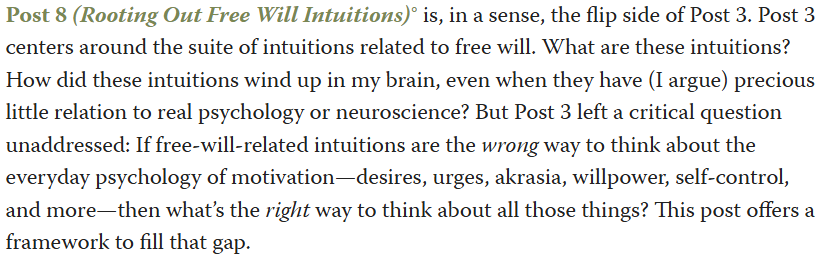
[Intuitive self-models] 8. Rooting Out Free Will Intuitions — LessWrong

Back in Post 3, I argued that the way we conceptualize free will, agency, desires, and decisions in the “Conventional Intuitive Self-Model” (§3.2) bears little relation to what’s actually happening in the brain. For example, for reasons explained in detail in §3.3 (brief recap in §8.4.1 below), “true” desires are conceptualized in a way that makes them incompatible with having any upstream cause. And thus …
Post 7 of my 8-part “Intuitive Self-Models” series: “Hearing Voices, and Other Hallucinations” https://www.lesswrong.com/posts/k8uMmw45k3qp8LPNc/intuitive-self-models-7-hearing-voices-and-other
[Intuitive self-models] 7. Hearing Voices, and Other Hallucinations — LessWrong

The main thrust of this post is an opinionated discussion of Julian Jaynes’s The Origin of Consciousness in the Breakdown of the Bicameral Mind in §7.4, and then some discussion of how hallucinations and delusions arise from schizophrenia and mania (§7.5), and from psychotic depression and BPD (§7.6). But first—what exactly does this have to do with intuitive self-models? A whole lot, it turns out! …

Post 6 of my 8-part “Intuitive Self-Models” series: “Awakening / Enlightenment / PNSE” https://www.lesswrong.com/posts/GvJe6WQ3jbynyhjxm/intuitive-self-models-6-awakening-enlightenment-pnse
[Intuitive self-models] 6. Awakening / Enlightenment / PNSE — LessWrong

I do have meditation experience—in my lifetime, I have probably logged as much as *several hours* of total time spent meditating! And I was keeping up my meditation practice until as recently as 2007! OK fine, obviously I won’t be speaking from personal experience here. But I will offer some opinions anyway, with pretty low confidence all around.

Post 5 of my 8-part “Intuitive Self-Models” series: “Dissociative Identity Disorder, a.k.a. Multiple Personality Disorder” https://www.lesswrong.com/posts/6bW5uJ325JxHYqMFr/intuitive-self-models-5-dissociative-identity-multiple
[Intuitive self-models] 5. Dissociative Identity (Multiple Personality) Disorder — LessWrong

Dissociative Identity Disorder (DID) (previously known as “Multiple Personality Disorder”) involves a person having multiple “alters” (alternate identities), with different preferences and (in some cases) different names. A DID diagnosis also requires some nonzero amount of “inter-identity amnesia”, where an alter cannot recall events that occurred when a different alter was active. For example, DSM-V talks about patients “coming to” on a beach with no recollection of how they got there. …

Post 4 of my 8-part “Intuitive Self-Models” series: “Trance” https://www.lesswrong.com/posts/QAjmr323LZGQBEvd5/intuitive-self-models-4-trance
[Intuitive self-models] 4. Trance — LessWrong

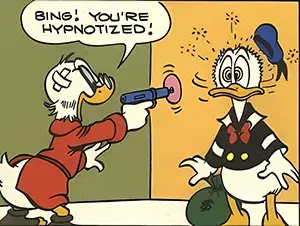
“Trance” is an umbrella term for various states of consciousness in which “you lose yourself”, somehow. The first kind that I learned about was hypnotic trance, as depicted in the media.…

Post 3 of my 8-part “Intuitive Self-Models” series: “The Homunculus” https://www.lesswrong.com/posts/7tNq4hiSWW9GdKjY8/intuitive-self-models-3-the-homunculus
[Intuitive self-models] 3. The Homunculus — LessWrong

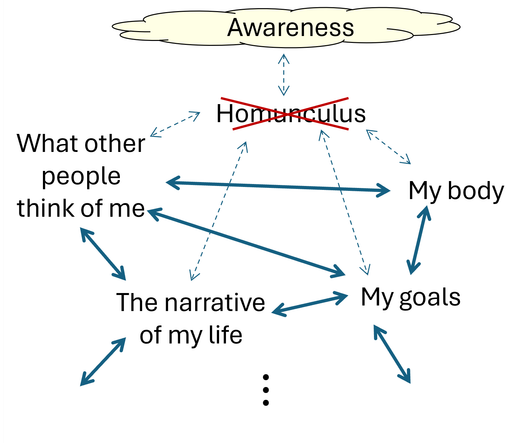
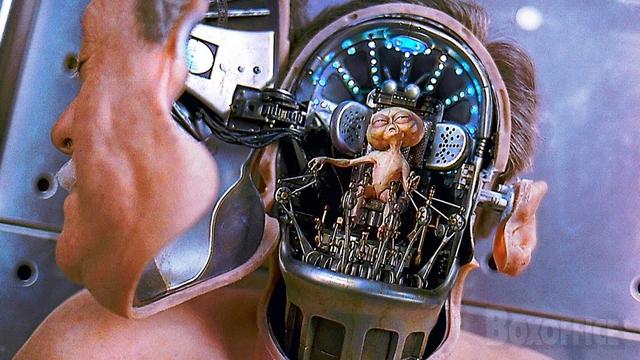
So far in the series, Post 1 established some foundations about intuitive self-models in general, and then Post 2 talked about the specific intuitive self-model concept “conscious awareness”. Now we’re ready to meet the protagonist starring in (most people’s) intuitive self-models—the mental concept that is conceptualized as being the root cause of many important mental events, especially those associated with “free will”. It’s the intender of intentions! It’s the decider of decisions! It’s the will-er of willing! Following Dennett, I call this concept: “the homunculus”. …

Post 2 of my 8-part “Intuitive Self-Models” series: “Conscious Awareness” https://www.lesswrong.com/posts/73xBjgoHuiKvJ5WRk/intuitive-self-models-2-conscious-awareness
[Intuitive self-models] 2. Conscious Awareness — LessWrong

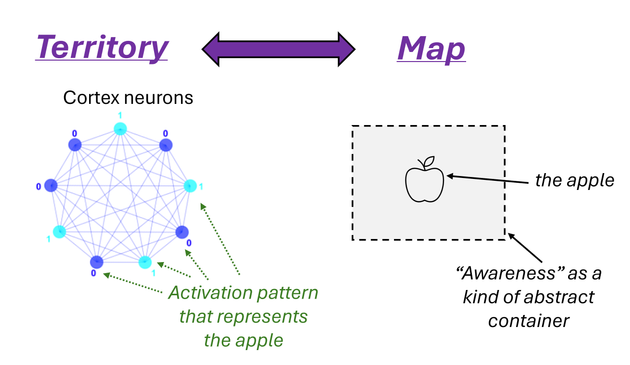
The previous post laid some groundwork for talking about intuitive self-models. Now we’re jumping right into the deep end: the intuitive concept of “conscious awareness” (or “awareness” for short). Some argue (§1.6.2) that if we can fully understand why we have an “awareness” concept, then we will thereby understand phenomenal consciousness itself! Alas, “phenomenal consciousness itself” is outside the scope of this series (§1.6.2). Regardless, the “awareness” concept is centrally important to how we conceptualize our own mental worlds, and well worth understanding for its own sake.…

New 8-post series on “intuitive self-models”! I’ll be attempting to explain what’s the deal with consciousness, free will, hypnotism, enlightenment, hallucinations, flow states, dissociation, akrasia, delusions, and more!

Post 1 of the series, “Preliminaries”, covers the basic idea:
• The brain has a predictive (a.k.a. self-supervised) learning algorithm.
• It builds generative (“intuitive”) models.
• Some of those models are of the brain algorithm itself! https://www.lesswrong.com/posts/FtwMA5fenk

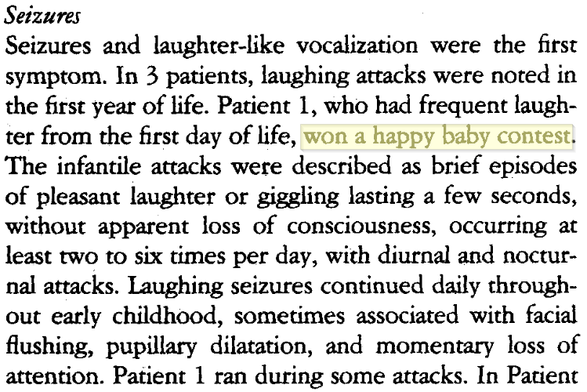
#LifeProTip: Want to win a “happy baby contest”? There’s a rare, dangerous medical condition that’s perfect for that!
Blog post: “Munk AI debate: confusions and possible cruxes” https://www.lesswrong.com/posts/LNwtnZ7MGTmeifkz3/munk-ai-debate-confusions-and-possible-cruxes
Munk AI debate: confusions and possible cruxes - LessWrong

There was a debate on the statement “AI research and development poses an existential threat” (“x-risk” for short), with Max Tegmark and Yoshua Bengio arguing in favor, and Yann LeCun and Melanie Mit…