https://scalibq.wordpress.com/

@Scali
- 19 Followers
- 34 Following
- 159 Posts

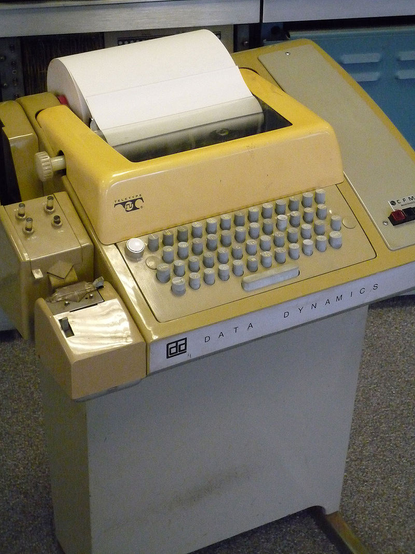
@ChrisWarwick @b0rk Yes, it was my first printer (on a C64 that is). My dad brought it home from work, they were getting rid of it. But those things were originally used to interface with AT&T UNIX machines, among others. Character displays came later.
 Kate "K8-bit" Lorimer
Uncool? Pffft. Impossible when it had components called Paula, Agnus, and Denise.
https://www.theguardian.com/games/2024/apr/26/my-undying-love-for-the-painfully-uncool-amiga
@foone PCjr has composite out.
In fact, IBM even sold an RF modulator, so you could hook it up to your TV (in the days before composite input was common).
That modulator can be retro-fitted to the header on CGA btw. IBM never produced that one, even though the header is there.
The 5155 abuses the header to get the composite signal for the internal monitor.
In fact, IBM even sold an RF modulator, so you could hook it up to your TV (in the days before composite input was common).
That modulator can be retro-fitted to the header on CGA btw. IBM never produced that one, even though the header is there.
The 5155 abuses the header to get the composite signal for the internal monitor.
 Nina Kalinina
Thanks to the orange site, I learned about XDC video player that runs on XT machines. Time to watch Frieren on CGA~
@b0rk Yes, I would say that 32-bit integer is most appropriate in most cases... Some exceptions are pointers/large indices into memory/data/files/etc, and timestamps.
For floats, 32-bit floats effectively only have 24-bit precision because of the mantissa, which makes you run into problems quickly if you don't know what you're doing.
32-bit is fine for realtime graphics, image processing, audio etc, but limited for most other stuff.
