You'll find me more often i n⤵️

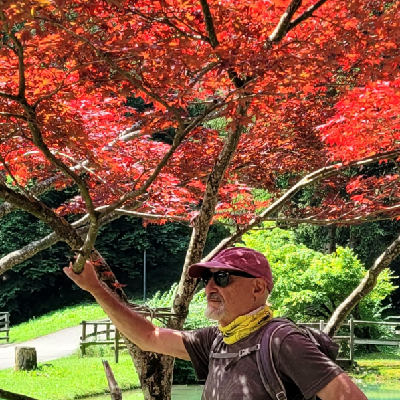
Epistemological Therapist
https://www.uib.no/en/persons/Silvio.Oscar.Funtowicz
Post-Normal Science:
https://en.m.wikipedia.org/wiki/Post-normal_science
Extended Peer Communities:
https://en.wikipedia.org/wiki/Extended_peer_community
‘Post-normal science’ () points to plurality, diversification & potentially incommensurable perspectives, breaking
up expert monopolies over ‘science’ & the articulation of desirable transformations. The question of what to sustain or transform becomes more difficult to collect, assemble, synthesise & ‘integrate’.
@sumingkhoo
https://www.elgaronline.com/edcollchap/book/9781802207835/book-part-9781802207835-12.xml

This chapter considers complex pressures on disciplinary ‘normal science’, globalised higher education (HE) and its autonomous, public, and democratic dimensions. It argues for research and education to foster debate, resistance, and ‘habitation’, not simply ‘producing knowledge’, but cultivating ethical integrity and public good. Addressing key transdisciplinary themes of integration and emergence, the discussion centres critically insurgent, intersectional struggles that historically challenged established knowledge, leading to the emergence of interdisciplinary studies. Questions of academic freedom, integrity, and social sustainability are explored, alongside the principles of integration, variance and emergence. These are related ‘higher’ and ‘obstinately educational’ aspects of HE and possibilities to critique, delay or refuse neoliberalism’s transformative project. Educative processes exceed instrumental purposes, resisting immediate societal demands to allow for learning. The discussion highlights the importance of open-ended learning, values and ethics. Epistemic responsibility countermands neoliberal imperatives, existential threats to democracy and epistemic cynicism with inclusive requirements to seek the common interest of human dignity in healthy environments for all.
“Many of the scientific (and some of the educational) practices we observe in our studies have a strong flavouring of what can be called ‘post-normal science’ (). They are practices in which epistemic uncertainty combined with a need for urgent action make it imperative to bring together scientists, educators and other stakeholders in discussing and resolving ways to proceed.”
https://link.springer.com/chapter/10.1007/978-3-031-35411-3_4

In this chapter we draw upon our program of research into interdisciplinary science and education to explore some relations between postdigital research and the construction of locally-useful design knowledge. We introduce the Activity-Centred Analysis and Design...
Researchers need to accept that solving complex conservation problems often requires a “post-normal” science (sensu Buschke et al., 2019; Funtowicz & Ravetz, 1993; Rose, 2018), which is “context-sensitive” (Nowotny et al., 2001), problem-focused and contingent on bringing multiple ways of knowing together (e.g. combining explicit scientific facts and tacit knowledge based on an individual's experiences) to deliberate and negotiate meaning.
Prioritizing democratic dialogue and shifting away from top-down policymaking will not be easy. In a society as large and as varied as ours, there will always be the temptation to outsource contentious decisions to supposedly neutral authorities.
https://harpers.org/archive/2023/08/doctors-orders-jason-blakely/
"When questions of ethics and motivations are not considered critically, and perhaps publicly, individual engineers may get the sense that the grace of the enlightened swan is not for them."
https://issues.org/creative-intolerance-venice-biennale-madhavan/
"When questions of ethics and motivations are not considered critically, and perhaps publicly, individual engineers may get the sense that the grace of the enlightened swan is not for them."
https://issues.org/creative-intolerance-venice-biennale-madhavan/
 danmcquillan
 Su Ming Khoo
