A new Dr. was born!
Congratulations, @julipeale, and good luck in your new position with @YergeauE.
Thanks to @LuedersLab @SaudiDaudi for being such great reviewers. It was fun hosting you here.
Also, thanks, @m_wutkowska, for the pictures.
New collaborative publication in @DesalinationJ showing bacterial succession and growth of Actinobacteria at the expense of Proteobacteria on a reverse-osmosis biofilm using DNA-SIP
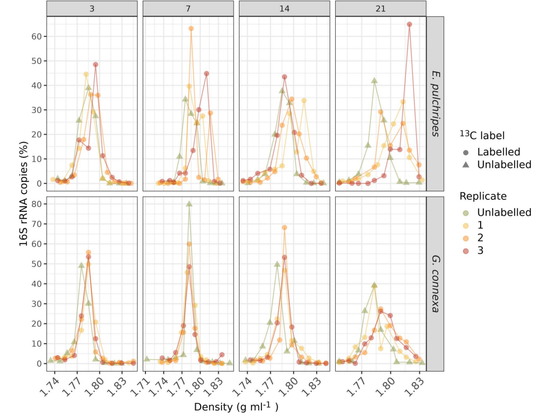
https://www.sciencedirect.com/science/article/pii/S0011916424003692Stable isotope probing showed us very slow labelling of the gut bacteria and somewhat faster for fungi
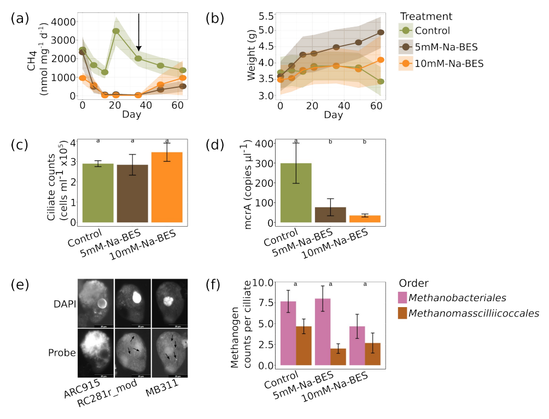
Also suppressing CH4 production did not affect them much, and their gut methanogens survived and revived after impression was eliminated.
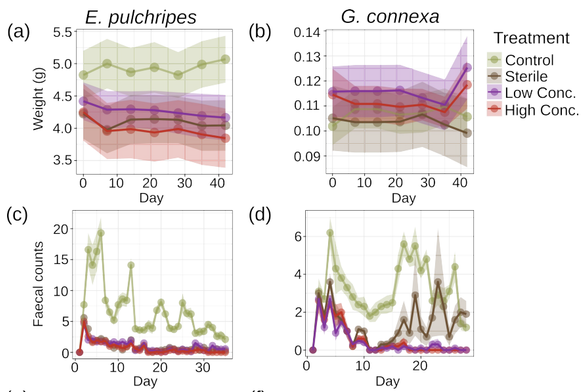
Antibiotics nearly eliminated their microbiota but had no effect on their weight.
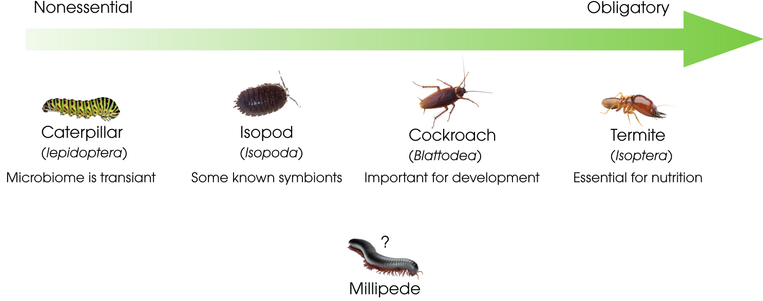
We continue our work with millipedes. Here, we wanted to see how dependent millipedes are on their gut microbiome. Do they fully depend on it like termites, or is it expendable, like in caterpillars?
Lastly, we found low virus-to-microbe-ratios and a prevalence of lysogenic viruses, supporting a Piggyback-the-Winner dynamic in both hosts.
More exciting, we show that the most common auxiliary metabolic genes (AMGs) found in the viruses are related to chitin degradation (GH 18 and 19). This gives further support to our conclusions from our previous Microbiome paper.
We continue our work with millipedes. Here, we conducted one of the only comprehensive surveys of DNA and RNA viruses in arthropod guts. We show that viral communities are different between the species and that this reflects the differences in the gut microbiome.
As the title says, however, we found many of the metabolic functions to be shared. One big surprise was that the most common secreted glycoside hydrolases (GHs) were targeting fungal cell walls and not cellulose.