@PerconaBytes

6 Followers
4 Following
6 Posts
Databases are hard. We make them faster. ⚡ Deep dives on optimization, open source advocacy, and expert peer support. Stay portable: http://percona.community

Two teams. Same problem. Built independently.

pginbox.dev is joining hackorum.dev — one project to make the pg-hackers mailing list actually readable. This is what open source is supposed to feel like. https://percona.community/blog/2026/05/13/two-projects-one-mission-hackorum-and-pginbox-join-forces/ #Postgres
#Community

Two projects, one mission - hackorum and pginbox join forces

Last week, Zsolt and I jumped on a call with someone who had been building something remarkably similar to what we had been working on, completely independently. That someone is Jack Bonatakis, the creator of pginbox.dev, and that call turned into one of the most energizing conversations we’ve had since launching hackorum.dev. Two builders, one problem When we launched Hackorum back in January, the goal was simple but important: make the pg-hackers mailing list actually readable. The list is the heartbeat of PostgreSQL core development, patches are proposed, debated, iterated on, and committed entirely through it. But the interface? Decades-old email threads. Dense, fast-moving, and not exactly welcoming to newcomers or even experienced contributors trying to manage the volume.

28% of organizations use open source but contribute nothing back.
Not a moral problem. A business one.
Non-contributors spend ~$670k/year building internal workarounds for things upstream already shipped & hear about breaking changes last.
https://devops.com/open-source-contribution-is-about-more-than-just-altruism/ LC

If your innodb_redo_log_capacity is set to a % of RAM, you're guessing.

Redo sizing is about LSN growth rate, not memory. Measure 30–60 minutes of peak redo generation and size for that.

What's your current capacity — and do you know your redo/hour?

https://percona.community/blog/2026/05/02/innodb-redo-log-sizing-stop-guessing-start-measuring/ LC

InnoDB Redo Log Sizing: Stop Guessing, Start Measuring

Introduction Many MySQL configurations inherit redo log sizing from defaults, aging blog posts, or configuration folklore. innodb_redo_log_capacity gets set once… and then quietly fades into the background. But redo log capacity directly shapes how efficiently MySQL absorbs writes, manages checkpoint pressure, and handles burst-heavy workloads. Set it too low, and aggressive flushing can throttle throughput. Set it too high, and crash recovery can become painfully long. Redo logs are more than crash insurance.

@freenandes Hello :) any suggestions on who we should be following now we're on here :) Thanks LC
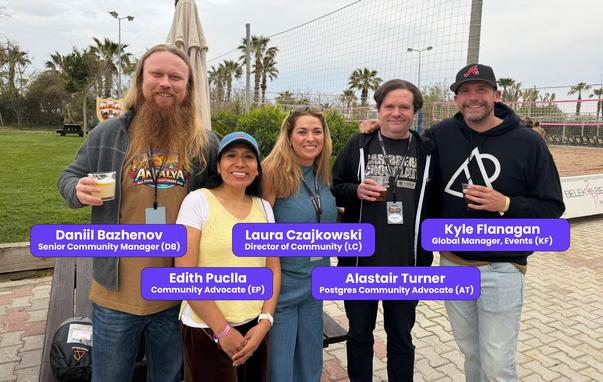
Meet the team behind this account. Five of us, one shared inbox, and a habit of turning up at every database conference going. Each post is signed with our initials so you know who you're talking to.
https://percona.community/blog/2026/05/07/meet-the-percona-community-team/
— LC
If you've used Claude Code or Codex for real work, you know the choice: babysit every command, or hand the agent your SSH key and ssh-agent and pray.
Zsolt Parragi's setup: one Ansible-driven dotfiles repo that builds his laptop, his containers, and throwaway VMs identically. Mount the project, skip the .env with secrets, run the agent in a cell that looks exactly like home.
https://percona.community/blog/2026/05/05/how-i-stopped-babysitting-my-coding-agent-with-dotfiles/