Great job Maja Peng and Ludmila Kerhartová presenting our work on 🐭 vocal recognition 🎶 at the “Ethology 2026” conference in Grünau 👏. We also listened to Rosemary and Peter Grant giving amazing talks 🐦⬛. What an inspiration!


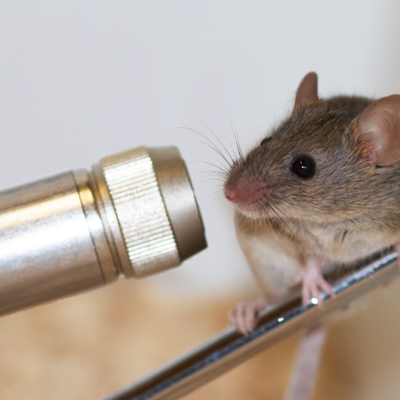


Before… and during the Vetmed Uni Open Door Day!
So very rewarding teaching children about the ultrasonic songs of mice and seeing the kids’ (and their parents’ 😉) faces upon hearing them for the first time (which we made audible for human ears). Come and visit us next time to see how we are using AI to decode the complex acoustic signals of mice. Thanks to Maja Peng and Bettina Wernisch for their great teamwork!


Background It has been suggested that the expression of males’ secondary sexual traits provides reliable indicators of their sperm traits, predicting positive correlations between pre- and post-copulatory traits (Fertility Indicator Hypothesis). Yet, it has also been suggested that males face life-history tradeoffs between investing into primary versus secondary sexual traits, predicting negative correlations (Sexual Allocation Tradeoff Hypothesis). These two hypotheses are not mutually exclusive when males’ sexual traits are condition-dependent and high-quality males are better able to invest into both pre- and post-copulatory traits than low-quality males. To test these hypotheses, we manipulated the genetic quality of wild-derived male house mice by experimental inbreeding and first tested whether inbreeding affects primary or secondary sexual traits (condition-dependent expression). We then tested whether pre- and post-copulatory traits are correlated. We recorded courtship behavior and vocalizations of the males during female contact and measured males’ reproductive organs, sperm quality, and the expression of four genes associated with spermatogenesis. Results Inbreeding did not reduce male courtship vocalizations, though it altered their vocal repertoire and reduced other courtship behaviors. Inbreeding negatively impacted relative testes mass and sperm quantity and quality, after two generations of inbreeding. We found no consistent correlations between pre-and post-copulatory traits, either positive or negative, regardless of inbreeding. Conclusions Our results indicate that inbreeding impacted the expression of primary and secondary sexual traits in wild-derived house mice, which is the first such evidence to our knowledge, but we found no support for either the Fertility Indicator or the Sexual Allocation Tradeoff Hypotheses.
Looking forward to it:
🎵 🐭 🎶 🔜
Next COST_TEATIME #animalresearch webinar will take place already in two days - join us on March 13 (2 pm CET) for a presentation "Courtship vocalisations of house mice are highly dynamic and correlate with copulatory success" by Dustin Penn and Sarah Zala
More info and registration:
https://mailchi.mp/878e420349f5/teatime-webinar-march-13?e=8c4a17256c
TEATIME Webinar - March 13th, 2 PM CET
mailchi.mp


