The Mayor's Office released a beautiful 5-minute documentary on the artist Lorenzo Pace, who created the sculpture at the African Burial Ground in Lower Manhattan, for Juneteenth.
https://www.youtube.com/watch?v=IoUBK1tIJIM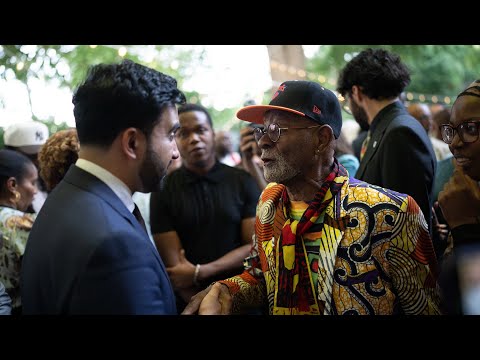
Triumph of the Human Spirit
My MacDowell colleague Katy Scoggin's film about her interactions with evangelical creationists and paleontologists, Flood, will show in NYC June 19-25, with Q&A with guests every showing! Laura Poitras, who made Citizen 4 and other movies, and composer Stuart Bogie will be the guests on Friday, June 19. Katy's mom and therapist will join her Saturday. Sunday it's Macky Alston and "Queer Families." Then Wednesday it's Yance Ford, and on Thursday, my personal fave, Charles King of Housing Works!
Here is a gift link to my new paper with Samantha Majic, "Re-thinking vulnerability: Research fraud and bureaucratic harm in community-engaged online research," about our experience with fraud in research, and the bureaucratic response. Here is a gift link:
https://read.dukeupress.edu/nps/article/doi/10.1215/07393148-12325114/410638/Sex-Workers-Online-Platforms-and-DeplatformingA?guestAccessKey=0f00425a-1cef-4548-ae72-77bd562d2440Samantha Majic and I have another paper out, "Re-thinking vulnerability: Research fraud and bureaucratic harm in community-engaged online research," about our experience with fraud in research, and the bureaucratic response. Here is a gift link:
https://read.dukeupress.edu/nps/article/doi/10.1215/07393148-12325114/410638/Sex-Workers-Online-Platforms-and-DeplatformingA?guestAccessKey=0f00425a-1cef-4548-ae72-77bd562d24404/4: To illustrate this argument, we demonstrate how university bureaucratic practices and research fraud may variously harm both participants and researchers by undermining community collaborations, data collection, and researcher safety and well-being. In conclusion we suggest best practices for online research and for universities, so they may better protect researchers and the integrity of such studies.
3/4: Based on our encounters with university bureaucracies and research fraud over the course of this project, we argue broadly that vulnerability is not a fixed, inherent attribute of certain research participants; instead, it emerges through various relations and events in the field, and all parties involved in a research project may experience it.
2/4: making it difficult for researchers to discern relevant best practices. To further understandings of vulnerability here, we reflect in this article on our experience with a mixed-method project, where we partnered with sex workers across the United States to study their experiences with the online platforms they use to facilitate and conduct their work.
Abstract 1/4: Vulnerability – understood broadly as susceptibility to harm – factors into many social science research projects, including those that are qualitative, involve collaborations between scholars and members of the group under study, and engage with online research techniques and technologies. However, guidance for how researchers and communities may understand, navigate, and mitigate vulnerability in such projects is often scattered across disciplines,
Samantha Majic and I have another paper out, "Re-thinking vulnerability: Research fraud and bureaucratic harm in community-engaged online research," about our experience with fraud in research, and the bureaucratic response.
https://journals.sagepub.com/doi/abs/10.1177/14687941241297417My latest paper, with Marlise Richter and Jantina De Vries, argues that the drastic cuts to global health funding initiated by the Trump Administration in January 2025 require careful consideration of what ‘solidarity’ with the most marginalised entails and bold action. "Demanding solidarity, not salvation: sex work and global health" in BMJ Global Health.
https://gh.bmj.com/content/11/5/e022050 Everyone can access it.

Demanding solidarity, not salvation: sex work and global health
There is increasing attention paid to solidarity in global health, but its substance and definitions remain contested. We explore the tensions between global health institutions’ historic approaches to sex work, their commitment to health and human rights and how these are connected to or disconnected from solidarity. We foreground the protracted and incomplete evolution from international health approaches to sex workers as spreaders of pathogens that should be punished, to sex work health programmes that are situated within human rights principles. Thus, substantial resources and material changes to laws, policies and programmes are required to action claims of ‘standing in solidarity’ with sex workers. We argue that the drastic cuts to global health funding initiated by the Trump Administration in January 2025 require careful consideration of what ‘solidarity’ with the most marginalised entails and bold action.