 felix stalder
This is a very impressive visualization of one of the biases of AI, the origin of data sets. This, quite reasonably i think, assumes that there is a connection between the place of origin of and the information contained in a data set.
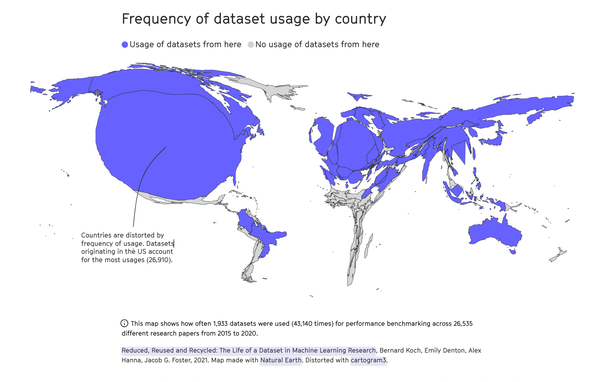
This is a very impressive visualization of one of the biases of AI, the origin of data sets. This, quite reasonably i think, assumes that there is a connection between the place of origin of and the information contained in a data set.
I've done a lot of newspaper research, but up to now via traditional methods (i.e. going through page by page) combined with word searches in digitised collections. This excellent article from @JoshBlack gives some great insight into more powerful options for using historical newspapers.
(It also makes clear how much work is involved...)
New Publication: Creating Specialised Corpora from Digitized Historical Newspaper Archives | Joshua Wilson Black
https://joshua.wilsonblack.nz/post/digital-scholarship-in-the-humanities/

One of the promises of digital humanities for the ‘historical sciences’ is that we’ll be able to, in Tim Hitchcock’s words, shift from ‘piles of books’ to ‘maps of meaning’. That is, we’ll be able to produce high level representations of phenomena across large collections of text.

 John Carter Wood
 Tom Scheinfeldt