DinoCarpentras

@JustaNormalDino
10 Followers
96 Following
49 Posts

Postdoc at ETHz - Associate Editor HSScomms

Exploring Opinion Dynamics and Collective Intelligence with social simulations and belief networks.

Do we really need representatives in a democracy? Our paper shows how systems based on collective intelligence could be used by citizens to identify and find solutions to their problems even at a national scale!

https://www.researchgate.net/publication/397018149_The_Wisdom_of_the_Democratic_Crowd_Allowing_Collective_Intelligence_at_Massive_Scale

Today we have the first public event of the Special Interest Group on Strongly Empirical Modelling, with a talk from Bruce Edmonds titled: Towards inferring clusters of “cognitive models” from survey data. See you at 2pm CET!
https://ethz.zoom.us/j/66230792870
Join our Cloud HD Video Meeting

Zoom is the leader in modern enterprise cloud communications.

Zoom
Why do people prefer using statistical tests that nobody ever heard of instead of just bootstrapping? (I'm really asking, it's not a complaint or sarcastic or anything)
Wouldn't bootstrapping also make results more understandable?

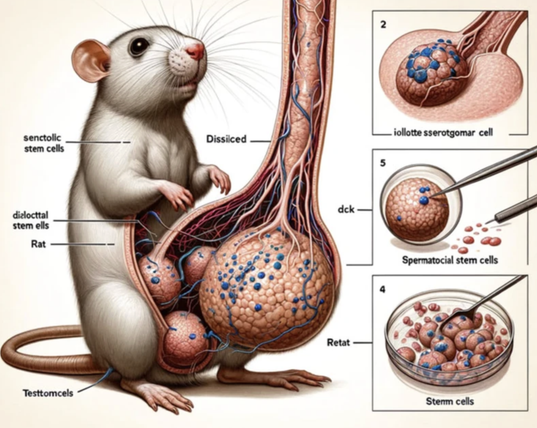
Another figure from a (now retracted) scientific publication. I'm not an expert, but I feel proportions may be a little off...

https://www.swissinfo.ch/eng/science/wrong-ai-generated-images-in-scientific-journal-put-a-strain-on-swiss-publisher-frontiers/73657004

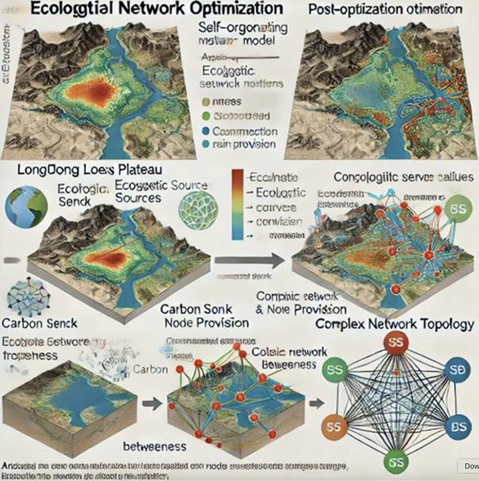
Yes, this is a real image from a scientific publication 😅

https://www.sciencedirect.com/science/article/pii/S0304380025001966

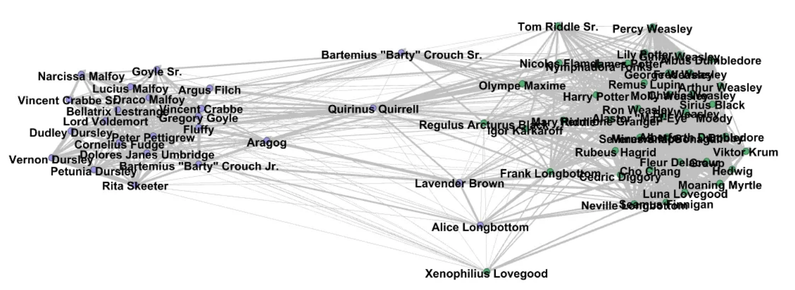
Some years ago I applied ResIN to a Harry Potter dataset. The more two people are similar (in terms of how they relate to other characters), the tighter their connection. As you can see, the HP world is heavily polarized.
But now my question is: why did I do something like that??

Apparently, ignoring all those predatory journals made me very popular with girls!

(btw, all these emails are from a single day)

To cite this meme:
Photoshop et al. (2025)

How can we develop a better understanding of Complex Attitude-Identity Systems (CAIS)? Here👇we introduce a theory of Belief Networks to explain how to accurately measure them. This will help us understand how beliefs connect, evolve and shape identity.

https://www.researchgate.net/publication/395098297_Belief_Network_Theory_A_conceptual_framework_for_studying_complex_attitude-identity_systems

Today, both Samuel Moor-Smith and I will give a presentation at the Social Simulation Conference. If you are interested in the validation of ABMs, their classes of equivalence and how psychometrics plays an important role, join us!