And the winner of the 2025 Frontiers of Knowledge FBBVA Award… is Philip Kitcher!


| Más: | www.hugoviciana.eu |
Diego E. Machuca’s Cambridge Elements on The Philosophy of Disagreement is still available to read for free online until December 30, 2024.
Just in time to prep for those lively holiday dinner debates!
https://www.cambridge.org/core/elements/disagreement/7666257A3D9E3B38EA6D243778DE7391

Science education is generally perceived as a key facilitator in cultivating a scientifically literate society. In the last decade, however, this conventional wisdom has been challenged by evidence that greater scientific literacy and critical thinking skills may in fact inadvertently aggravate polarization on scientific matters in the public sphere. Supporting an alternative “scientific update hypothesis,” in a series of studies (total N = 2087), we show that increased science’s epistemology literacy might have consequential population-level effects on the public’s alignment with scientific results. In one exploratory study and a pre-registered national online survey, we first show that understanding scientific epistemology predicts refusal of pseudoscientific beliefs and higher scores in a methodology of science test. We also find and replicate a propensity for epistemologically literate citizens to endorse the norm of belief updating and the communicated scientific consensus following both ideologically congruent and incongruent scientific results. Notably, after 2 months of first being presented with scientific results on politically controversial issues, a one standard deviation higher score in epistemological literacy is associated with a 14% increase in the odds of individuals switching their beliefs to align with the scientifically communicated consensus. We close by discussing how, on the face of ideological incongruity, a general understanding of scientific epistemology might foster the acceptance of scientific results, and we underscore the need for a more nuanced appreciation of how education, public comprehension of scientific knowledge, and the dynamics of polarization intersect in the public sphere.
A great read on history of science, art history and colonial history. If context is that which is scarce, this research adds much context to Hume’s infamous footnote, the portrait of Francis Williams, and newtonianism in the 18th century
https://www.lrb.co.uk/the-paper/v46/n22/fara-dabhoiwala/a-man-of-parts-and-learning

In this episode, we delve into induction and deduction and talk further about issues related to generalizability. Shownotes Popper, K. The Logic of Scientific Discovery. (1953). Hutchinson & Co. (Originally published in 1935) Yarkoni, T. (2022). The generalizability crisis. Behavioral and Brain Sciences, 45, e1. Mook, D. G. (1983). In defense of external invalidity. American psychologist, 38(4), 379-387. Salmon, W. C. (1981). Rational Prediction. The British Journal for the Philosophy of Science, 32(2), 115–125. https://doi.org/10.1093/bjps/32.2.115 Reichenbach, H. (1938) [2006], Experience and Prediction: An Analysis of the Foundations and the Structure of Knowledge, Chicago: University of Chicago Press. Senn, S. (2007). Statistical issues in drug development (2nd ed). John Wiley & Sons. Ernst, M. D. (2004). Permutation Methods: A Basis for Exact Inference. Statistical Science, 19(4), 676–685. Bacon, F. (1620). Instauratio magna [Novum organum]. London: John Bill. Urbach, P. (1982). Francis Bacon as a Precursor to Popper. The British Journal for the Philosophy of Science, 33(2), 113–132.
After #BlueSky Crossposter 👆 stopped working for me, I found #Fedica, which has been crossposting to nearly 10 platforms (for free!):

Attached: 1 image This morning's post was sent via #Fedica. Fedica's free tier allows users to schedule posts on up to NINE #socialMedia platforms! 😳 Until today I was using the free #Buffer plan, which limits users to 3 platforms. 😒 You can learn more about Fedica at https://fedica.com?_by=byrdnick


 Francis Fukuyama

 Daniel Lakens
 Nick Byrd, Ph.D.
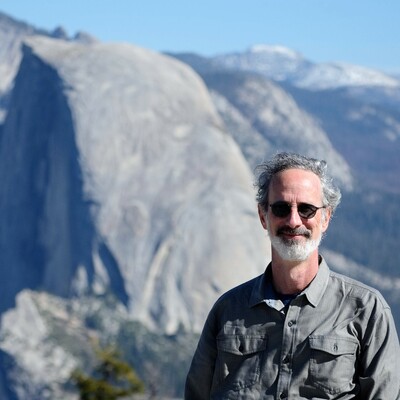 Peter Gleick
