Now doing science news on BlueSky @mkhochb.bsky.social
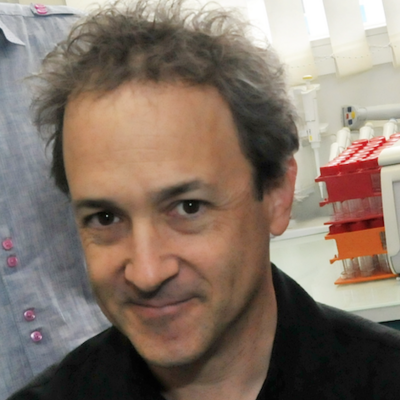
Michael Hochberg
- 120 Followers
- 0 Following
- 60 Posts
CNRS Research Director & Santa Fe Institute External Faculty - Founding Editor of Ecology Letters - Blogger - https://mehochberg.wixsite.com/blog
New silly blog post - https://mehochberg.wixsite.com/blog/post/unexpected-8-like-old

Unexpected 9: Like old
This came out of left fieldIt’s weirdEmbarrassingFrankly unbelievablePossible? Yes!I like old people!Well, some old people.This isn’t like me. My concept of old is grey, sallow, bitter, cold, bent over, diminished, sick, complaining. Dastardly. Death. Anti-positive, true, but don’t get me wrong – even if I avoid old like the plague, I have respect. But time flies. Evasion hones. Old scares. Stay away.That was pre-2023.2023 and 24 were the same except for one – as it then seemed – innocuous thin
A preview of Part 1 of my book "An Editor's Guide to Writing and Publishing Science" is freely available on Google Books https://shorturl.at/0xo93
If you like this preview, consider buying the book. No other book uses my writing approach, nor covers the world of scientific publishing based on expertise as the editor in chief of a major journal.
If you can't afford to buy the book, then contact me and I'll send it to you for free.

An Editor's Guide to Writing and Publishing Science
A good research paper is more than just a clear, concise, scientific expose. It is a document that needs to go beyond the science to attract attention. There are both strict and less definable norms for doing this, but many authors are unaware as to what they are or their use. Publishing is rapidly changing, and needs to be explained with a fresh perspective. Simply writing good, clear, concise, science is no longer enough-there is a different mind-set now required that students need to adopt if they are to succeed. The purpose of this book is to provide the foundations of this new approach for both young scientists at the start of their careers, as well as for more experienced scientists to teach the younger generation. Most importantly, the book will make the reader think in a fresh, creative, and novel way about writing and publishing science. This is an introductory guide suitable for advanced undergraduates, graduate students, and professional researchers in both the life and physical sciences.
I develop the idea that intelligence is a calculus of information. Some general equations, predictions and speculations. Comments welcome. https://www.preprints.org/manuscript/202404.0722/v1

A Theory of Intelligences
Intelligence is a human construct to represent the ability to achieve goals. Given this wide berth, intelligence has been defined countless times, studied in a variety of ways and represented using numerous measures. Understanding intelligence ultimately requires theory and quantification, both of which have proved elusive. I develop a framework – the Theory of Intelligences (TIS) – that applies across all systems from physics, to biology, humans and AI. TIS likens intelligence to a calculus, differentiating, correlating and integrating information. Intelligence operates at many levels and scales and TIS distils these into a parsimonious macroscopic framework centered on solving, planning and their optimization to accomplish goals. Notably, intelligence can be expressed in informational units or in units relative to goal difficulty, the latter defined as complexity relative to system (individual or benchmarked) ability. I present general equations for intelligence and its components, and a simple expression for the evolution of intelligence traits. The measures developed here could serve to gauge different facets of intelligence for any step-wise transformation of information. I argue that proxies such as environment, technology, society and collectives are essential to a general theory of intelligence and to possible evolutionary transitions in intelligence, particularly in humans. I conclude with testable predictions of TIS and offer several speculations.
The weight estimate of 1 teaspoon of a neutron star at 5.5 x 10^12 kilograms says that everything in our experience is empty space. I asked Google Bard, which says it doesn't know for sure but "thinks" humans are between 99.9999% and 99.999999999999% empty space. Speaking for myself

Forecasting Antimicrobial Resistance Evolution. We hope that this article will generate discussion about better dealing with the antibiotic crisis. Pdf available here:
https://a4e12b56-c2f5-4629-8c15-aaa8f367ab96.usrfiles.com/ugd/a4e12b_4b8ba64e4c194b099a0557b749a52429.pdf
https://a4e12b56-c2f5-4629-8c15-aaa8f367ab96.usrfiles.com/ugd/a4e12b_4b8ba64e4c194b099a0557b749a52429.pdf
How many of your haircut/hairstyle experiences do you really remember? Here are mine. https://mehochberg.wixsite.com/blog/post/barbershop-snippets

Unexpected 7: Barbershop Snippets
I didn’t expect to reflect on hair-cutting experiences until seeing the Colloquium by Barbara Thériault at the Wissenshaftskolleg zu Berlin on Tuesday the 24th of October 2023. Barbara’s presentation was in German, a language I unfortunately do not understand. Many of the questions were in English and so I was able to get some messages. Even if hair salons were just a device in Barbara’s talk, afterwards I began to whimsically revisit some of my long-forgotten and not-so-forgotten haircut memori
New unexpected post about place: Be Cause https://mehochberg.wixsite.com/blog/post/unexpected-8-be-cause

Unexpected 8: Be Cause
Each year the second floor of the Institute for Evolutionary Sciences at the University of Montpellier (ISEM) organizes a Christmas lunch. This year’s was on Friday, December 15th, and the custom is to have a raclette. My understanding is that raclette is a Swiss invention, combining characteristic cheeses together with cold-cuts (French = “charcuterie”) and vegetables (“legumes”). There are many versions and diversions of raclette, but the idea is to melt the cheese either together with the cha
Work with Simon Castillo and colleagues: "Metastatic cells exploit their stoichiometric niche in the network of cancer ecosystems" https://www.science.org/doi/10.1126/sciadv.adi7902