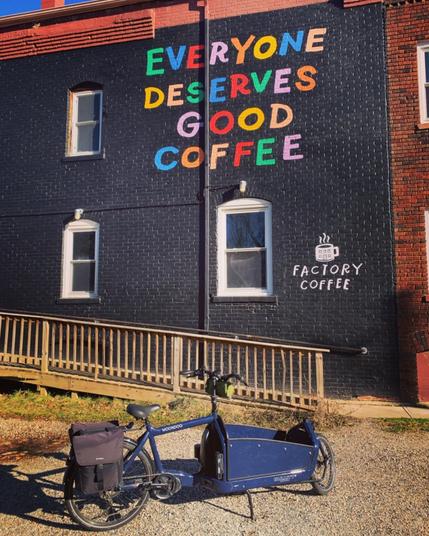
Night rides are rad!


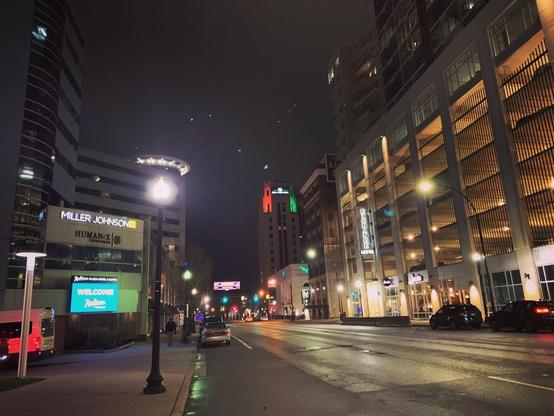
| Location | Kalamazoo, MI |
This article advocates for converting redundant street parking into biodiverse green space to promote depaving, canopy cover, and ecological connectivity in cities.

Nature-based solutions (NBS) are recognised as a means to address challenges such as heatwaves, flooding and biodiversity loss. Delivering these benefits at scale will require large areas of scarce urban land to be converted into green space. Here we show an approach by which cities can make substantial progress towards their sustainability targets using NBS, by converting redundant street parking into biodiverse green space. We demonstrate that up to half of street parking in our case study municipality (The City of Melbourne) could be accommodated in garages within 200 m, freeing up large areas for greening. Our modelling projects significant benefits in terms of tree canopy over, stormwater and ecological connectivity. These would represent strong progress towards a number of the city’s ambitious NBS targets. As many cities allocate extensive areas to both street parking and off-street garages, this approach to freeing up space for nature in cities is widely applicable.

After 22 years and 508 case studies, this new report shows that, contrary to popular belief, two-way bicycling on one-way streets is safe and suggests that “one-way streets should be evaluated to allow contraflow cycling” and “legislation mandating two-way cycling would improve cycling networks and routes.”
https://www.sciencedirect.com/science/article/pii/S000145752200330X?ref=cra_js_challenge&fr=RR-1