Editors’ Choice: OH in DH: Listening to Memory in the Age of the Digital https://digitalorientalist.com/2026/03/10/oh-in-dh-listening-to-memory-in-the-age-of-the-digital/

DHNow
- 61 Followers
- 34 Following
- 255 Posts
Editors’ Choice: Vibing Digital History https://jasonheppler.org/2026/03/09/vibing-digital-history/
Vibing Digital History | Jason A. Heppler
One thing I’ve been thinking about is a persistent critique—one I’ve expressed myself and think is completely valid—that code generated by Claude or Codex immediately becomes technical debt. That is, it’s tantamount to producing spaghetti or legacy code that you cannot understand because you did not write it (which, of course, is a similar concern I have about generative AI producing things like historiographical essays). But as my pal Lincoln Mullen just wrote, the barrier to entry for most things we do in digital history—building websites, creating maps, designing data visualizations, preparing data—can be reduced considerably. I’ve spent my career building these kinds of skills to do this kind of work, and now a machine can do them in a fraction of the time it takes me.1 Here’s an example.
Editors’ Choice: Transformers from Scratch https://www.brandonrohrer.org/transformers.html
CFP: Call for ELO Conference Hosts 2027 & 2028 https://eliterature.org/2026/03/call-for-elo-conference-hosts-2027-2028/
Event Announcement: LUSTRE/GLOW Workshop 6: Government Records and AI https://elaboratories.org/event/an-introduction-to-the-digital-humanities-climate-coalition-toolkit/

An Introduction to the Digital Humanities Climate Coalition Toolkit
On March 18 at 1:00 PM EDT, eLabs will host a webinar that invites researchers to explore questions around the environmental impact of digital humanities work. The session draws on the approaches and resources developed by the Digital Humanities Climate Coalition (DHCC), whose work includes the development of a toolkit designed to help individuals and organizations make informed digital choices and support the development of more sustainable research projects. Led by Christopher Ohge, this webinar will provide guidance on how to implement the toolkit in research projects.
Job Announcement: Lecturer I at University of Michigan-Ann Arbor https://apply.interfolio.com/183136
Report: What It’s Like to Be a Data Labeler Training AI https://www.youtube.com/watch?v=QH654YPxvEE&t=3s
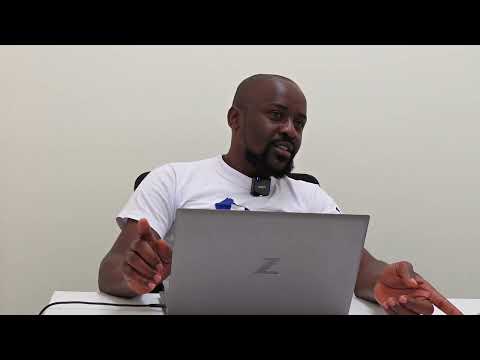
What It’s Like to Be a Data Labeler Training AI
Resource: AI for Cultural Heritage Hub (ArCH) https://www.lib.cam.ac.uk/research-institute/projects/arch
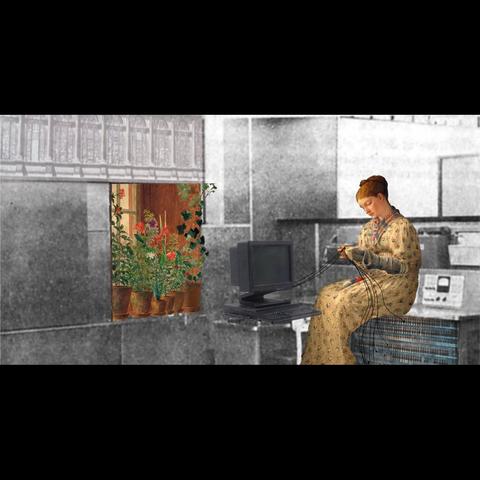
Resource: Waedeker: Wikipedia's knowledge in a handy Baedeker format https://waedeker.netzgewoelbe.com/
We are currently accepting applications for guest editors! Our editors are our eyes and ears in the global Digital Humanities landscape. To learn more and apply, visit https://digitalhumanitiesnow.org/editors-corner/guest-editors/