@ChristopherA Indeed. And this is the long-standing criticism by the security community of any proprietary technology. More eyes on a tech means more chances of finding the problems it has.
Together, we can ensure that the next generation of cryptographic semiconductors meets everyone’s needs, advancing the entire cryptography industry. Support our efforts to host these conversations & build this community by sponsoring us at
https://github.com/sponsors/BlockchainCommons/… [9/9]
We hold these Silicon Salon events quarterly, with our next one in April. We are planning now, and if you have a topic you'd like to present next quarter, let me know: pain points, architectures, secure boot & firmware, supply chains, threats & countermeasures, and more. [8/9]
Next week, join cryptographers & semiconductor manufacturers to discuss requirements for new silicon-logic-based cryptographic functionality & leveraging opportunities for semiconductor acceleration. January 18th, 9am-noon PT hosted online via Zoom. [7/9]
https://www.eventbrite.com/e/silicon-salon-3-tickets-492802494527Silicon Salon 3
Silicon Salon 3 unites semiconductor designers & cryptographers to review new silicon-based cryptographic functionality & acceleration.
The goal of the Silicon Salon community hosted by @BlockchainCommons is to bridge the gap between semiconductor manufacture and wallet design, between academia and real-world usage. Take a look at our archives to see what we've done so far. [6/9]
https://www.siliconsalon.info
The Silicon Salon
The Silicon Salon brings together the semiconductor and cryptography communities to talk about the future of semiconductor design that can support crypto.
Semiconductor designer Cramium (a division of CrossBar), working on the next generation of secure chips, desires to support MPC-based distributed key management (FROST, Threshold ECDSA, etc.), which is receiving insufficient hardware support and academic attention but is an important future.…[5/9]
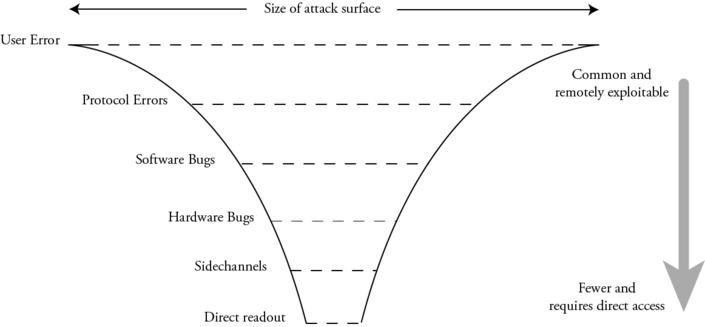
"The current NDA-heavy status quo for chips creates an analytical barrier that prevents us from determining how big the actual attack surface is. Without intimate knowledge of how the hardware is functions, there are important classes of software bugs we can’t analyze."…[4/9]
Bunnie of
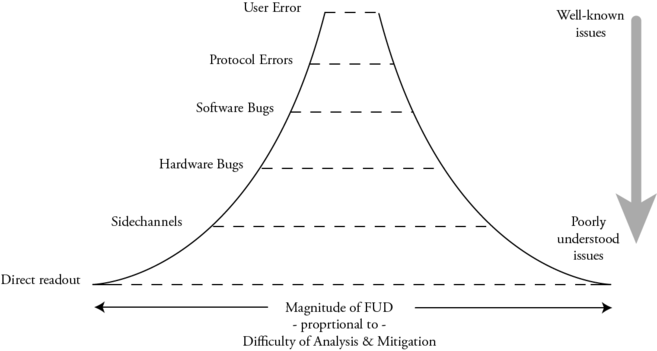
@bunniewill be talking about "where to draw the line for openness…the perceived fear/uncertainty/doubt (FUD) around a particular attack surface tends to have an inverse relation to the actual size of the attack surface."…[3/9]
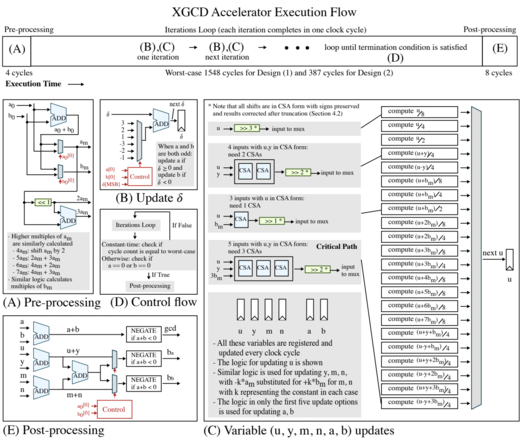
For example, in next week's virtual Silicon Salon 3, Kavya Sreedhar will be presenting about a 16nmn semiconductor design for constant-time modular inversion for Curve25519 using XGCD — 31 times faster than software! But more importantly, it can be hardened in silicon…[2/9]
Why is the discussion & community we are building at
#SiliconSalon so important? Our problem is that silicon-based security is lagging, supporting only decade+ old crypto—no blockchain, no ZKP. The result is modern cryptography is done in user space. Let's solve this!🧵… [1/9]

 DCrocker