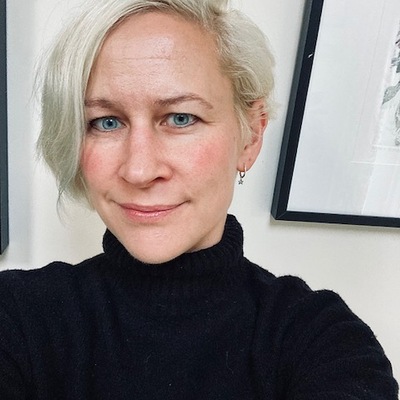
Anna Strhan

326 Followers
159 Following
34 Posts

Reader in #Sociology at the University of York

Studies #religion #culture #ethics #values #citizenship #atheism #childhood #education

Also on Bluesky @annastrhan.bsky.social

Work profilehttps://www.york.ac.uk/sociology/our-staff/academic/dr-anna-strhan/

Growing Up Godless is available to preorder, and there's a chunky discount if you use code P327 when ordering from press.princeton.edu And do get in touch if you'd like me to come and give a talk about the book!

https://press.princeton.edu/books/paperback/9780691247250/growing-up-godless

@princetonupress #sociology #atheism #nonreligion #religion #humanism

Growing Up Godless

How children’s non-belief and non-religion are formed in everyday life

New article out in British Journal of Sociology of Education, exploring children's emotional engagements with the aspects of religion they encounter in schools - ranging from interest via boredom to feelings of injustice, co-authored with Joanna Malone, Peter Hemming and Sarah Neal #sociology #education #religion #nonreligion #children
https://www.tandfonline.com/doi/full/10.1080/01425692.2025.2462954
Where is the Good in the World? Ethical Life Between Social Theory and Philosophy is now out in paperback. Co-edited with David Henig and Joel Robbins, with a fab range of contributions https://www.berghahnbooks.com/title/HenigWhere #sociology #anthropology #ethics
Where is the Good in the World?: Ethical Life between Social Theory and Philosophy | Berghahn Books

Independent Publishing since 1994

Growing Up Godless: Non-Religious Childhoods in Contemporary Religion, my forthcoming book with Rachael Shillitoe, has a cover! Thanks to the team @princetonupress

https://press.princeton.edu/books/paperback/9780691247250/growing-up-godless

#atheism #humanism #childhood #sociology

Growing Up Godless

How children’s non-belief and non-religion are formed in everyday life

New blog post on Childhood and the Politics of Atheism, featuring comments from children in our 'Becoming Citizens of Postsecular Britain' research project and children in our 'Nonreligious Childhoods' project #atheism #humanism #childhood

https://politicaltheology.com/childhood-and-the-politics-of-atheism/

Childhood and the Politics of Atheism | Political Theology Network

How would the politics of atheism be enriched and deepened by attending the perspectives of children? And how might making space for children shift our conceptualizations of ‘the political’?

Political Theology Network

New blog post on Childhood and the Politics of Atheism, featuring comments from children in our 'Becoming Citizens of Postsecular Britain' research project and children in our 'Nonreligious Childhoods' project #atheism #humanism #childhood

https://politicaltheology.com/childhood-and-the-politics-of-atheism/

Childhood and the Politics of Atheism | Political Theology Network

How would the politics of atheism be enriched and deepened by attending the perspectives of children? And how might making space for children shift our conceptualizations of ‘the political’?

Political Theology Network

So happy to see our article about how children become humanist published online in Sociology of Religion - with co-authors Lois Lee and Rachael Shillitoe

https://academic.oup.com/socrel/advance-article/doi/10.1093/socrel/srad050/7623471

#humanism #nonreligion #atheism #children #sociology

Becoming Humanist: Worldview Formation and the Emergence of Atheist Britain

Abstract. It is widely accepted that the growth of “non-religious” identification and “non-belief” in God(s) in many societies is linked to changing religious s

OUP Academic

So happy to see our article about how children become humanist published online in Sociology of Religion - with co-authors Lois Lee and Rachael Shillitoe

https://academic.oup.com/socrel/advance-article/doi/10.1093/socrel/srad050/7623471

#humanism #nonreligion #atheism #children #sociology

Becoming Humanist: Worldview Formation and the Emergence of Atheist Britain

Abstract. It is widely accepted that the growth of “non-religious” identification and “non-belief” in God(s) in many societies is linked to changing religious s

OUP Academic