billbennett
What data sovereignty means for New Zealand
https://piefed.social/c/newzealand/p/2173166/what-data-sovereignty-means-for-new-zealand
What data sovereignty means for New Zealand
https://piefed.social/c/newzealand/p/2173166/what-data-sovereignty-means-for-new-zealand
Just FYI there’s a bit of a problem in dark mode (I could not even work out how to enable light mode, so maybe it’s always like this?):
I think my main feedback on the article would be that the intent is not clear. There is information about data sovereignty, but there is no call to action, it doesn’t really tell me why the article exists. If it’s just an explainer I feel like it should tell me more clearly that it’s just explaining data sovereignty. I kept waiting for the part where it would try to convince me of something but it didn’t come.
Or maybe more succinctly, I didn’t come away from it understanding what data sovereignty means for NZ. What are the implications of these listed facts?
Useful feedback thanks.
Yes, It is a backgrounder. I mention the topic occasionally in my journalism and point readers to this rather than explain the ideas at length in a news story.
I’m looking into the dark mode strangeness. I suspect it’s because I dropped some HTML and CSS into the page without planning for dark mode (I’m not a coder).
The final point that this isn’t a technical problem, is a little off the mark.
The two pillars of data sovereignty are access and trust.
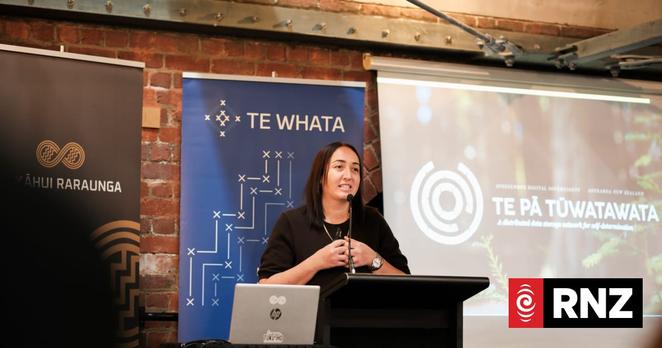
Te Pā Tūwatawata addresses both of these pillars. Data is encrypted in transit and see rest, access is controlled; it is built on open source technology, the platform can be audited and thus trusted.
Both pillars are fundamental, controlling access to data with strong encryption and effective governance ensures, control and ownership of IP, cultural knowledge, business critical information, etc… Whilst open source is not strictly required for trust of platforms, it does simplify things significantly (whilst generating it’s own problems); ownership cannot be ensured, if you are unable verify the security is implemented correctly.
Both pillars are heavily technical in nature.
 Dave
Dave absGeekNZ