 Gabriele Svelto
I have never seen a graph explain more clearly what's going and why it's completely unsustainable (and this is just cash-flow, it doesn't take into account the rapidly climbing debt!).
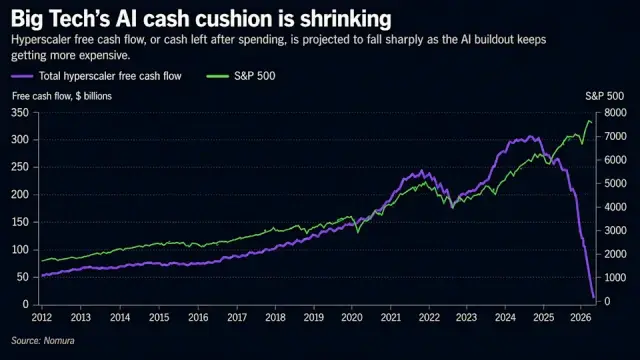
I have never seen a graph explain more clearly what's going and why it's completely unsustainable (and this is just cash-flow, it doesn't take into account the rapidly climbing debt!).
@gabrielesvelto i dropped out of economics, so am not quite versed on the nitty gritty academic aspects of the field, so gotta ask:
has there ever been a time in history when a few companies trapped themselves into an incestuous cycle of investments?
what’s happening around NVidia and the slopware bros is eyebrow raising, especially since there isn't really any cash or even assets transferring hands. it’s basically promisory notes that make it look like they’re making money.
just wondering.
Huh, interesting question.
First thought was the East India Company, but that one was highly extractive, but still tended to follow "normal" commerce (they paid on contracts for things like ships and some goods without needing those companies to buy from them). In some respects, NVidia is also acting like a monopsony, since it's pretty much the sole provider of the GPUs being used by AI centers, with the rest of the high purchases (memory, disk, etc) being tack-on to that.
The thing that is really weird is that NVidia is essentially funding their customers to establish it's own market, and I'm hard pressed to come up with an example of any other market doing that. Even some of the most egregious self constructed monopsony markets (Standard oil) actually produced something of value outside of it's own market, which lead to it self-maintaining.
( granted, I'm an amateur history buff, so I expect someone actually versed in this to have a better answer )
@jrconlin @blogdiva @gabrielesvelto Also an amateur looking for a similar answer, the closest I've got and the thing I keep coming back to is the radio boom of the 1920s.
(I'm also not the only one: https://finance.yahoo.com/news/big-short-investor-michael-burry-223042880.html )
It's not a great match, but it's ... got commonalities, particularly in the mass buildout that never paid RCA shareholders back.
The collapse of that bubble didn't cause the great depression by itself, but it sure didn't help.
 your auntifa liza 🇵🇷 🦛 🦦
 j-r conlin
 Solarbird