 Gabriele Svelto
I have never seen a graph explain more clearly what's going and why it's completely unsustainable (and this is just cash-flow, it doesn't take into account the rapidly climbing debt!).
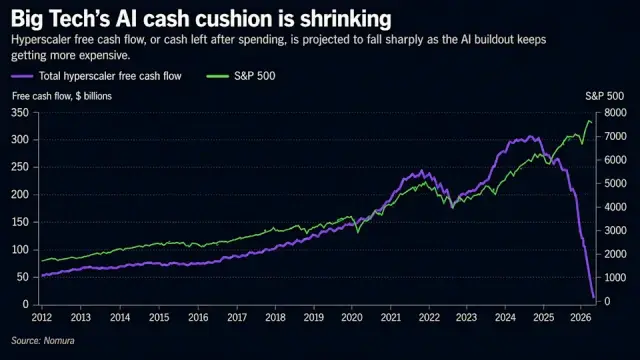
I have never seen a graph explain more clearly what's going and why it's completely unsustainable (and this is just cash-flow, it doesn't take into account the rapidly climbing debt!).
@gabrielesvelto This looks like a pretty expected graph for startups to me. Holding cash is expensive, and a startup typically believes - rightly or wrongly - that they can buy revenue with it, and by extension a higher valuation. You'd expect cash to drop dramatically when they think raising more is expensive at their current valuation vs future.
Now, of course you'd *also* expect it if they're struggling to raise and struggling to reach profit.
But you can't tell from free cash flow alone.
@gabrielesvelto Put another way, when I worked at a VC, our modelling indicated that it'd be near optimal for a startup to almost run out of cash every 12-18 months, as long as you had reasons to be confident your valuation was going in the right direction - short cycles of nearly running out of cash correlated with higher returns.
Of course, it also correlates with risk, so it's not that none of these companies will fail - odds are many will.
@gabrielesvelto Low cash on hand != zero cash flow. None of these have zero cash flow, and you *want* debt to increase if you have good reason to think you can buy more cashflow with the money than it costs to service the debt - that motivated my startup comparison.
Debt to equity is meaningless unless you expect the company to fail.
Oracle has a *market cap* of $446bn, or ~3x their debt, and costs of maintaining their debt equivalent to ~20%-25% of operating income. They are not at riskl.
@vidar I don't expect Oracle to fail but my opinion isn't worth much and CDS tell a different story
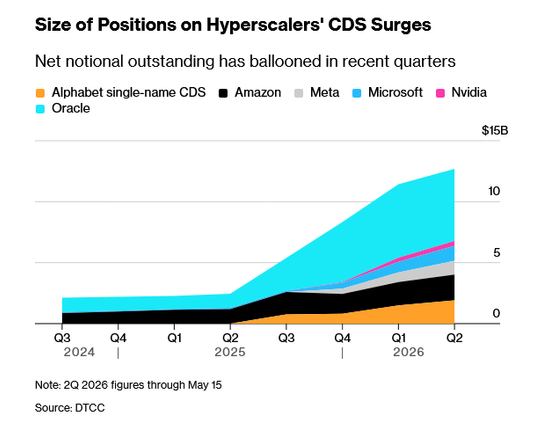
 Vidar Hokstad / Galaxy Bound
 Weltzeitgeist