 Jonathan Alfonso
Delegating Humanity – Discussing AI’s impact on society
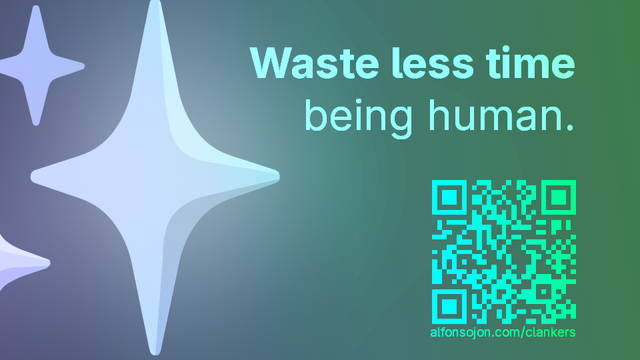
Artificial intelligence - more specifically Generative AI - has arrived and is now found across many different classes of electronics. Whether it's Microsoft Copilot inserted into every application on your PC, Google Photos offering to enhance your family photos with AI, or Siri deflecting to ChatGPT to answer a simple question, AI seems to be here to stay. Yet, I have seen a concerning lack of discussion about what AI should be used for. While AI is not inherently bad, the general target of current AI systems seems to be replacing tasks that humans do for fun. Artificial intelligence is suddenly being used to replace our creative outlets. Photo editing, music creation, graphic design, poetry, and even writing of essays are being supplemented or replaced entirely with AI. With time, it grows more difficult to discern what is AI-generated, AI-enhanced, or created with genuine human expression. Artificial intelligence did not appear overnight. It has been a hypothetical goal of computing to one day achieve. The hopeful believed that having computers spend time thinking for us would free up our time to spend more time with family, friends, and on the hobbies we love. The reality of the situation is far from this idealized fantasy. Artificial intelligence is instead being used to take shortcuts. Go faster. Produce more. Get it done with AI. Do it all with AI. If this sounds familiar, that's because we as a society have been down this road a number of times. When the automobile arrived, horses found themselves without a job. When the assembly line became automated, many factory workers found themselves unemployed. When the internet made online shopping easier than shopping in-person, suddenly centuries-old stores found themselves unable to compete. The distinction I wish to draw is that AI is being used to replace the human experience rather than improve it. Thinking Machines Early on, the first modern computers were used to crack the Axis powers' message encryption used during World War II. These computers were crucial in helping the Allied powers win the war. The technology used in the war effort would later go on to drive the computing boom. With computers becoming mainstream, the technology would go on to make its way into the homes of everyone, and eventually in our pockets and on our wrists. As technology continued speeding up exponentially while also growing smaller, generative artificial intelligence became accessible across many of our devices. With the technological progression, it became incredibly difficult to distinguish what was crafted with human hands and what was spawned in a data center. Artificial intelligence has been the subject of many science fiction and horror stories for many decades now. As with any technology that is introduced, skeptics and luddites alike often had fear of computers one day taking over humanity or being used to surveil and control the general population. This fear inspired stories such as George Orwell's 1984 and James Cameron's The Terminator. While technology has generally made life easier and more comfortable, many were skeptical about the future of technology and the impact it would have on society. A Bad DeepDream With generative artificial intelligence becoming available to the masses, many of the science fiction horror stories began to sound more plausible. In the late 2010s, the technology was initially used to generate rather unreal or absurd images that were plainly AI. Researchers at Google found that if the neural network used for face recognition was run in reverse and parameters were adjusted, the software could hallucinate faces into images, generating rather psychedelic imagery. Generative AI would quickly reach a turning point where it became convincing enough to fool many people. By the mid-2020s, AI had transitioned from an experimental toy to a quick, easy way to generate any image or video that you want to exist. Communities appeared on various social networks where individuals would share the prompt they provided to a model and the output they received from it. One such example went viral in 2023, when Reddit user chaindrop posted an absurd video of Will Smith eating spaghetti. https://www.reddit.com/r/StableDiffusion/comments/1244h2c/will_smith_eating_spaghetti Though rudimentary, it shows significant technical progress over the previous Mona Lisa example using earlier AI technology. This progress would continue rapidly, with billions being invested in the future of the technology. Many realized that AI would have the capacity to impersonate people as it progressed. By 2026, this concern is now a reality. AI models are now capable of creating hyper-realistic images, videos, audio, and text that has human tone and cadence. https://youtu.be/WeIzH2jFsNw In this promotional video released by Google for their Veo 3 product, every single sequence is AI-generated, including the sounds. The Forbidden Fruit Many technology companies have gone all-in on marketing their AI-powered products. Microsoft began incorporating their Copilot product into the Windows operating system and their cloud services. Google replaced Assistant with Gemini, now beginning to design their platforms around it. Anthropic Claude gained popularity within the tech sector for its technical prowess. Within everyone's pockets and homes, AI has arrived whether or not it was wanted. And society has taken a bite of the forbidden fruit. Whether in online groups or at local craft fairs, AI is ever-present like a persistent fly that you can't quite shoo away. It has been incorporated into workflows at many - if not most - workplaces, with spaces such as marketing, programming, cybersecurity, and art being outsourced to the digital brains residing in data centers. Tasks traditionally requiring a creative spark and authenticity are often being aided or replaced by computer-generated products lacking human touch. On social media, flyers for local events, weddings, funerals, and cook-offs are being generated with AI. Some of the most intimate moments of human life are being delegated to a computer. The United States of America turns 250 this year. In celebration, local artists are largely being ignored in favor of AI-generated images which are being placed on merchandise and sold both online and in stores. Is it okay to be celebrating our semiquincentennial with computer-generated art and not celebrating by supporting local artists and businesses? It feels incredibly wrong to me. To demonstrate my point, I generated the entire image above using ChatGPT. Nullville, WI doesn't exist. The shirt doesn't exist. You can't buy it anywhere. Yet I can assure you that on your local Facebook groups, this type of image would feel right at home. No artists were involved in making this image. Nobody gets credit. No artistic process was involved. A simple prompt - "Generate a commemorative image for america's 250th anniversary in Nullville, WI" created that poster. It was incredibly easy, but there was no challenge in doing this. Nobody is rewarded for their work. Nobody worked for it. I am rather vocal about my concerns with local businesses and organizations using AI, as I personally feel it is disingenuous especially when generating imagery of food or a product for sale. A common argument I have received in reply is that businesses do not have the time or financial resources to hire an artist to create their menus, logos, or advertisements. I'd like to offer counterpoints based on personal experience. In 2011, I tried learning how to create digital art. I was taking classes in high school for Photoshop, but didn't want to pay for it at home, so I tried applying my skills in the GNU Image Manipulation Program (GIMP). Awkward acronym aside, this program offers much of what Photoshop can do at no cost. It is developed by the open-source community entirely for free. There is no subscription or purchase required for this software, and it runs on just about any computer whether it runs Windows, macOS, or Linux. I created this article's featured image entirely using GIMP and free software to generate the QR code. It took me about 15 minutes and cost me nothing. To make a menu like this using LibreOffice Draw, it takes minimal effort and is very approachable if you already know how to use a word processor. I spent five minutes making this as a demonstration. If you learn the skill, you can save time and money. If you never try, you will never learn the skill. You will be stuck delegating your tasks to AI, and you will never develop your own unique style or ability. Is AI the right tool? Artificial intelligence is incredible; humanity even more so. We (generally) have two hands, two feet, and an incredible computer called a brain. But humans are fragile. We have thin skin. We stand upright and by some miracle only fall down sometimes. We break bones, sprain ankles, and get sick. Yet even if you are bedridden, disabled, or sick, you can think. You can dream. When you sleep, you can be taken to wherever your mind invents that night. You can revisit old friends, address fears, and wake up to repeat the whole thing again tomorrow. A blind person can still draw. A deaf person can still sing. Beethoven himself was deaf and is one of the most famous composers to have lived. We are adaptable creatures who approach every challenge with gusto and make the best of what we are capable of. Not everybody will be the next Picasso, Mozart, or Steve Jobs. Yet, we try anyway, and in the process we become whomever we were meant to be. By outsourcing our human creativity to a computer, we are giving up this process. We aren't fostering our artists anymore. We aren't relying on an expert who can figure it out. There is an immense human loss when we delegate our humanity to machines. Our creativity as a species is what has birthed numerous tools. Humans have used tools to make new ones, with each invention depending on the previous ones. To make fire, you need wood. To make metal, you need fire. To make computers, you need to trick the rocks into thinking using science involving millenia of human progress. You can use a sock to wash your dishes, and you can use a rock as a hammer. Yet, if you were to survey most people, I doubt you would get many people saying their favorite sponge is a sock, and their favorite hammer is a rock. Any tradesman would tell you that the right tool for the right job is worth its weight in gold. Artificial intelligence is but one tool that has been added to humanity's arsenal. AI will solve problems for us. AI will save lives. Like all things in life though, there is nuance. Why should AI be used to generate art when art is the passion of millions of people? Why use AI to write an email when it is such a critical skill to develop? Why use AI to generate song when there is no human connection within? Art is part of the core human experience. Art is in everything we as humans do. From programming to welding, the core of our skillset is art. If practice makes perfect, how can we ever get there if we don't give ourselves the chance? You can never be an artist if you don't try. In Conclusion Photo by Reinhard Bruckner on Pexels.com I am against AI being shoehorned into every single tech product. Despite being incredibly adept for some purposes, it should only be used as but one tool in humanity's toolbelt. Artificial intelligence should not replace the very skills that make us human. Whether it is singing, painting, programming, or any other of our muses, these are skills that should be left to us. Throughout history, even before written language was invented, humans were painting pictures. We told stories of the stars, sang songs of our ancestors, and expressed ourselves in our creations. This is a tradition that is sacred to humanity. Art is core to humanity itself. Our work is our art - two programmers trying to solve the same task will have very different code. Two artists asked to draw a picture of someone's cat will produce very different results. Countless songs about the same stories retold in so many ways. AI should be used to free people's time, improve our health, and improve our safety. AI has the potential to give people free time to pursue their interests. People should have more time to spend time with friends and family, write poetry, sing, dance, and enjoy life. Giving up this spark that makes us human will cost us more than can be expressed with dollars and cents. The very essence of what makes us human - our soul - is at risk. Do not delegate your humanity. […]