 anna_lillith 🇺🇦🌱🐖
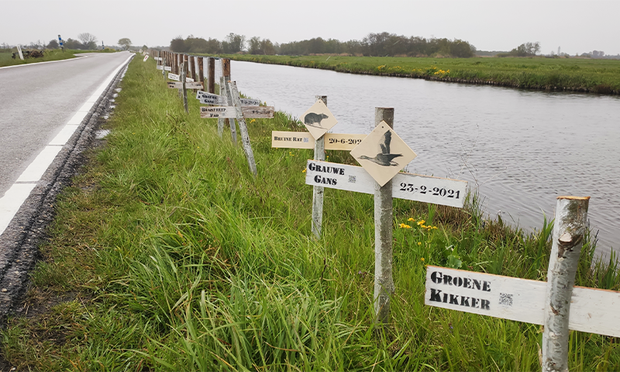
Bram Koese is one of the best freshwater zoologists of the Netherlands and lives in a town, surrounded by wetlands and canals, some 30 kilometers south of Amsterdam where speeding cars often hit wildlife. He saw entire families of graylag geese (Anser anser) and barn swallows (Hirundo rustica) being mowed down.
Prompted by these sad encounters, and curious about the actual impact of the traffic on wildlife, he began logging his roadkill sightings. For a whole year, on average every other day, he would ride up and down the road, scanning with a headlamp if it was dark, and record and photograph every dead animal. His sightings amounted to 642 carcasses. Shocked by the volume of his data, and disenchanted by the lack of response he got from the municipality, Koese then hatched a secret plan for a clever guerrilla campaign.
Prompted by these sad encounters, and curious about the actual impact of the traffic on wildlife, he began logging his roadkill sightings. For a whole year, on average every other day, he would ride up and down the road, scanning with a headlamp if it was dark, and record and photograph every dead animal. His sightings amounted to 642 carcasses. Shocked by the volume of his data, and disenchanted by the lack of response he got from the municipality, Koese then hatched a secret plan for a clever guerrilla campaign.

 Dr Helen Wilson
 Daniel Howard 🌻
 Alex@rtnVFRmedia Suffolk UK