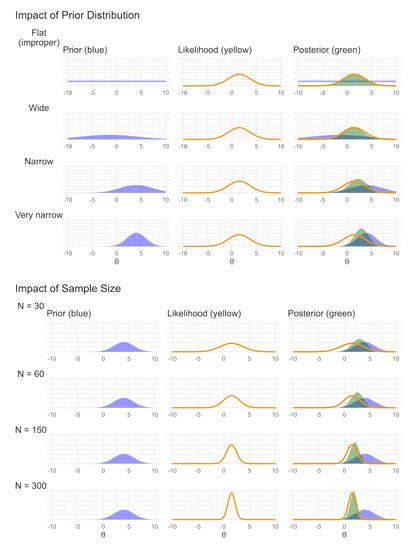
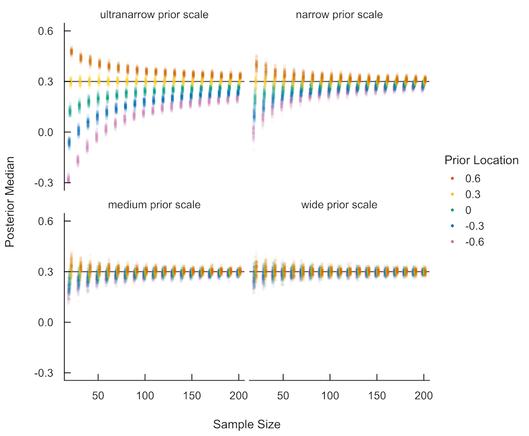
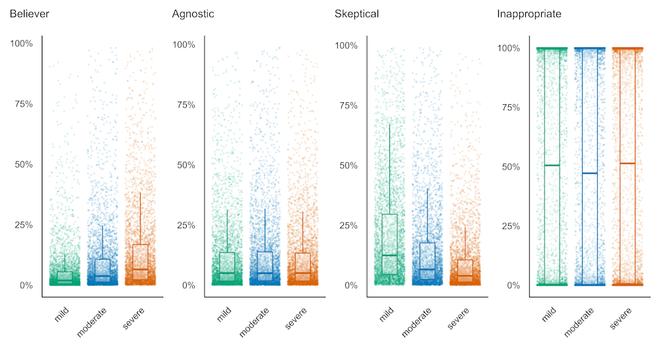
A new paper by @dominiquemakowski.bsky.social, @mattansb.msbstats.info, me and colleagues just out! We show how to choose informative priors in Bayesian regression models using a systematic simulation study and a practical step-by-step tutorial in #Rstats and #Stan!
doi.org/10.3389/fpsy...
>
Small samples or rare events making your frequentist models unstable? In our paper, we show how Bayesian informative priors act as a regularizing force, narrowing credible intervals and preventing implausible estimates when data is sparse. >
Subjectivity concerns holding you back from Bayesian methods? Our tutorial walks through a real-world case study using "believer", "agnostic", and "skeptical" priors to run a built-in sensitivity analysis - ensuring robust and transparent science >
 Daniel 🕹️