 Ethan Black
Instead of a filesystem you get a simple transactional KV store. Processes are actors, but they only exist as state in the DB + an address registry. If they havent received a message they do not use memory or CPU.
With this plus the sbility to spawn new actors with arbitrary s-expr allows you to spawn actors that refine the set of capabilities in arbitrary code defined ways without having to create more granular capabilities.
This is the way!
Marce Coll (@[email protected])
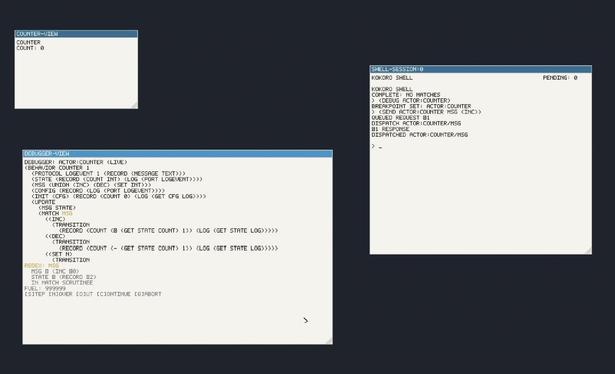
Attached: 1 image I've been working on an #OS idea I've had for a long time. The idea is a mix of #smalltalk, #lisp machines and #Elm. Instead of a filesystem you get a simple transactional KV store. Processes are actors, but they only exist as state in the DB + an address registry. If they havent received a message they do not use memory or CPU. Actors are written in a typed lisp language. It's easy to create programs that store state and where that state persists across reboots. Every program is like that by default. The system is based on a very simple set of capabilities, only two types exist: an actor address and a hash in the content addressable store which gives you read access. With this plus the sbility to spawn new actors with arbitrary s-expr allows you to spawn actors that refine the set of capabilities in arbitrary code defined ways without having to create more granular capabilities. #osdev