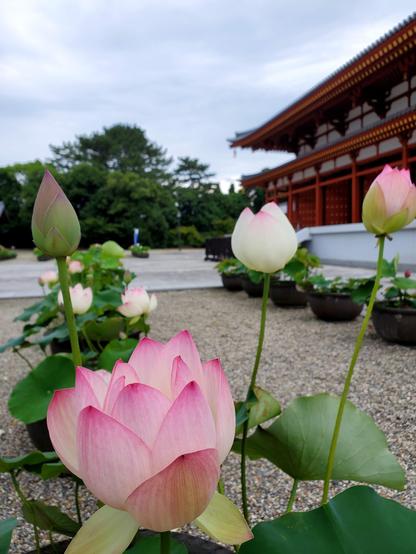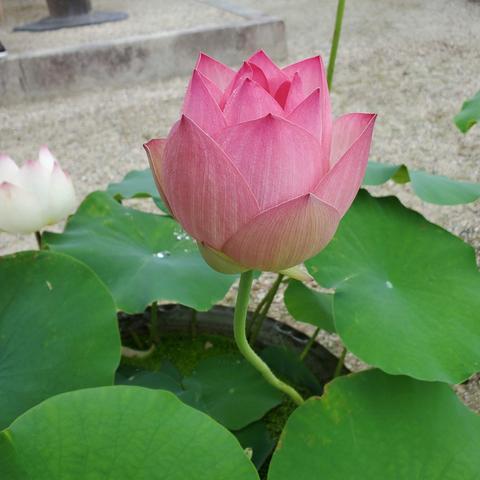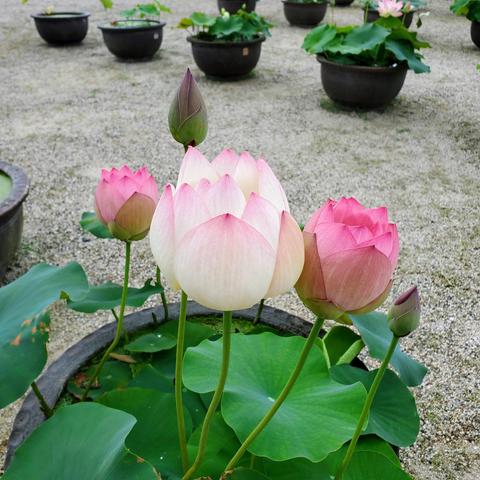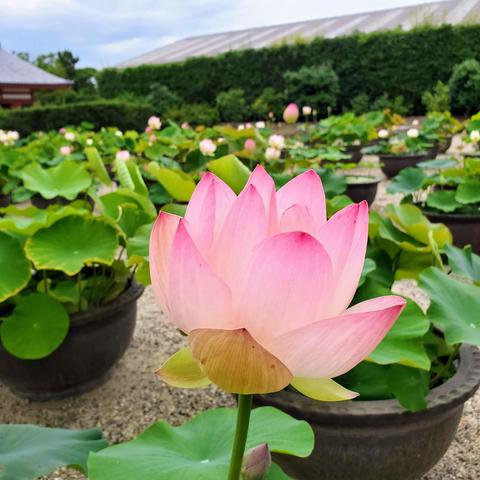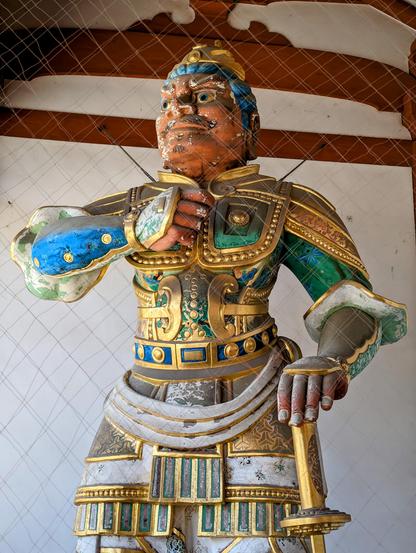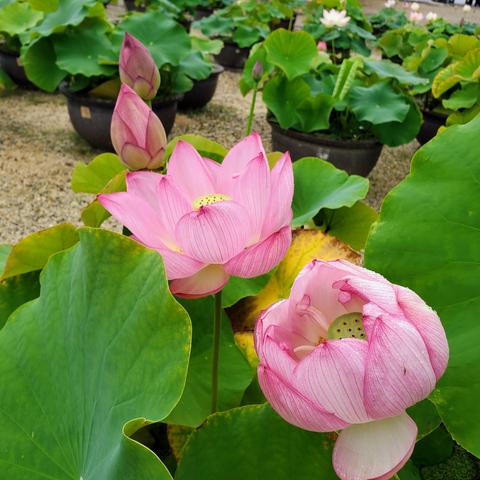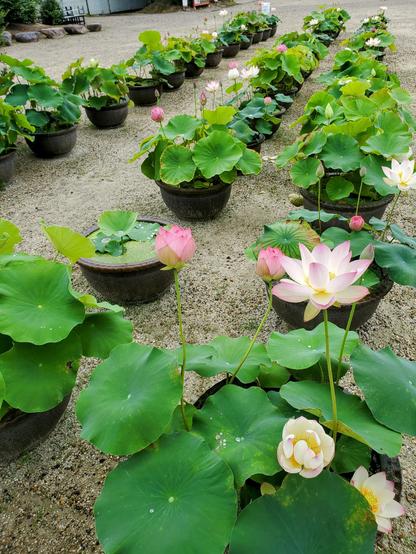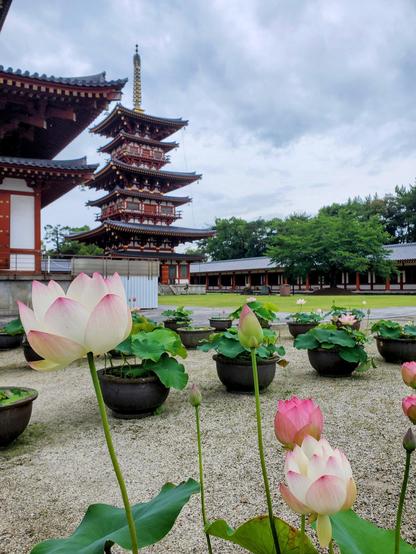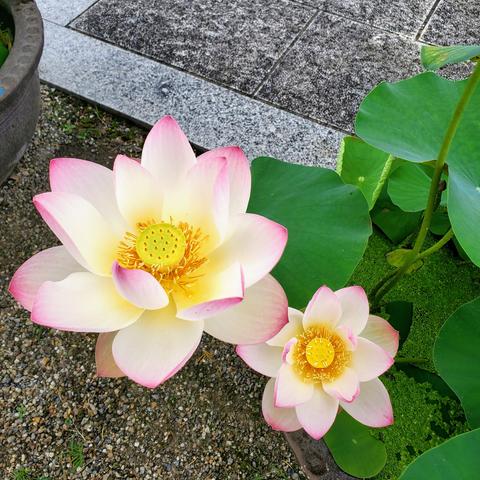
💦THE MEDICINE BUDDHA'S LOTUSES🪷

dew from a lotus-
plenty
for morning tea
蓮の露一つもあまる朝茶哉
-Kobayashi Issa (小林一茶), 1819.
Trans. David Lanoue.

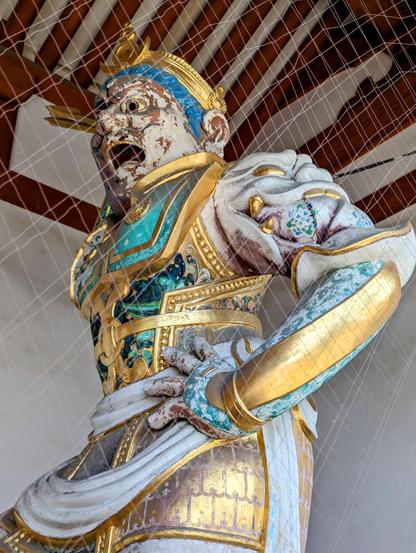
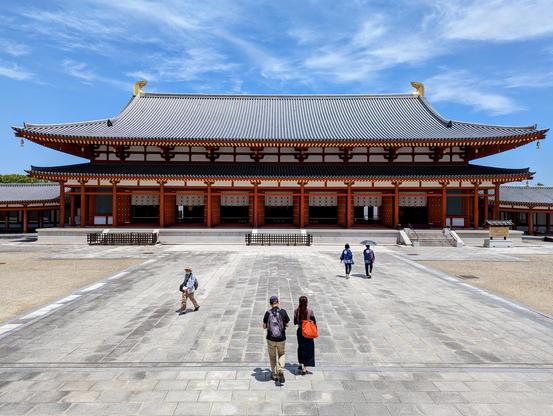
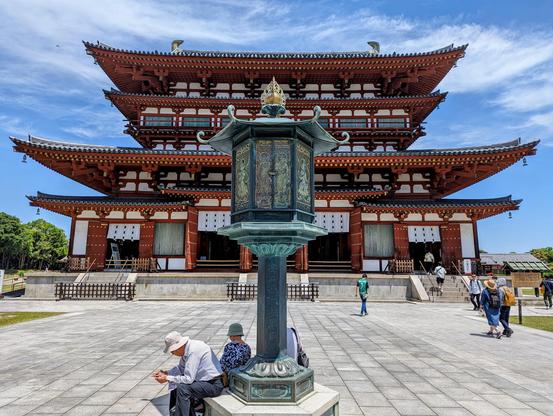
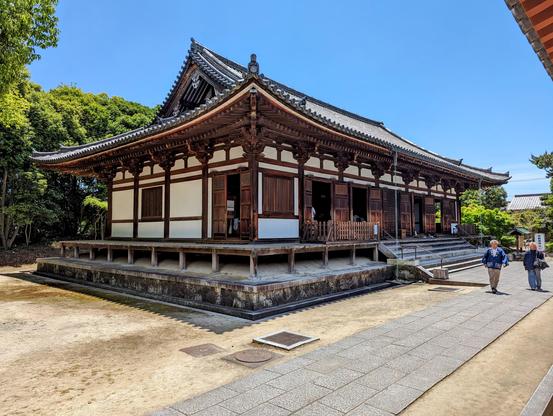
When his consort fell deathly sick in 680, Emperor Tenmu (天武天皇) ordered the construction of Yakushi-ji (薬師寺) as a prayer for her recovery.

The emperor's act of devotion worked, and his consort not only survived, but went on to succeed him as Empress Jitō (持統天皇 645-703).

Yakushi-ji originally stood beneath Mt. Miminashi in Kashihara (耳成山)/橿原), site of the then capital, Fujiwara-kyō (藤原京 694-710).
#lotusflowers #lotus #蓮

By the time construction work finished on the temple in 698, Emperor Tenmu (天武天皇) had been dead for 12 years.

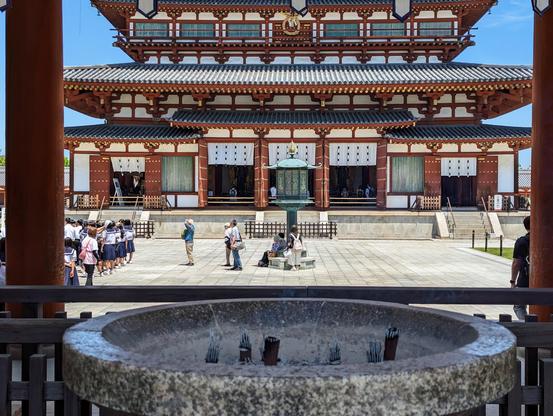
A decade later work began on the new capital, Heijō-kyō (平城京 - modern Nara), and in 718 Yakushi-ji was partly dismantled and moved to its new (current) home.
#Japan #Nara

Yakushi-ji was counted as one of the original "Nanto Shichi Daiji" (南都七大寺), the "7 Great Temples of the Southern Capital" (Nara).

🪷Daian-ji (大安寺)
🪷Gangō-ji (元興寺)
🪷Hōryū-ji (法隆寺)
🪷Kōfuku-ji (興福寺)
🪷Saidai-ji (西大寺)
🪷Tōdai-ji (東大寺)
🪷Yakushi-ji (薬師寺)

There is evidence that for a long time two Yakushi-ji's existed: the original temple in Fujiwara-kyō (known as 'Moto Yakushi-ji' 元薬師寺 the 'Original Yakushi-ji') and its new iteration in Nara.

When completed in 726 Yakushi-ji sprawled over 12 city blocks!
#Nara #奈良 #平城京

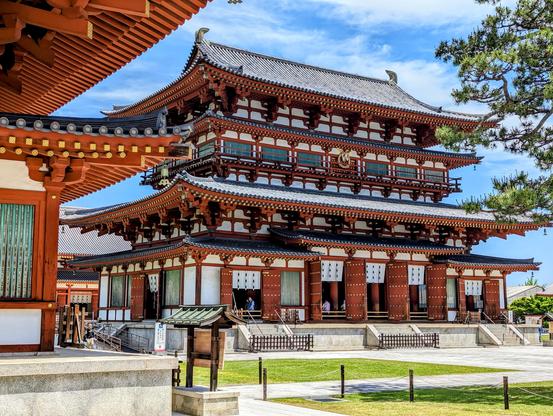
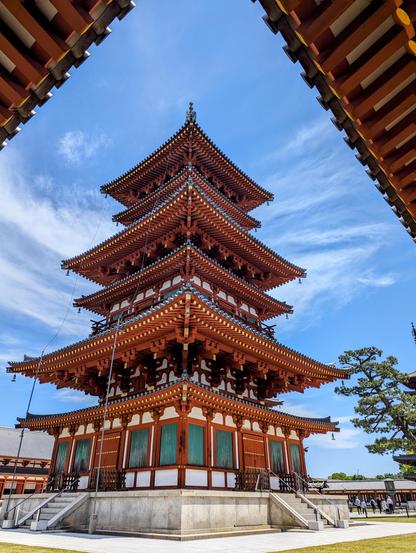
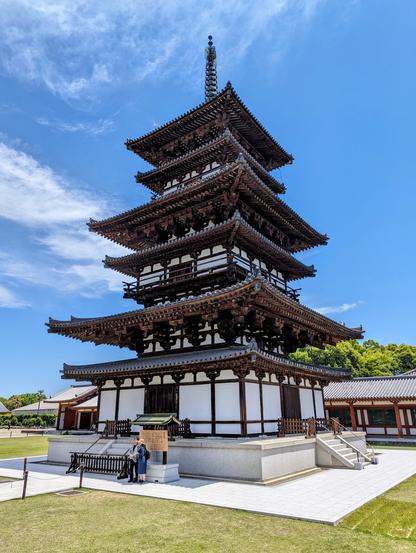
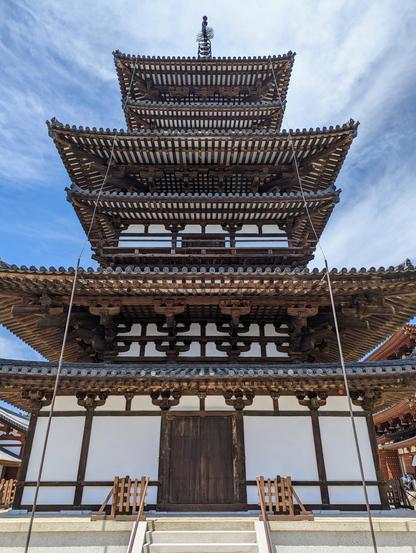
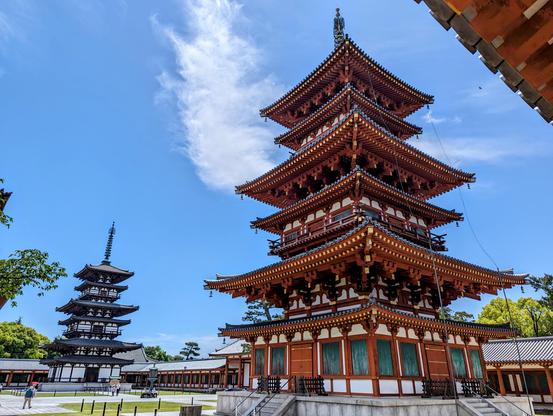
Fires in 973 and 1528 destroyed everything but the Tō-tō (東塔 'Eastern Pagoda'), which survives to this day.
Seriously neglected in Meiji times, from the 1970s Yakushi-ji saw a renaissance under Abbot Takada Kōin (高田好胤), who began a vast reconstruction project.
#Nara #奈良

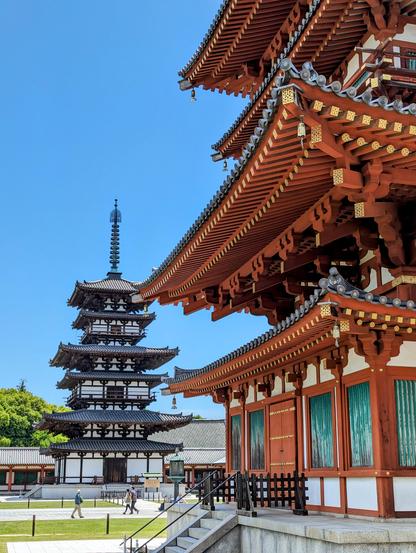
Yakushi-ji's Tō-tō (東塔), dating to 730, is considered to be one of Japan's most beautiful pagodas.

Art historian Ernest Fenollosa (1853-1908) described the 34m tall structure as 'frozen music'...alluding to the pagoda's 'rhythmical symmetry' and to the fretwork of the finial.

@camelliakyoto

So many great photos this week :)