 Rxiv mechanobio
https://doi.org/doi:10.1186/s43897-026-00231-0
https://pubmed.ncbi.nlm.nih.gov/42260696/
#CellDivision #Cytoskeleton
Stress-induced MAPK (SIMK)-dependent organization of microtubules in alfalfa - Molecular Horticulture
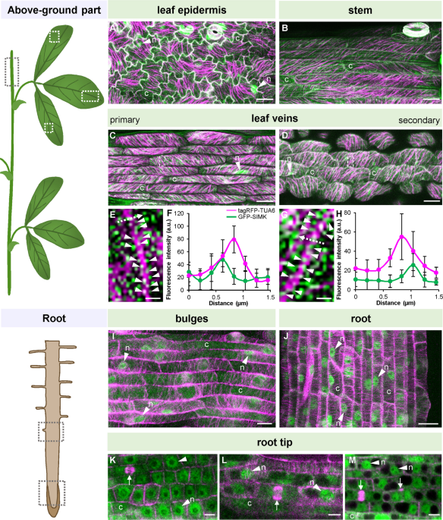
Mitogen-activated protein kinases (MAPKs) modulate the organization of the plant cytoskeleton. The spatial organization of microtubules is critical for cell division, polarity, shape control, and elongation during plant growth and morphogenesis. Here, we analyzed the impact of the stress-induced MAPK (SIMK) abundance on the tubulin cytoskeleton in different plant organs and tissues of an important legume crop species, alfalfa (Medicago sativa L.). For this purpose, we have established unique transgenic double lines with genetically manipulated SIMK, possessing microtubular molecular fluorescent marker, the tag RED FLUORESCENT PROTEIN-TUBULIN ALPHA 6 (tagRFP-TUA6). We show that lower or higher SIMK abundance can change cell division planes (CDPs) and phragmoplast orientations in roots. In addition, the transgenic line with downregulated SIMK shows disordered and disorganized microtubules, and a reduced degree of microtubule bundling mainly in leaves and stems. This may be linked to smaller habitus, shorter stems, and smaller leaves. Obtained results indicate that the genetic manipulation of SIMK abundance has effect on microtubule organization and plant development in alfalfa. This study also paves the way for testing anti-microtubular drugs on alfalfa and for biotechnological use of the newly-developed lines.