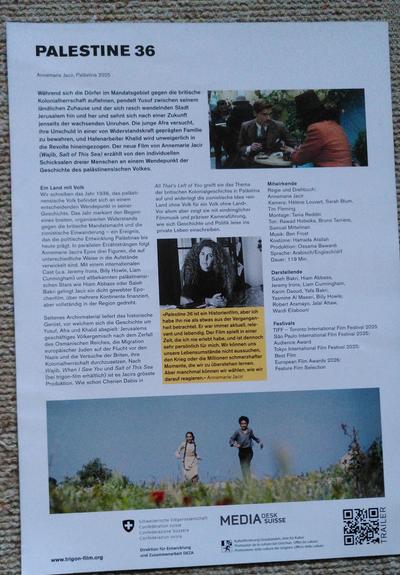
Liebe Rüsseltierchen und Fedinauties. Der Sonntag geht sonnig vorbei. Morgens war ich im Cinema Luna in Frauenfeld, um den Film "Palestine 36" zu sehen. Ein heftiger Film, der die ganze palästineensische Tragik auch am Beispiel des Dorfes Al Bassa in welchem ein Massaker der Briten an der Dorfbevölkerung stattgefunden hatte. Die Menschen wehrten sich mit einem Streik und Aufständen gegen die britischen Besatzer und deren Unterstützung der Siedler, die sie von ihrem Land vertrieben.

Es würde zu
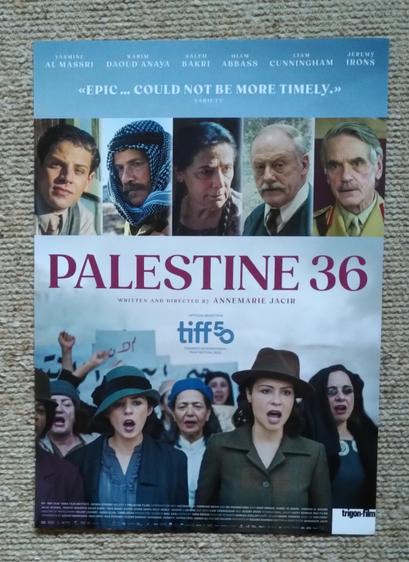
weit führen, alles wiederzugeben. Die Bilder, teils Originalsequenzen und Zeitungsausschnitte aus damaliger Zeit, sind sehr schockierend. Und trotzdem ließen sich die Menschen nicht kampflos vertreiben. Es kam zu heftigen Kämpfen zwischen den britischen Soldaten und Widerständischen.

Und die Tragödie geht unvermindert weiter. Wie lange noch? 🤔

Nun aber mache ich mich für eine Portion Musik parat. Euch allen wünsche ich eine gute Nacht. Träumt bunt. 💤😴🥱😊😘👋🙋🙏🤗☮️🕊️🐺🕯️🐧🐘🦣

@Weinberg

Palestine 36 defies—and at times invents—the historical record to rewrite the past in service of a contemporary political agenda. It presents the Great Arab Revolt as a morality play of colonial cruelty and Arab resistance, while rendering its primary targets, the Jews of Mandatory Palestine, voiceless pantomime figures at best. At worst, they are venal, behind-the-scenes figures, alluded to but scarcely seen.

It is an absence that erases the Jewish community—nearly half a million strong by the revolt’s end in 1939—in an act of historical revisionism verging on fantasy.

The uprising erupted in April 1936 against both the Holy Land’s Jews and the British authorities, who for two decades had facilitated the creation of a Jewish national home as pledged by the Balfour Declaration and required by the mandate ratified by the League of Nations.

The rebellion began in spontaneous, lethal attacks on civilians but was quickly matched by a monthslong economic strike and political demands.

The first demand was a complete halt to the immigration of Jews, which over the first half of the 1930s, spurred by rising antisemitism in Europe, had doubled their numbers to nearly 30 percent of Palestine’s 1.3 million people. The second demand concerned land ownership—a question, then as now, at the conflict’s molten core.