Deborah Preuss, pcc
Ooh, a lovely article with lots of photos from @majnouna, on dyeing natural fibres with botanicals! I found the last item a lovely surprise. https://zirk.us/@majnouna/116704171386945356
#bloomscrolling #fibreArts #textileArt
#bloomscrolling #fibreArts #textileArt
Joumana has moved! (@[email protected])
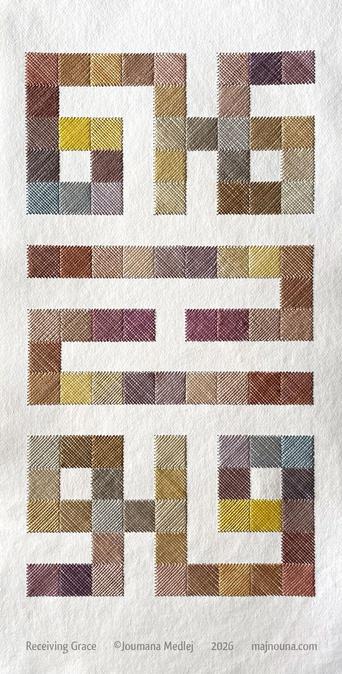
Attached: 2 images For this comeback, let me offer up the last #art piece I finished (before getting swallowed up by writing a book): Receiving Grace. Silk and linen threads, dyed with found plant dyes, stitched on Khadi paper. 34x68 cm. Brief description below, but there's a fuller one on majnouna.com/portfolio/receiving/ and an even deeper dive over two substack posts: https://majnouna.substack.com/p/receiving-colour https://majnouna.substack.com/p/receiving-colour-denouement
 Gordon J Holtslander