
This is exactly what happens when cars are the default transportation policy. EVs are often sold as the ultimate fix, but they take up the exact same amount of space as gas cars. A blanket "cars-for-everything" policy will always fail because geometry always wins.
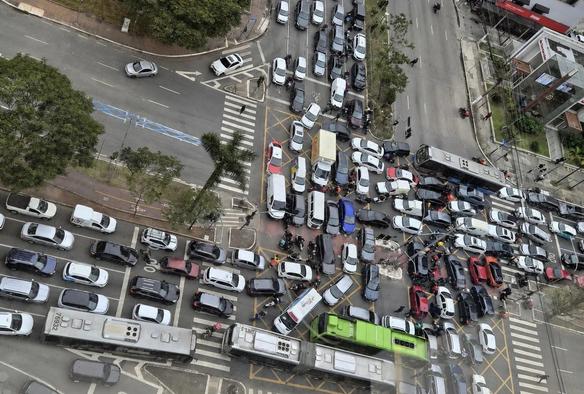
I swear @[email protected] used to have a "cars have a geometry problem" sticker, but I can't find it.
Discontinued! Was a limited edition.
And it was "Geometry hates cars," a Cory Doctorow line.

@americanfietser.bsky.social and, indeed, in the second half of this century we as a planet are going to be critically short of metals, so there isn't going to be metal for a new electric car for everyone.

Well, if we keep fossil fuelled smelters going there could be. But if we do that we're all dead.

#ClimateEmergency

https://www.journeyman.cc/blog/posts-output/2021-08-18-wheres-the-steel/

Where's the Steel?

From the discovery of iron working techniques, about 3,200 years ago, up until the widespread exploitation of fossil fuels, about 250 years ago, iron and steel were rare, precious materials. The average person, across the whole world, almost certainly had less than 500 grammes of it. A knife, probably; some tool of their trade, possibly. Even members of the elite — warriors who fought in full armour, for example — probably owned no more than 30kg of iron and steel.The use of fossil fuel changed all that, of course. There's about one car for every two people in the UK, and the average car now weighs 1857Kg, so that's almost a ton per person in cars alone, not to mention all the steel we now have in buildings and infrastructure. But it's fossil fuels that have made that possible. In future, we can't use them. So how much steel will we have?

The Fool on the Hill