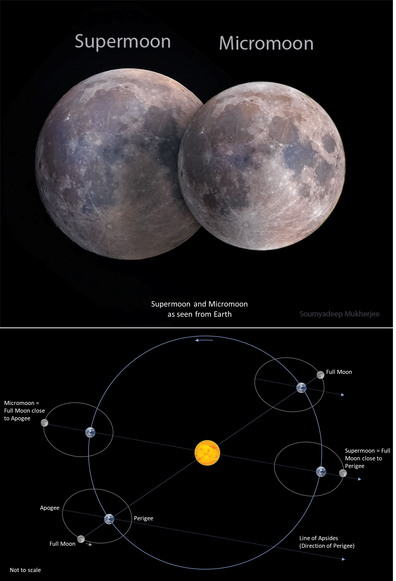
As you are all aware, tonight's full moon is called a Blue Micromoon.

A Micromoon is a full moon that occurs when the moon is farthest from Earth in its elliptical orbit around Earth.

A Supermoon is a full moon that occurs when the moon is closest to Earth.

The apparent diameter of a Supermoon is ~12% larger than that of a Micromoon.

A rare 2nd full moon in a month is known as a Blue Moon.

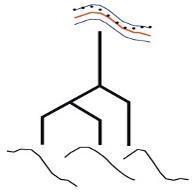
The orbital diagram below helps understand Supermoons and Micromoons.
https://apod.nasa.gov/apod/ap260530.html
1/n

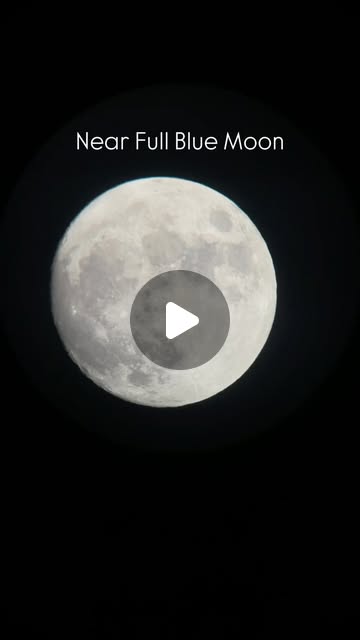
@AkaSci β€œThe 2nd full moon in a month is known as a Blue Moon.” I just learned today that this is one of two definitions, and it’s a more recent one that came out of a mistake in a 1946 article in Sky and Telescope Magazine that became popularized and accepted! Sunshine Nate explains it here.

https://www.instagram.com/reel/DY8l21ZtQBB/

SunshineNate on Instagram: "What is a Blue Moon? Near Full Blue Moon through Telescope with Venus and Jupiter #bluemoon #history #science #astronomy #telescope"

4,532 likes, 81 comments - sunshinenateastro on May 29, 2026: "What is a Blue Moon? Near Full Blue Moon through Telescope with Venus and Jupiter #bluemoon #history #science #astronomy #telescope".

Instagram

@bluejay @AkaSci

I would go further and just call it wrong. Two full moons in a month isn't terribly uncommon, the opposite of the meaning of "blue moon" which is of a very rare occurrence.

The folk etymology has the "rareness" derive from the not-very-rare double full moons, which makes no sense. It's just wrong.

#Astronomy #Etymology

@jgamble @bluejay @AkaSci

It *is* wrong, and the astronomical usage of β€œblue moon” is much more recent (OED gives 1937) than the original idiom, which just refers to the rarity of the moon appearing blue because of atmospheric conditions): earliest attestation 1821

@ancientsounds @bluejay @AkaSci

Yeah, though for what it's worth I put the widespread dissemination of it at 1982, which from my experience is when the U.S. TV news channels started using it as filler in between more serious news stories.

@ancientsounds @jgamble @AkaSci I suppose β€œrare” is a relative term. Months with two full moons occur roughly every 2.5 to 3 years (according to a casual internet search) which I guess might still be considered pretty infrequent, if admittedly more common than what the older usages described. It’s more a folkloric or pop culture idea than a scientific one, and seems to be going through a meaning shift the way much of language inevitably does.πŸ€·πŸ½β€β™‚οΈ