Crazy idea for #Emacs enthusiasts

On the #LispyGopherClimate podcast today, me, @screwlisp and @kentpitman had a fascinating conversation with @someodd .

During our conversation I remember her dropping this idea that the #GopherProtocol was all about menus. I remember this because she had said something like it in her Bartleby RFC document which I had read earlier, “But gopher is hierarchical. That’s the whole point. It’s a tree of menus, not a stream of content.” (I copy-pasted the section from which that quote comes below).

Just two weeks prior on the #LispyGopherClimate podcast we had a discussion with @chiply about “incremental completing read,” which was directly related to @karthink ‘s blog post on the Emacs Avy package.

So here is my crazy synthesis of the two: Emacs Avy as a Gopher client!!!

The incremental completing read pattern goes “Filter a list of results -> Select an item -> perform an action on the item.” The action could be to read the page, or to open a link that may trigger an “applet” action. I can see a whole new way to browse the Internet: no search engines, no LLM chat, just type what you think may exist and narrow down the list of all the content until you find something that you might want to read!

Is this post an attempt at humor, or am I just rambling? A little of each. I do want to try to build this thing, if anything to see how funny it would be to try to browse the Gopher network that way.

(Quoting @someodd )

I’ve been thinking a lot about how people in gopherspace – myself included – try too hard to make gopher be like the web. We abuse directories so we can have files with links. We call our writing “phlogs” which is just “blog” with a different letter, and then our phlogs end up looking like imitations of blogs anyway. Reverse chronological. Post after post. A timeline.

But gopher is hierarchical. That’s the whole point. It’s a tree of menus, not a stream of content. And the biggest abuse of gopher I see is people trying to flatten that hierarchy, trying to make it not-hierarchical, because that’s what the web trained us to expect.

So I started asking: what would sharing information look like if gopher had won? If the web never happened and something other than blogs took off? You wouldn’t have “posts.” You’d have a library. Subjects on shelves. You’d browse by walking through the stacks, not by scrolling a timeline.

That’s what bartleby is trying to be. Not a blog engine that speaks gopher, but a tool that takes the hierarchy seriously. Collections are the primary axis, not dates. Recent acquisitions exist, but they’re the display by the door, not the organizing principle.

gopher-proxy – /0//regarding_someodd/opensource/bartleby/bartleby-rfc.txt

@ramin_hal9001 @chiply @karthink @someodd @screwlisp

«…I can see a whole new way to browse the Internet: no search engines, no LLM chat, just type what you think may exist and narrow down the list of all the content until you find something that you might want to read!…»

This would be lovely, but I think the thing to understand is that there is a war on. It is not an accidental artifact that there is this whole "economy of attention". And what is being portrayed in advertising is "choosing an ad that is what the buyer wants". It has shifted to "tell the buyer what they want".

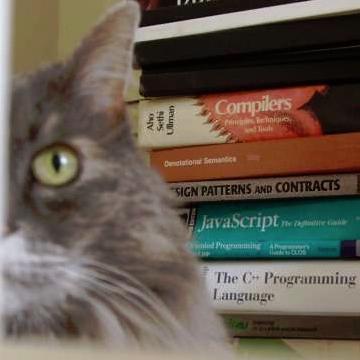
The last thing the powerful forces want right now is for you to choose what you want. They are in control of an un-audited tool that doesn't have to prove that what it shows you is in fact a survey of what's there. Add to that that even if they did want to be your non-pushy friend, the changes with RAG work against this in the way (pardon my taking a strong position in the programming language culture wars) C++ takes too-aggressive a position on optimizing dispatch at compile time.

There are real virtues in waiting method dispatch to runtime. But if the argument is "it's more efficient not to offer that choice", that leads somewhere dark. And that's what is going on in modern advertising.

It's fine to explore this as a technical hobby, but if you want it to play out in practice, you need to get political because (I allege) it will not happen on its own, and not because someone lacked vision, but rather because they COULD see the vision you are offering and because they actively don't like it and are taking specific steps to make sure it's not what's going to happen.

What's going on now is just a continuation of what's been going on for a while. The reason we have big giant companies like Apple and Amazon are because they want to control the formats, the process flows, the inventory mechanisms, the competition. They talk about markets but such large entities are anti-market, or at best market-on-their-own-terms.

The kind of bliss in the images of choice and power that are offered for "AI" create a kind of bliss, that things are going in the right direction. But there are other metrics that are far less clear, which are being tarred as scare tactics, Luddite, or even lately a national security threat (to speak in favor of not going all in on AI).

@kentpitman
> to speak in favor of not going all in on AI

Objectively: experts have said that the current LLM technology *cannot* fix the hallucination problem; it will require some kind of fundamental change.

Objectively, it is therefore not ready for unsupervised use anywhere that mistakes matter -- which is most uses.

@ramin_hal9001 @chiply @karthink @someodd @screwlisp

@dougmerritt @kentpitman @ramin_hal9001 @karthink @someodd @screwlisp

I agree with @dougmerritt , and there are tons of horror stories.

One way around the non-determinism issue is to have some kind of external check. I encourage folks to hand-write all their data models and tests (of all kinds). But sadly, I see most people letting their agents write these too. You lose the critical human gate when you do that, and then there is org-wide ignorance as to what the system is actually doing.

It’s fine to explore this as a technical hobby, but if you want it to play out in practice, you need to get political because (I allege) it will not happen on its own, and not because someone lacked vision, but rather because they COULD see the vision you are offering and because they actively don’t like it and are taking specific steps to make sure it’s not what’s going to happen.

@kentpitman I guess now is a good time to bring up #PermaComputing . You call it a “war,” so I would say of our chatter about what we can do with Emacs and LLMs is akin to sharpening our tools. People will always be able to find ways of organizing and forming communities under even the most oppressive conditions. In previous revolutions, people who publish their own pamphlets were the first to be targeted by the police. I think of the Perma-Computing movement as analogous to this, we are the ones who run our own printing presses and publish material to enrich our community and foster resistance against the forces that oppress us.

At some point ordinary people may completely loose access to any computing resource that is not directly monitored at all times by the government. It might even become illegal to use a computer without a built-in LLM to monitor your every action, down to your accelerometer data finding patterns in how your body moves around as you carry your phone. It might come to the point where the government deploys police forces to seek out and destroy any computer they find that isn’t controlled by an American big-tech company. The last remaining computers without spy-tech built-in will be all we have left to do computing in the way that we once knew before. Those of us born before the wave of oppression will have invaluable knowledge about preserving this technology so that it can continue to benefit people rather than subjugate them.

Hopefully we can dissipate this current wave of oppression before it comes to that. But to come back to your point, Kent, I agree, we can’t just sit back and hope that the wave passes. We have to be actively working against it, which means becoming more political.

@chiply @dougmerritt @karthink @someodd @screwlisp

@ramin_hal9001

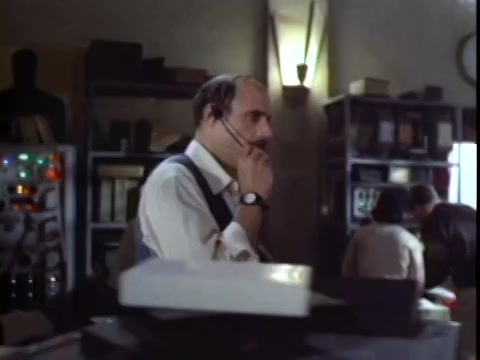
If you have not seen the TV series Max Headroom, you really should. You can probably find it on YouTube or something. It's about ubiquitous computing, and it was very prescient given how early the show was made. If I recall, it was illegal to have an off switch on your TV. And there are characters called blanks who live off grid because they were able to protect their data back when that was still possible. It's an extremely quirky show, and obviously it will be dated, but I think maybe it'll stand up. I haven't watched it in a while.

Cc @chiply @karthink @someodd @screwlisp @dougmerritt

@kentpitman I have seen Max Headroom quite a long time ago, and I only remember parts of it. Cyberpunk was in vogue at the time, they borrowed a lot of ideas from authors like William Gibson’s “Neruomancer” and Katsuhiro Otomo’s “Akira”, who in turn probably borrowed heavily from Aldous Huxley, D. H. Lawrence, H. G. Wells, George Orwell, and so on, but upgraded with commentary on what Reagan and Thatcher were doing at the time. It’s too bad Reagan/Thatcher became the new normal and people kind of stopped writing fiction about it.

Now that you bring it up, I kind of want to watch Max Headroom again.

EDIT: I really should have tagged @mdhughes on this one, he has probably read all of the above and then some. He knows better than I do.

@chiply @karthink @someodd @screwlisp @dougmerritt

@ramin_hal9001
I watched some episodes a few months back, it holds up pretty well..

here's the complete series on archive.org

https://archive.org/details/max-headroom-complete

@kentpitman @chiply @karthink @someodd @screwlisp @dougmerritt

Max Headroom - Complete Series : George Stone, Rocky Morton, Annabel Jankel : Free Download, Borrow, and Streaming : Internet Archive

In the future, an oligarchy of television networks rules the world. Even the government functions primarily as a puppet of the network executives, serving...

Internet Archive
@ramin_hal9001
Take a look at episode 4 and tell me that doesn't sound like Palantir ... seriously a very prescient TV series considering it was about 40 years ago.
@kentpitman @chiply @karthink @someodd @screwlisp @dougmerritt