 Shouty person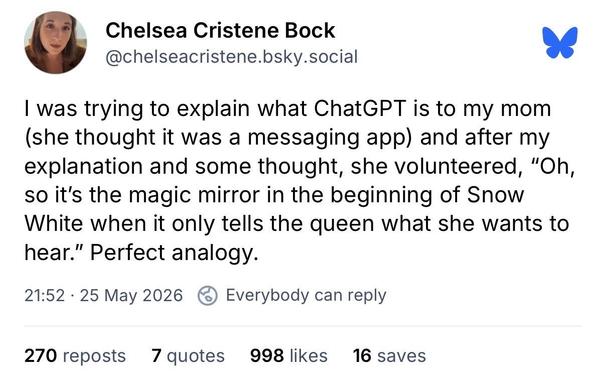
 Karl Schwartz, Artist advocate
@clacksee There can be some of that (sycophancy through flattery with AI) but mainly in my experience it provides evidence-based answers to my questions - with citations. On the other hand, we self-select on social media voices that we already agree with -- confirmation bias --leading to tribalism. To test AI queries, ask of it a question in your field of training.
 Magnus Ahltorp
@lymphomation @clacksee Sycophancy is the reason people get addicted to chatbots. Related is also the simulation of apology, a key characteristic of chatbots.
Do you know what provides evidence-based answers to questions, with citations, in a repeatable, verifiable manner? An article search.
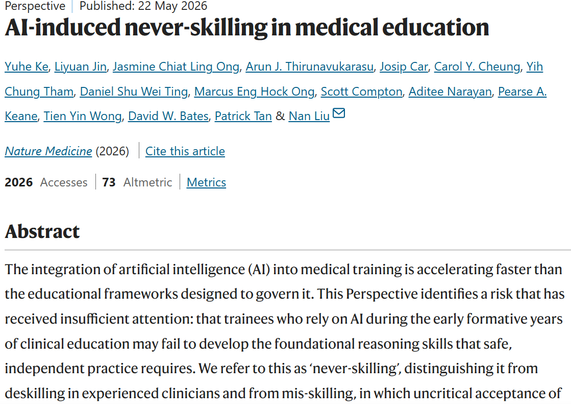
A search began for me w pubmed, followed by the related papers and citations within each; informed by importance of different study groups arriving at similar findings - that I focus on the study methods and hold author's conclusions lightly. Today it begins with AI, but does not end there. AI finds the relevant papers instantly. Your students will start there (fact of life), but they must learn not to end there.
Tools to ID fake papers https://share.google/aimode/lEUfa0D2niVeWRuWT
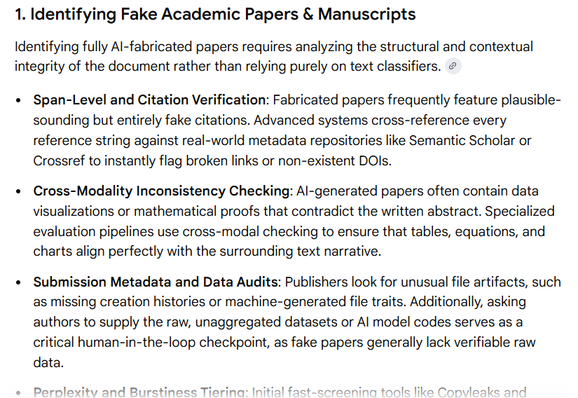
@lymphomation @clacksee Wow, you actually try to support your argument by linking to vaguely related chatbot output as an authoritative source. It’s almost as if an LLM generated your post.
Having a natural language search for papers could be beneficial, but the chatbot presenting ”conclusions” that are not in the papers is not. Even with a list of papers, bias is a huge problem. And how do you explain to someone (coauthor, supervisor, …) how you came up with that specific list?
@lymphomation I read further into your post than you seemed to: "AI finds the relevant papers instantly"
@ahltorp It's time to end the adversarial conversation. I'll end by saying we don't disagree about the dangers. We're we seem to part is with the acceptance that AI has also enormous positive values and its not going away.