Both right and left populists share at least 1 idea in common; a legend of a Golden Age that we can and should "go back" to. For the right, it's a mostly mythical version of the 1940s/50s, where different races keep to themselves, mostly within ethnically homogeneous nation-states. For the left, it's the heydey of the Keynesian welfare state, between the mid-1930s and mid-1970s.

(1/?)

#populism

Both sides seem to agree that the societies produced by welfare states were better than what we have now. Yet "centre-left' parties continues to nominate neoliberals as candidates, and the left keeps voting for them. The right populists must be just as confused and frustrated by that, as left populists are when their counterparts on the right vote for "small government" neoconservative Republicans, who similarly work against their interests.

(2/?)

Why don't either of the major parties in most multiparty elections reflect this nonpartisan nostalgia for social welfare policy?

To understand this, I think we need to look back to the beginning of the end of welfarism as a political-economic paradigm. IMHO this came in the 1970s, when the oil shocks were pushing governments towards industrial policy based on moving to renewables.

(3/?)

This provoked a desperate defensive reaction from fossil fool companies. Their wealth depended - in both long term *and* short term, because of the "stranded assets" problem - on undermining any industrial policy supporting renewables.

But there was no credible scientific or strategic argument against transitioning to renewables. So the only way to undermine pro-renewables industrial policy supporting was to undermine the very idea of countries having industrial policy at all.

(4/?)

To do that, they had to undermine the very idea of democracy; that citizens have a right to collectively decide how the common resources of our countries ought to be deployed. To make sure we all get our basic needs met, and some of our social aspirations too.

Instead, they told us, we had to "leave it to The Market". In other words, rather than voting in governments to push renewables through industrial policy, we should wait for "investors" to fund them and then vote with our wallets.

(5/?)

Oil companies might have struggled to build a convincing case for this alone. Fortunately for them (but unfortunately for the rest of us), a range of other industries were also frustrated with public regulation. Which closed off certain opportunities for profit, by taking strategic actions to safeguard citizens' welfare and advance the public interest. Plenty of deep pockets stood to benefit from undermining the radical idea that democratic governments exist to do exactly that.

(6/?)

The role of US capitalists in this slow corporatist coup is exhaustively documented in season 1 of the The Master Plan;

https://the.levernews.com/master-plan/

FYI season 2 episodes started dropping in March this year. Taking up the story and showing how it produced both the MAGA Presidency, and the Clintonite-dominated Democratic party.

(7/?)

Master Plan | Listen Now

Master Plan, the award-winning investigative podcast series from The Lever, reveals the hidden forces behind today’s biggest problems — and how small groups of powerful people engineered those problems to serve their own interests. We are exposing their schemes.

I've sketched out an explanation for why electoral parties moved away from welfarism. In short, they followed the money.

But why do most of those who still support the idea of social welfare, on both sides of the aisle, do it in a nostalgic way? Why do they want to "go back"? Rather than imagining a new society that retrieves some of what was abandoned during the decades of the corporatist coup, while retaining the many social and technological advances we've still made despite it?

(8/?)

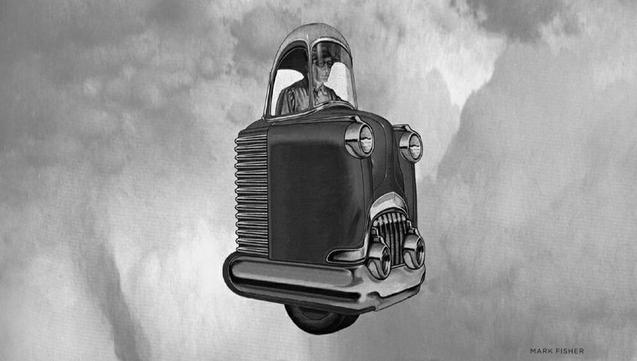
David Graeber attempted an answer in his 2015 book The Utopia of Rules. Particularly in an essay first published in 2012, entitled Of Flying Cars and the Declining Rate of Profit;

"Given a choice between a course of action that would make capitalism seem the only possible economic system, and one that would transform capitalism into a viable, long-term economic system, neoliberalism chooses the former every time."

https://thebaffler.com/salvos/of-flying-cars-and-the-declining-rate-of-profit

(9/?)

#DavidGraeber #neoliberalism

Of Flying Cars and the Declining Rate of Profit

A secret question hovers over us, a sense of disappointment, a broken promise we were given as children about what our adult world was supposed to be like. I am referring not to the standard false…

The Baffler

In other words, we've all been conditioned by decades of propaganda to think of alternatives to corporatist capitalism as something that can only exist in the past. Therefore the only way out of the race to the bottom we find ourselves in is to "go back". Which upon careful examination, is neither possible nor desirable.

So where does this leave us?

(10/?)

I'm reminded of a Paris 1968 graffito that sums up the answer nicely;

"All power to the imagination."

Not to the soviets. Not to "The Market'. To the imagination.

We need to urgently reclaim our ability to sketch futures together. Futures that start with the realities we find ourselves in, but are not confined by the ideological straitjackets that produced them.

We need to dispense with dystopias. Instead we need to tell stories of futures we're excited to go forward into. Together.

(11/11)

@strypey I honestly think that part’s easy. It’s safer to defend a return to a system that folk believed mostly worked than to convince them of a plan to do something new. New is scary, the stakes are high.

I think it’s cowardly garbage myself, but the impulse is real and not even necessarily cynical or misguided.

@donaldball @strypey I mean it's also a useful rhetorical and coalition-building tool. It's easier to convince people of something that was tried in the past and worked than jump straight to utopianism, much of the time