 AI6YR Ben
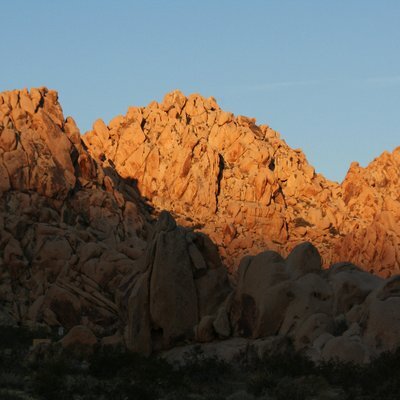
Another spot near East side of Sequoia Ave 5/19/26 1653 #SandyFire #Simi
Map of area. (Random: Sometime after midnight last night there was some kind of kerfuffle involving Los Angeles County Sheriff's Dept (?) lights and sirens ordering an evacuation of Brandeis, but no such order coming from Incident Command... everything was handled by phone call. I believe that is Simi Valley PD territory, but no idea. Anyway, it sounded like a kerfuffle, no idea if evacs happened or not. ) 5/19/26 1657 #SandyFire #Simi
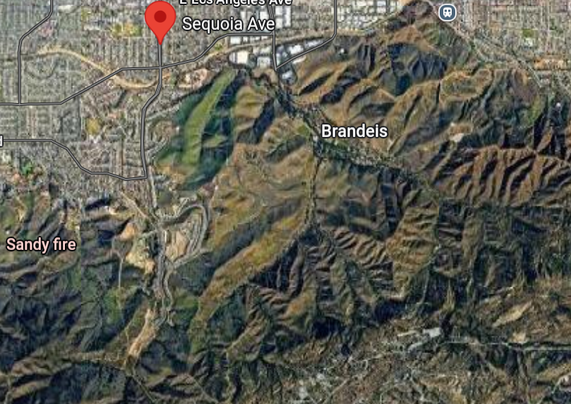
Chatter about working on contingency near Brandeis, and dozer work to isolate spots on east side of Sequoia. 5/19/26 1658 #SandyFire #Simi
Talking about shelter in place order for a convalescent home, they do not want to move anyone, about 200 residents. 5/19/26 1719 #SandyFire #SimiValley #Simi
Fire making a push towards Albertson's Fire Road near Mike Tango Break 5/19/26 1754 #SandyFire #Simi
Fire spot may have passed Arnaz Fire. Road, but they are not sure. It's not doing much at the moment, deep in smoke. Crews working at Brandeis. 5/19/26 1809 #SandyFire #Simi
 Darth Osler
@ai6yr a grocery chain has a fire road
California is too weird to exist
@autolycos LOL I am sure there is some reason it called that, not related to the grocery store.
 j-r conlin
It's just named that because it's a safe way.
Apparently named for the Albertson Ranch, and was the first east/west route in Simi Valley, per "A History of Sage Ranch, Ventura County, California" by Albert Knight, June 6, 2017

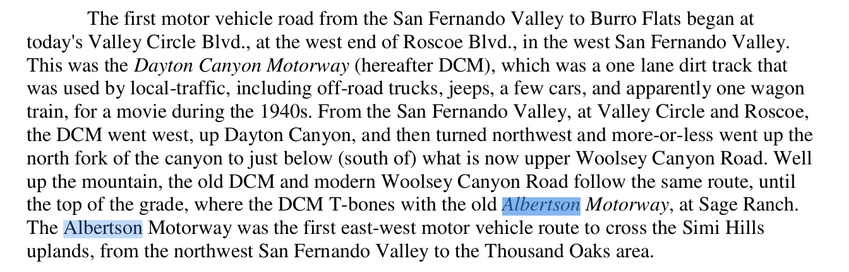
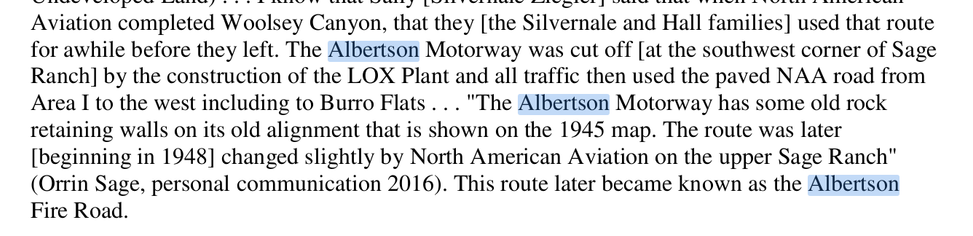
@autolycos @jrconlin Looks like some of it was briefly called the "North American Aviation Road", on the way to Rocketdyne and the nuclear power plant.
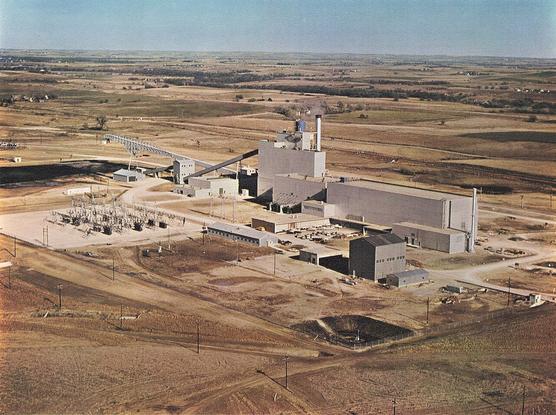
"View of Westlake Village, known as Albertson Ranch, prior to construction, 1963. Photograph by Ed Lawrence, Ed Lawrence Collection, Thousand Oaks Library Foundation, City of Thousand Oaks, Conejo Recreation and Park District, and California Lutheran University. Call # EL00440. "
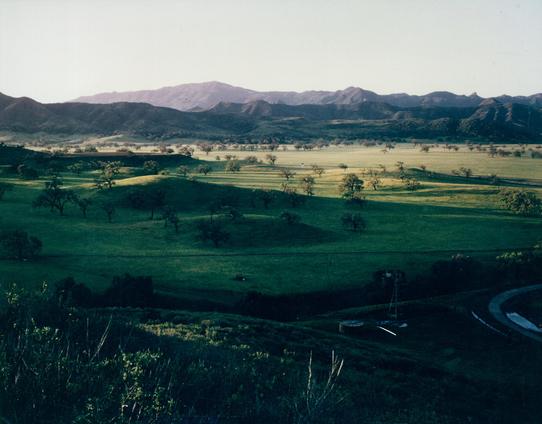
 cmgrowell
@autolycos @ai6yr Named after Albertson Ranch and Fred Albertson. Apparently, a car dealership owner in the LA area who bought the ranch from William Randolph Hearst in 1943. Most of it became Westlake Village. Not the same as the grocery store chain. We also have a Hidden Valley around here, but I don't think that is related to the salad dressing.
@cmgrowell the dressing originated in Thayer, Nebraska @ai6yr
@cmgrowell @ai6yr https://youtube.com/shorts/XX0jIhtVjFg
Relevant-oid

I DESIST!
 BakersRelay
@cmgrowell @[email protected] @ai6yr The Hidden Vallley Ranch in Santa Barbara County was indeed the origin of the so named ranch dressing. The story of the ranch and its people is a comical lesson in how business success has nothing to do with the founding personnel.
 Nazo
Nazo@BakerRL75 @cmgrowell @ai6yr Well, I got curious after you said that and I tried to look it up. I would (very loosely) summarize the Wikipedia article on it as:
· Person moves to location and renames it to Hidden Valley Ranch.
· They have a steakhouse with food which includes ranch dressing.
· The ranch dressing sells so well they start selling ingredients via mail order.
· The mail order does so well they stop doing the rest and focus on selling the dressing.
· Clorox buys it from them for a lot (by that time's money.)
· Person retires.
Either I read the wrong article or that doesn't seem to fit that description at all, so I'm wondering what I'm missing here?
@nazokiyoubinbou @cmgrowell @ai6yr I’ll see if I can dig up the Steve Henson lore tomorrow morning. He really was quite the character. Here are some excerpts from Coleman Andrews, then at the LA Times: “Earlier this year, I wrote about the origins of that ubiquitous contemporary condiment known as “ranch dressing,” noting that it had been invented at the Hidden Valley Guest Ranch in Santa Barbara after World War II.
Shortly after my column on the subject appeared, I received a long letter from Alan Barker of Los Angeles, who lived and worked at the ranch from 1959 to 1963, adding quite a bit of colorful detail to the story. I’ve been meaning to run excerpts from his letter since that time. I hereby do so:
““The dressing was invented in the mid-’50s,” Barker writes, “not right after the war. It was concocted by Steve Henson, who opened Hidden Valley as a sort of country club, nightclub, dude ranch in the mountains. He and his wife Gayle built it from a much smaller existing ranch with money they had made in Alaska in the plumbing business. The ranch was not received well and promptly went broke. During my stay, we lived on peanut butter sandwiches and leftovers from parties thrown there by UCSB fraternities and sororities.
“Steve was a muscular, hard-drinking, tale-telling cowboy sort. He charmed most who came to the ranch. There were 20 different stories of how he captured the bear whose skin hung in the foyer. If I recall correctly, he found the bearskin in the local dump where he got most of the ‘Old West’ decor that littered the ranch. Gayle cleaned, cooked as many as 300 steak dinners a night when the ranch was leased out for a party, and played the organ to entertain guests at night. They were the two hardest-working, most unwilling-to-give-up people I have known. Gayle once said that she married Steve ‘because I couldn’t get rid of him . . . and he beat up all my other boyfriends.’ There was a daughter, Connie, and a son, Nolan--who was my best friend during those years.
“The dressing, which was originally mixed with buttermilk and mayonnaise, had no name at first. We ate it on everything from steaks to, in a comical moment, ice cream. The guests at the ranch first began asking for jars of it to take home for themselves, and then wanted larger quantities for their friends. They took it in liquid form in mayonnaise jars. The impracticality of this led to packaging the mix as a powder.”
 me_valentijn
@nazokiyoubinbou @BakerRL75 @cmgrowell @ai6yr
Invented elsewhere, then commercialized at Hidden Valley 🤷♀️
Invented elsewhere, then commercialized at Hidden Valley 🤷♀️
 Peter McDonald
@cmgrowell @autolycos @ai6yr I lived in the southwest corner of Westlake in the mid-70's while attending NPHS. One of my simple joys was riding Hidden Valley back and forth between WLV and NP early on a weekend morning before most were up. It was much like slipping into another world. Even then, though most of it was likely owned by the wealthy retired from Hollywood, it outwardly appeared, smelled, sounded and largely operated unchanged from the 1920's.
 W6KME
W6KME@pmcdonald @cmgrowell @autolycos @ai6yr Back then, there was a class of wealthy person who tended to live in homes not all that different from what everyone else lived in, most of Hidden valley was like that. Now, the people who judge their own wealth by sheer square footage in cheaply-built-but-massively-oversized homes have been taking over.
@W6KME @pmcdonald @cmgrowell @autolycos Having stepped into a few of those homes, massively oversized is definitely it. And cheap. And all terribly boring, everyone in white and beige. All dedicated to yelling "LOOK! LOOK AT ALL THIS SPACE I HAVE! I AM RICH! LOOK AT ME!"
@ai6yr @pmcdonald @cmgrowell @autolycos I was still in the building materials biz when that became fashionable. People have no idea how cheap and crappy it really is. It's a grade of materials below what is usually used for affordable apartments. The cheapest of the cheap stuff. Real shit.
@W6KME @ai6yr @pmcdonald @autolycos Some of those homes aren't even occupied. Investor owned. My wife has gone walking with one family who lives in the older Lake Sherwood area and they pointed out a newer home that had never been lived in and which was already starting to show signs of rot and decay. At least they didn't take over the entire area with those types of homes. There are still some fields around, even if they aren't used for much. Probably used more for filming commercials than farming.
Back when I worked in an office in the Westlake Village area I would drive home through Hidden Valley every Friday afternoon. Definitely nicer than sitting in freeway traffic. I cycle through it once in a while, but I'm not as much of a road cyclist. I spend more time on the trails in the hills between there and T.O. They more recently added some bike lanes in the area at least. It is a very popular cycling route.
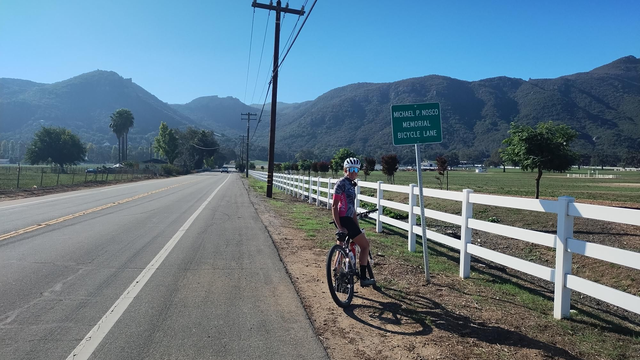
@cmgrowell @ai6yr @pmcdonald @autolycos One of the large fields, in the east end of the valley, is where my club puts on the world's largest Field Day (ham radio portable operations) demonstration every June. It's a field often used by movie and TV productions for staging equipment, parking for golf tournaments, etc.
I mention it because 2026 is the last year it will be available; plans are to turn the property into McMansions.
@W6KME @ai6yr @pmcdonald @autolycos Oh wow, I hadn't heard that. I know the field you are talking about. I remember seeing it being used for golf tournaments. Owned by the golf club co., I assume. I suppose there is nothing to stop the other land owners in the area from subdividing.
A big area (Ventura Farms) is owned by Murdock of Dole Foods, but he died a year ago, so who knows what will happen there. Ideally, they would donate at least part of it to the open space agencies. There are already some illegal trails from the official trail system that lead into the property. I think the Sherwood golf co. was supposed to make some areas of their property open to the public on the south side, but I don't think that has happened.
@cmgrowell @ai6yr @pmcdonald @autolycos That area, called Dicken's Patch by locals was also a personal property of David Murdock, managed by Sherwood Development Corp, not the country club. I don't know whether SDC is selling just that property, or if SDC itself has been sold after Murdock's death, but we were given a heads-up that this was the last year for our public event.
@W6KME @ai6yr @pmcdonald @autolycos Ah, ok. I'm seeing that SDC is still owned by Castle & Cooke (Dole), but the country club is now owned by Caruso. Maybe he'll build a mall back there.
 machenni
@cmgrowell @ai6yr @autolycos If I recall correctly Hidden Valley the place is related to Hidden Valley the ranch. But now's is Albertson Ranch related to the Boise company Albertsons???? The one that owns Safeway?
 bbmtnbb
 squirrelygirl
@ai6yr Ugh, I was thinking about this when I was looking at the smoke plume while visiting my mom in the nursing facility in Westlake today. What a hassle. But I’m not sure elderly invalids are the people you want to wait until the last minute to have to evacuate 😬
 Katherine W
I remember the yearly Russell Phillips fire trainings when I worked at a hospital, and the detailed plans for evacuating bed-bound patients. I always hoped I would remember it all and be able to help if there was a fire...
 Jim Hubbell
@ai6yr
That was always my fear with the place mom was at.
That was always my fear with the place mom was at.