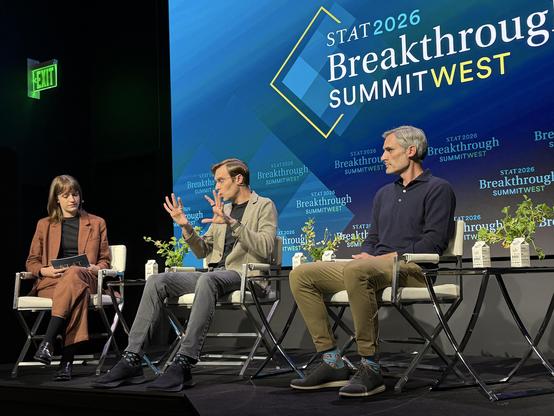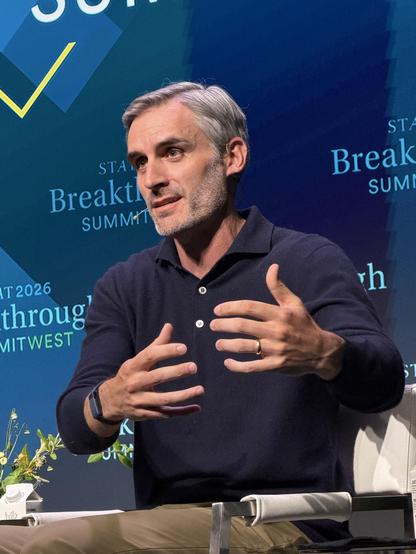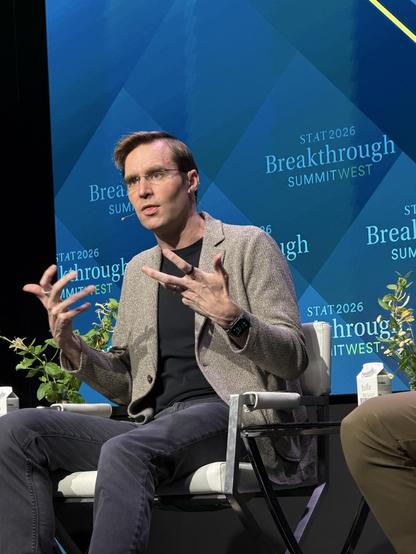
Today, I will be attending the #STATBreakthrough West in San Francisco at the Commonwealth Club. Lots of great talks about AI and personal journeys.

RE: https://bsky.app/profile/did:plc:dawci6skpmelnlja3lygz3p7/post/3mm5t54zj5k2d
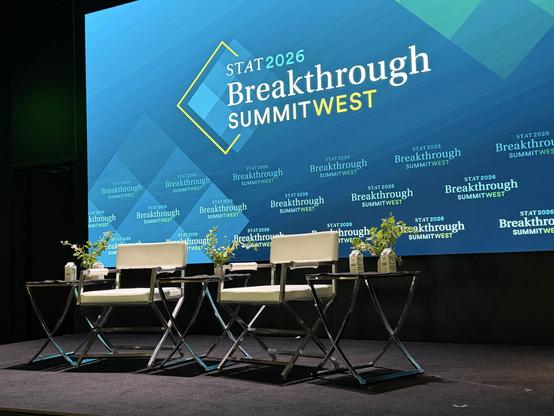
Getting ready @[email protected] #STATBreakthrough Summit West
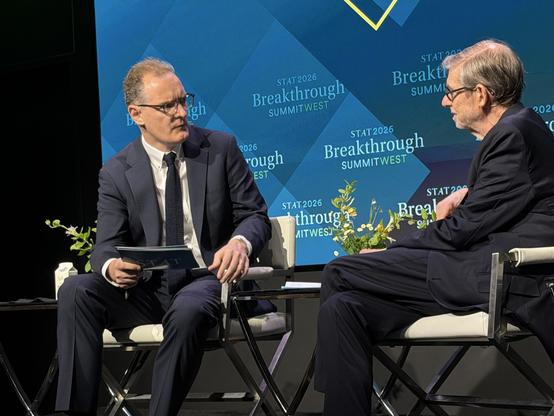
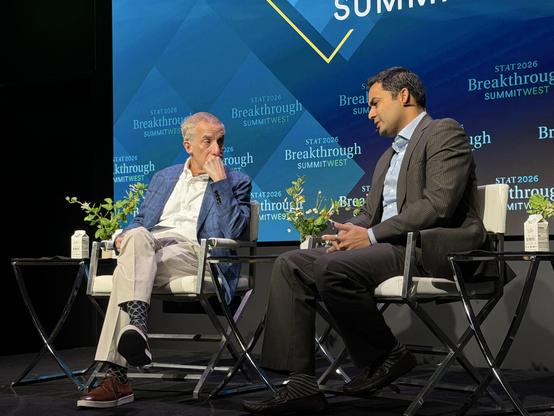
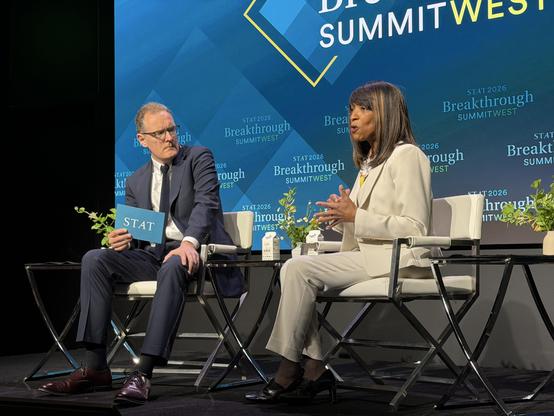
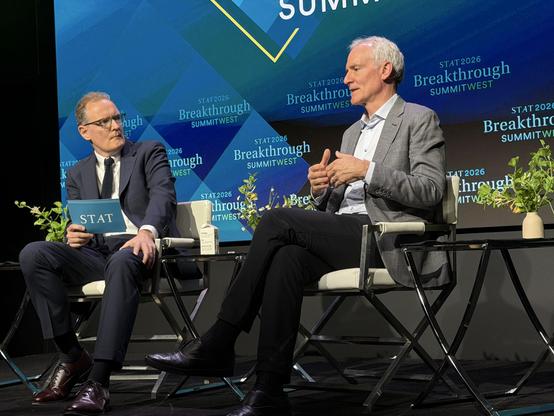
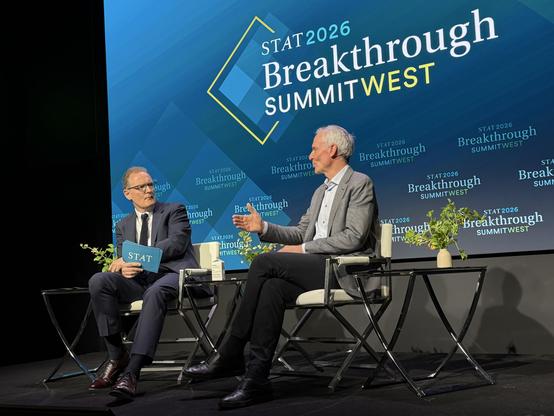
First up, David Kessler with “A Former Commissioner on the FDA”, moderated by @[email protected], about recent turbulent times at the FDA. DK: we have had a profound loss of talent. I have always looked for consensus and shortened approval times. #STATBreakthrough
DK: The FDA is at the center of US health. The COVID vaccines were an incredible effort - millions of people vaccinated for free. I hope everyone allows the agency to thrive. #STATBreakthrough
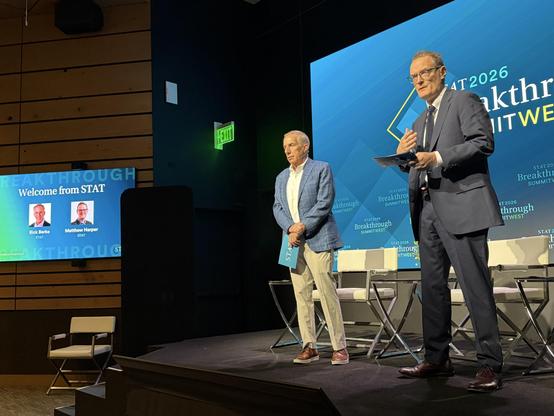
MH welcomes @[email protected] from @STATnews RB: Our mission is to have the most meticulous and trustworthy coverage on health and medicine - we are proud of our team, who regularly wins journalism awards. #STATBreakthrough
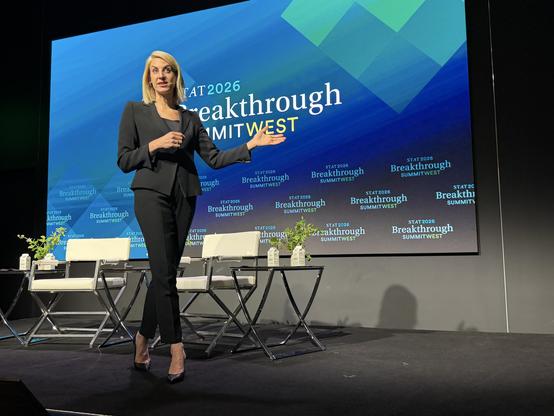
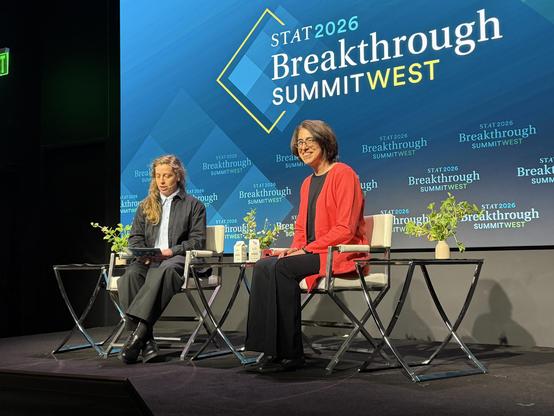
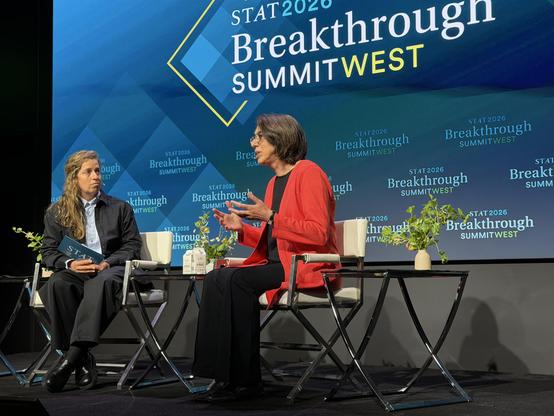
Next: Zoë Harris Lazaro, CMO at Genentech. Connecting technology to the right places, closing that last mile gap, is key. We must connect. How do we create trust in the communities that we serve? That is a conversation we need to be having now and the next 50 years. #STATBreakthrough
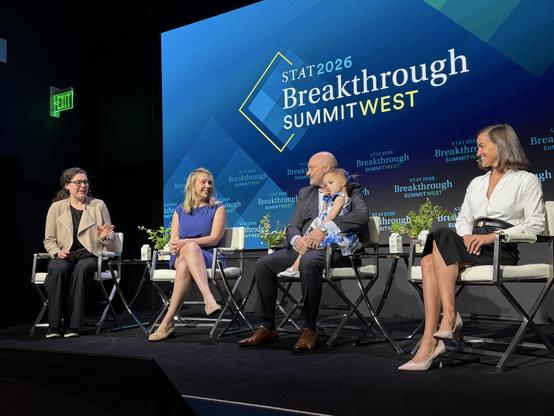
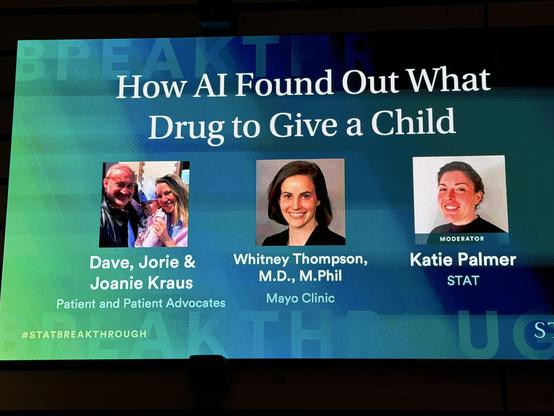
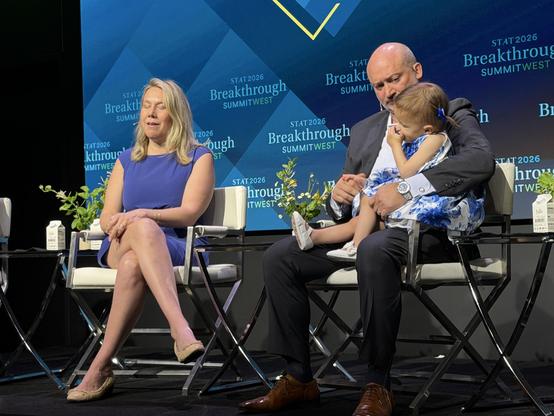
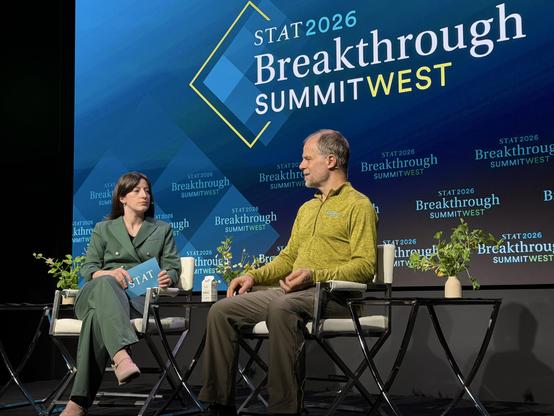
Next: Dave, Jorie, and Joanie Kraus, with “How AI found out what drug to give a child”. Jorie was born premature with a genetic disease (deletion in chromosome 10). Whitney Thompson at Mayo Clinic ran program, BabyForce, to offer sequencing, using AI tools to suggest drugs. #STATBreakthrough
The drug was first tested on Jodie’s skin cells, then given to her. Dave: very soon, we saw her making progress. She still has a big delay but she has gained so many skills with a year. Joanie: Her speech is now age appropriate! She got a second change at life. #STATBreakthrough
WT: The AI tool has been absolutely essential to help patients to with rare genetic diseases. The lab work still needs a lot of time, can we automate this? Or more quicker testing directly in babies. More info here: ncats.nih.gov www.mayoclinic.org/medical-prof... #STATBreakthrough .
Next: What is AI in Cancer Care Teaching Us? Mohit Manrao from AstraZeneca, interviewed by Rick Berle. MM: I am in my dream job! AI is helping us unlock doors we could not open previously. Our tool MILTON can predict diseases from biomarkers. www.astrazeneca.com/media-centre... #STATBreakthrough
MM (who loves the word “Leapfrogging”): AI can also make MD’s work more human, by taking over administrative tasks such as note taking. Medical system is so complicated. Too many systematic barriers that are difficult to navigate. At AstraZeneca, we want to eliminate cancer. #STATBreakthrough
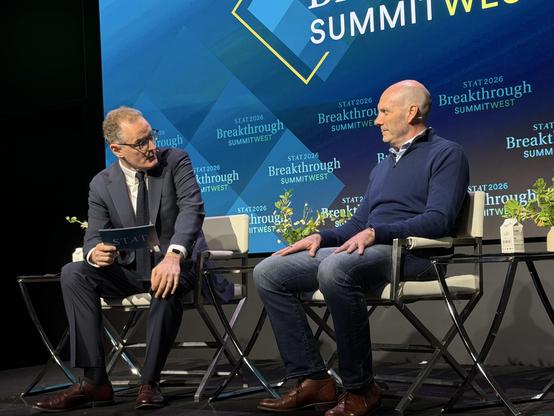
Next, Mario Aquilar interviews Zachary Ziegler from @[email protected] “OpenEvidence won the hearts of doctors. Now what?” ZZ: Evidence is the core foundation of medicine. Doctors can input a lot of data and get really personalized medicine. The website is free. #STATBreakthrough
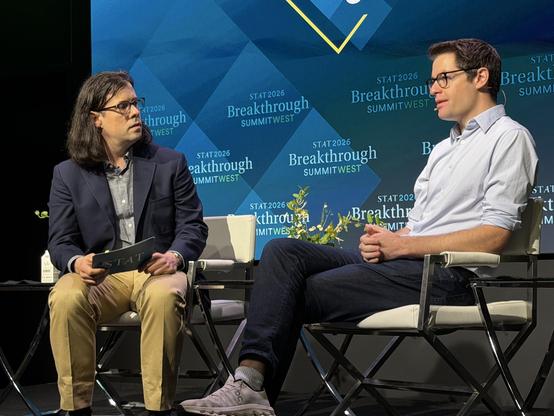
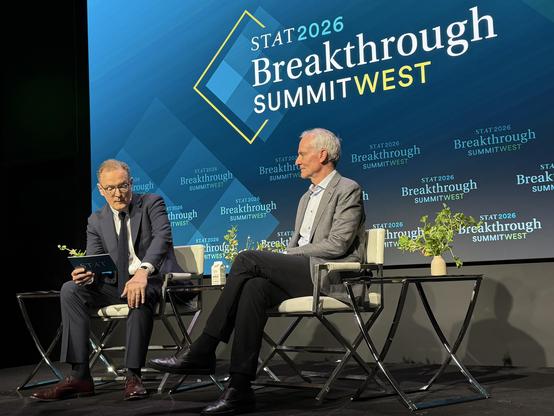
Next, ‘Unleashing the Next Era of AI-Driven Clinical Intelligence’ with Anthony Costello, CEO of Medidata (previously at Mytrus), interviewed by Matthew Herper. We are hyper-accelerating clinical data, like the Oura ring I am wearing. #STATBreakthrough
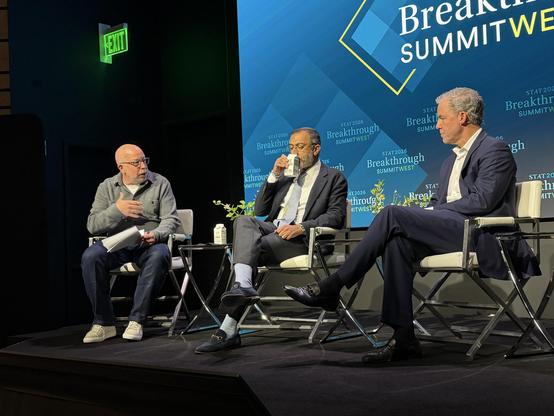
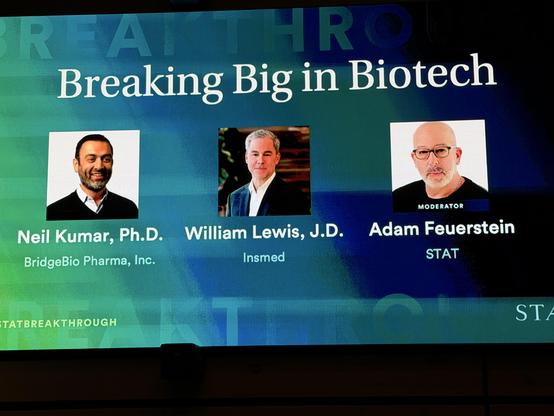
Next, ‘Breaking Big in Biotech’ with Neil Kumar (BridgeBio) and William Lewis (Insmed), interviewed by Adam Feuerstein. NK: we work on genetic diseases, often not interesting for big companies. WL: it is important to let the street know which direction you are going. #STATBreakthrough
Connectivity is very poor, and not sure what the WiFi password is, so having trouble posting. Apologies!
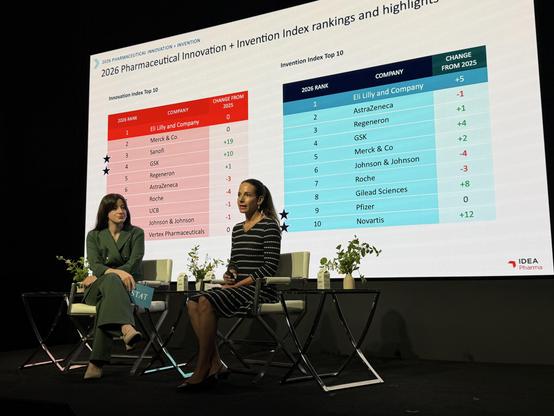
“Ranking Drug Companies on Innovation and Invention” with Jacqueline Poot of IDEAPharma, interviewed by Allison DeAngelis. JP discusses changes in the Pharmaceutical Innovation and Invention Index rankings. Sanofi and GSK climbed in the Innovation index, Novartis in Invention. #STATBreakthrough
We now have a coffee break. #STATBreakthrough
Long line for the women’s restrooms.
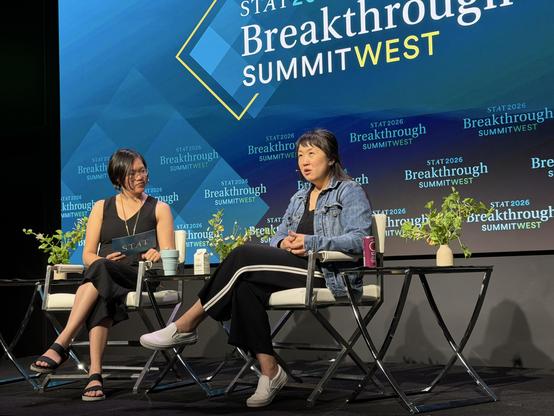
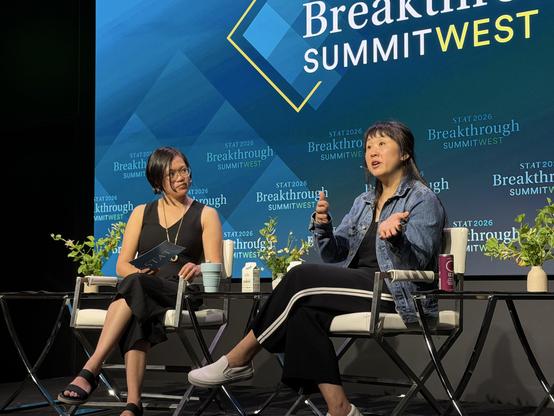
Giving away a fortune to fix science, with Seemay Chou at Arcadia Science/Astera Institute, interviewed by Brittany Trang. SC: science has been about human interpretation. We look into news ways of publishing, using AI to automate outputting experimental output without human bias #STATBreakthrough
SC: We publish our research online but not in traditional journals. We even publish research that did not work, “ice box”, before aborting a project. At Astera Institute, we are building an open source, flexible platform to make those papers discoverable, with a DOI. #STATBreakthrough
Humanizing the Delivery of Patient Care with Charlotte Owens, S.V.P. at Genentech and practicing MD, interviewed by Matthew Herper. CO: I bring what I see in the safety-net clinic back to my work at Genentech. AI can bring a lot of help to both patients and doctors. #STATBreakthrough
CO: AI and science is what we do. We want to remove barriers, being able to better and earlier diagnose diseases with a simple lab test. Making healthcare ubiquitous for all. Maybe Live Long and Prosper is not too far away! #STATBreakthrough
Next: Allison DeAngelis interviews Joe Betts-LaCroix, of Retro Biosciences, with ‘Can AI develop longevity drugs?’ JBLC: Dying is not part of our corporate mission. We want to extend the healthy life span, not make the final decline phase last longer. #STATBreakthrough
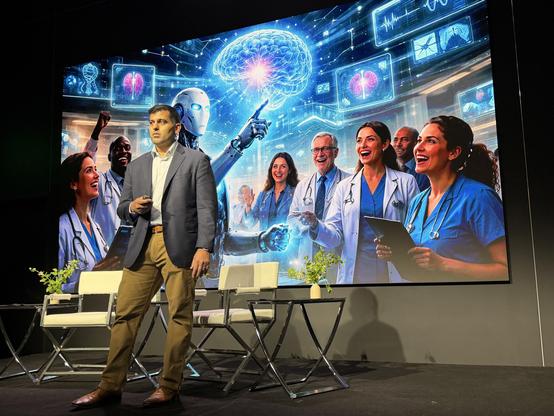
Next: ‘Separating Hype from Reality in Health Care AI’, with Amit Phull, Doximity. This slide shows the ‘pizza party’, created by AI, showing what AI can do for medicine’s problems. But we are still very far from this. AI medical triage has several blinds spots. #STATBreakthrough
AP: PeerCheck: vetting done by clinicians. With each round of vetting, we get smarter. At Doximity we have now 140+ partners, even have access to local guidelines. We are excited about AI. Move fast and don’t spill your drink. Human expertise is still at the core of medicine. #STATBreakthrough
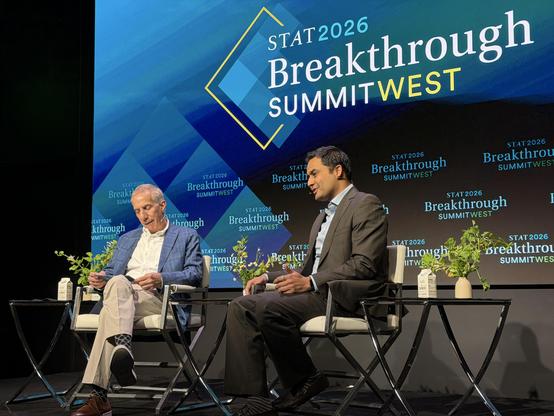
Next up: ‘From Axons to AI: A Biologist’s Journey’, by Marc Tessier-Lavigne, CEO of Xaira, interviewed by Matthew Herper. #STATBreakthrough
Side note: I helped with Theo Baker’s (his book came out today!) reporting on image problems in MTLs paper, eventually causing him to step down as the Stanford University president. Let’s see if this will be discussed today. stanforddaily.com/2022/11/29/ #STATBreakthrough

November 29, 2022 - The Stanfo...
Daily Archive - November 29, 2022

The Stanford Daily
MTL: 90% of drugs fail in clinical trial. AI can make a big difference in improving clinical trial, both on designing better drugs as well as matching patients to the targets. AI models can help in particular with complex cellular pathways, how to make cell healthy again. #STATBreakthrough
MTL: We can now make new molecules from scratch using AI. AI can open new doors. MH: you resigned from Stanford. Some images might have been manipulated but you were not find guilty of knowing this. Did you adequately correctly the record? #STATBreakthrough
MTL: I have been cleared of misconduct. I always trusted my staff but I have learned that you need to balance that with attention to potential misconduct. #STATBreakthrough
MTL: I sent several emails asking for corrections were lost by the journal, and I could have done better following up. MH. Theo Baker’s book came out today. I will read some paragraphs. #STATBreakthrough
MH reads some paragraphs from Theo Baker’s book, about the board of trustees with a not very flattering description about MTL’s conduct by anonymous persons. MTL: I can be firm but I try to be fair. I need to be mindful that I can come across as strong. #STATBreakthrough
MH: how prepared are you to deal with the public trusting you r company? MTL (sounding relic that we moved on to a different topic): we have to earn this trust. China is making stunning progress in new molecule development. We are more guarded in releasing new information. #STATBreakthrough
MH is you could go back to 2022, what would you tell yourself? MTL: I would like to go back to 2015 and pressed harder to correct those papers. I have been corporative with the investigation panel. MH. Would you have skipped the whole Stanford thing? MTL: No, I am proud of it. #STATBreakthrough
* If you could go back
Amazing view of the Bay Bridge from the Commonwealth Club in San Francisco, where we are having lunch break. #STATBreakthrough
Back from lunch with ‘Gene Therapy's Next Horizon: The Womb’ with Tippi Mackenzie @ UCSF, interviewed by Megan Molteni. Can genetic editing and fetal surgery become standard of care? #STATBreakthrough
TM tells about how she got interested in fetal surgery and is now delivery mole therapy to a fetus developing in the womb. This could be anatomical problems or genetic issues, which we can now treat with gene therapy or stem cell transplants. #STATBreakthrough
TM: We had to wait until those techniques were developed in adult. Some diseases develop during the fetal stage so treating them after birth has only limited effects. MM: Do patients really want this? TM: Not all, some terminate pregnancy. You have 2 patients: mother and fetus. #STATBreakthrough
TM: There are all kinds of ethical issues, such as unknown risks and complications. There has to be a big clinical improvement such as fixing a CNS disease. We have to walk a fine line between risks and benefits. We need more biomarkers to monitor fetal responses. #STATBreakthrough
TM: we do a lot of basic research but need more awareness to discuss issues that gene therapy could address. MM: where are we going to be 5 years down the road? TM: hard to answer! we need to learn by doing, experience the bottlenecks and move through them. #STATBreakthrough
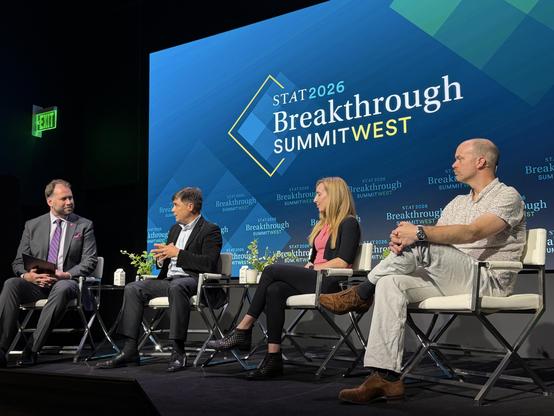
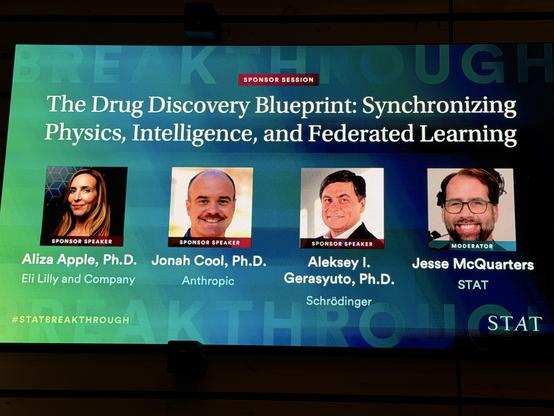
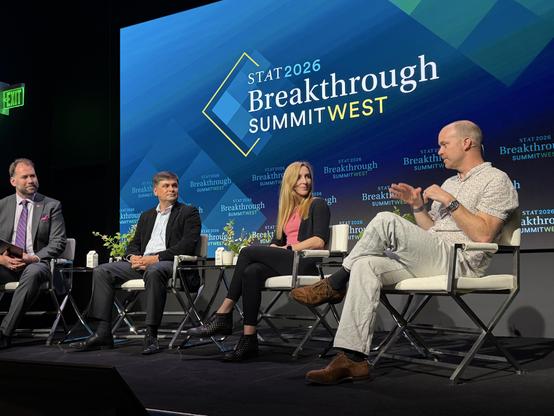
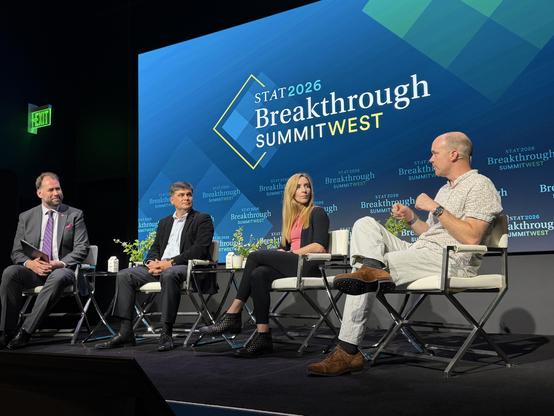
Next: The Drug Discovery Blueprint: Synchronizing Physics, Intelligence, and Federated Learning * Aliza Apple, Eli Lilly * Jonah Cool, Anthropic * Aleksey Gerasyuto, Schrödinger * Jesse McQuarters, moderator Single scientists can now work with teams of AI tools. #STATBreakthrough
AA: we launched TuneLab, derived from Lilly’s research and make this available to biotech companies. investor.lilly.com/news-release... JC: a scientist should understand what the agent did. You should be able to reproduce it. The models should look it up, not make it up. #STATBreakthrough
AG: patient safety is important. Drug molecules might already be optimized for efficacy and it would be time consuming to change the drug molecule at a late stage to incorporate patient safety. AA: Not just providing predictions, but also confidence intervals. #STATBreakthrough
AA: We can now get to clinical compounds in two years. It does not take the human scientist out of the equation. JC: if we need to get one thing right with AI models, it is health and medicine. #STATBreakthrough
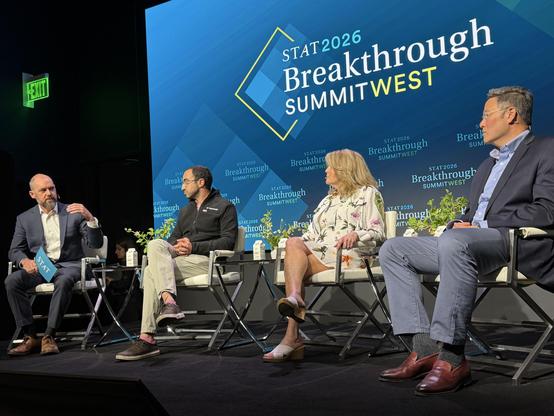
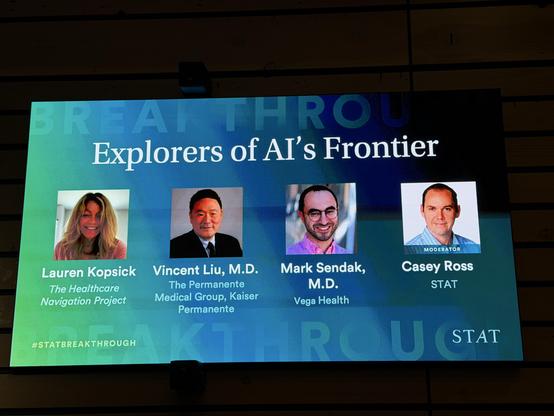
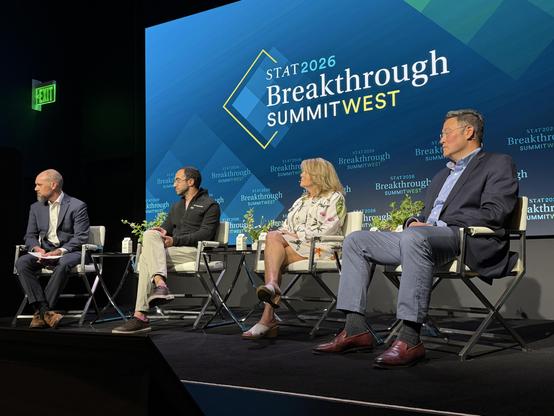
New panel: Explorers of AI’s frontier. * Lauren Kopsick, Healthcare Navigation project * Vincent Lou, Permanente Medical Group * Mark Sendak, Vega Health * Casey Ross at STAT, moderator LK: there is still some friction. We don’t always know why AI takes certain decisions. #STATBreakthrough
MS: a void of capacity to interpret technologies. It is moving incredibly fast. CR: are patients involved enough? VL: with the pace we are moving, patients need to be involved. AI might be a wedge that drives patient/doctors apart. That might not be archieve better health. #STATBreakthrough
LK: Doctors are very frustrated with all of this. The process is breaking down with AI. I love AI, but staff, doctors, and patients need more education. Q: how do you educate patients? VL: Ambient is Kaiser’s AI scribe tool to record conversations; saves MDs lots of time. #STATBreakthrough
VL: Human/AI handoff. 1) AI is great but can get it wrong. 2) Protect our patients’ data. 3) Always allow feedback. We need to keep on training the AI. MS: Organizations need to implement new technology but trust is needed too. #STATBreakthrough
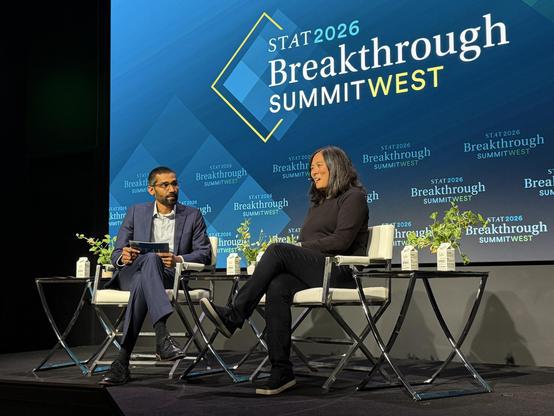
Next: Lison Joseph interviews Christine Lemke at Evidation. CL: I have autoimmune disease most often diagnosed in white men of a certain age. It might take years to diagnose a disease if you don’t fit the standard presentation. If we could all monitor ourselves earlier diagnosis. #STATBreakthrough
CL: Wearable devices can send signals before a flare up, create large amounts of data. AI can eat into every layer of a company. Lots of people think that AI is going to take their jobs. As a CEO, keeping people motivated is one of my concerns. #STATBreakthrough
Next: The wearables revolution, with: Ricky Bloomfield of Oura Alex Vannoni of WHOOP Moderated by Katherine MacPhail of STAT, who asks the audience who is wearing a wearable - most of us! #STATBreakthrough
AV: if we add blood work to wearables, our members can pick up lots of additional biomarkers. It is opt in, 4 times per year KMP: isn’t that creating too much data and creating anxiety? AV: it is to create a base line and act on it. #STATBreakthrough
RB: lots of people do not trust the traditional health system. If they avoid regular screening, this might be a way to get people treated. AV: we see this a complimentary to the current system. Human experts are not going away. It is a system that builds, rather than competes. #STATBreakthrough
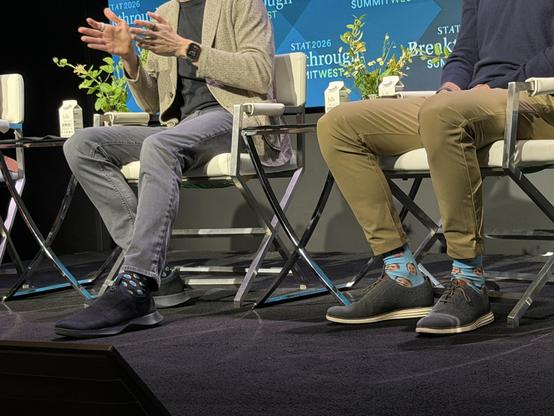
RB: If we want to improve people’s health, we need to measure data. AV: we can reach new cohorts, new partnership with Medicare. www.whoop.com/us/en/press-... Great sock game going on! #STATBreakthrough
AV: the FDA and other regulators are more open now to use wearables as medical devices (eg, blood pressure, arythmia) and we are very open to regulation. RB: new FDA guidance is a welcome update, Wearable can not diagnose but can monitor and connect to health provider. #STATBreakthrough