 Tube🌈 Time
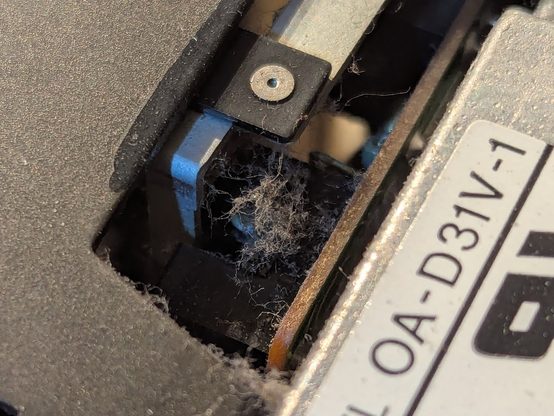
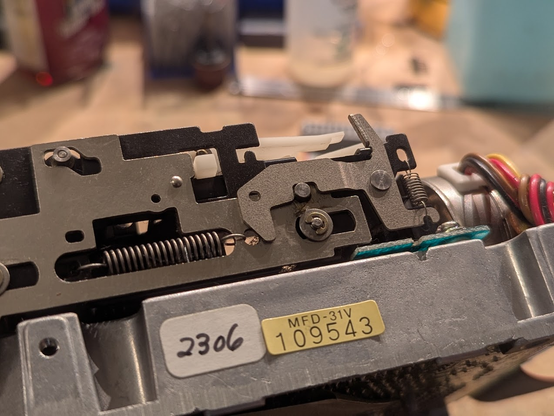
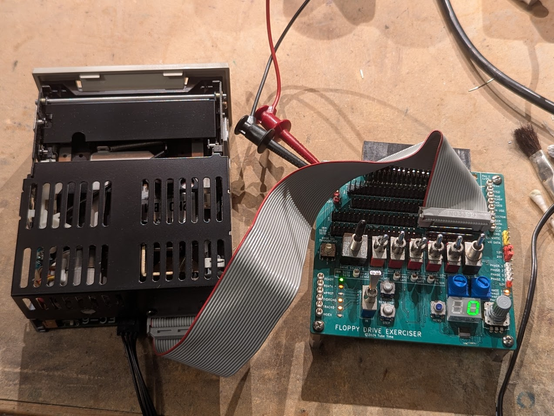
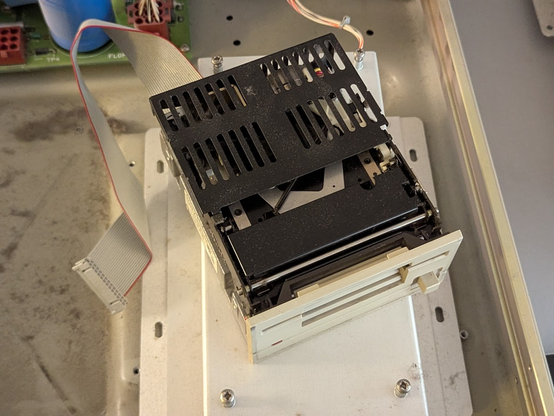
ahh, the HP 9133A - the largest and heaviest external 3 1/2" floppy drive ever built. let's get it working! 🧵
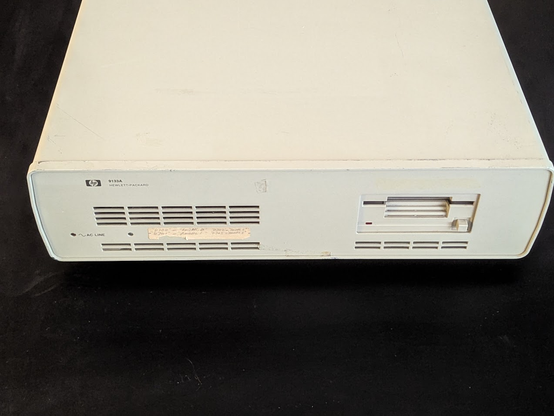
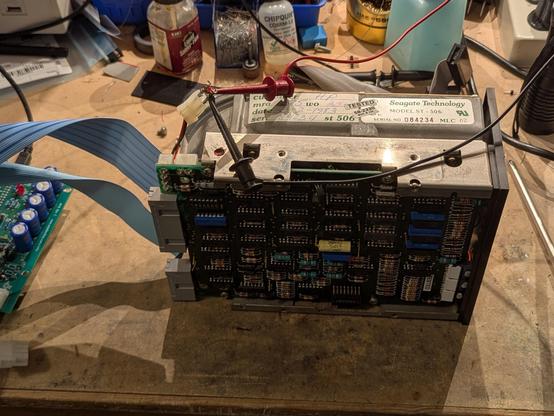
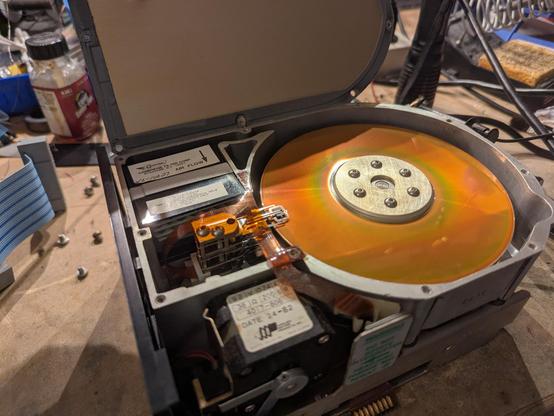
whoops, surprise hard drive inside!
this one is a Seagate ST-506, a MFM drive with a whopping 5MB capacity!
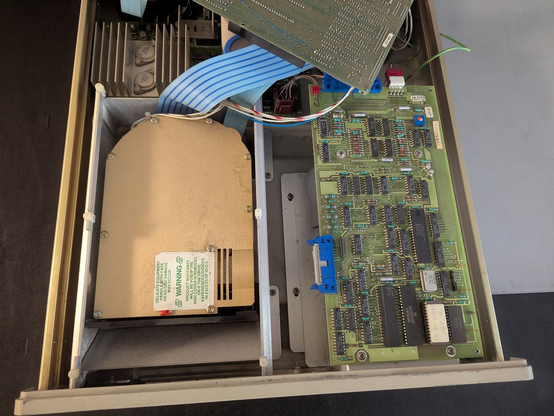
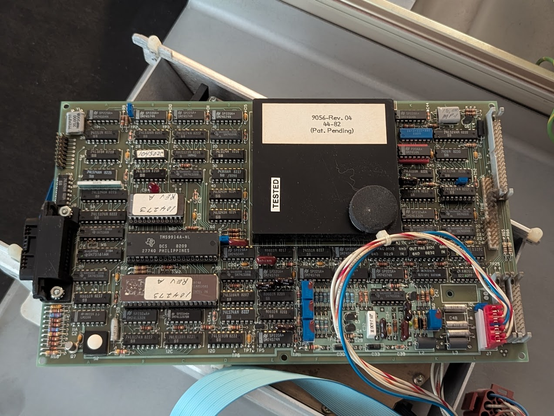
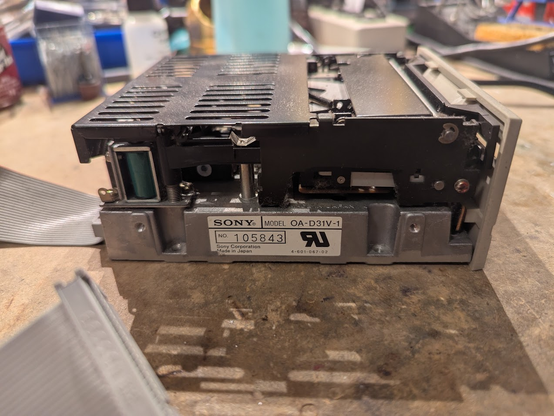

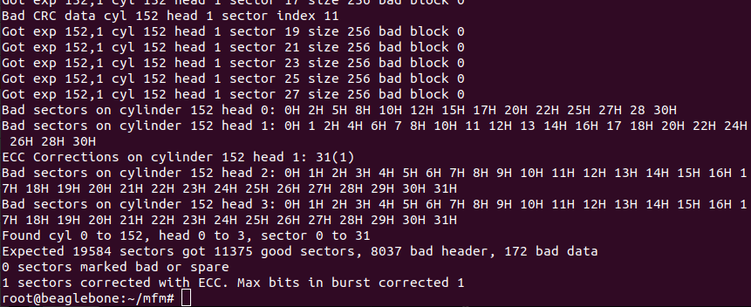
the Gesswein MFM emulator was able to capture a flux transition dump! i used their mfm_util to analyze it, and it is a very odd format: check out the command line:
--format EC1841 --sectors 32,0 --heads 4 --cylinders 153 --header_crc 0x0,0xa00805,32,4 --data_crc 0x0,0xa00805,32,4 --sector_length 256
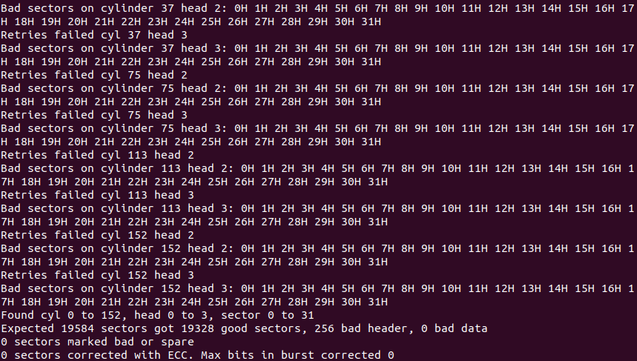
bad sectors were on tracks 37, 75, 113, and 152. the 9133a uses hardware partitioning to get four logical volumes, so these "bad sectors" are really just extra sectors at the end of each disk.
for posterity, the command i used was
./mfm_read --format Xebec_104527_C0_256B --sectors 32,0 --heads 4 --cylinders 153 --header_crc 0x0,0xa00805,32,2 --data_crc 0x0,0xa00805,32,2 --sector_length 256 --retries 50,4 --drive 1 --xebec_skew --begin_time 151000 --tran hp9133a_st506 --ext hp9133a_st506.bin

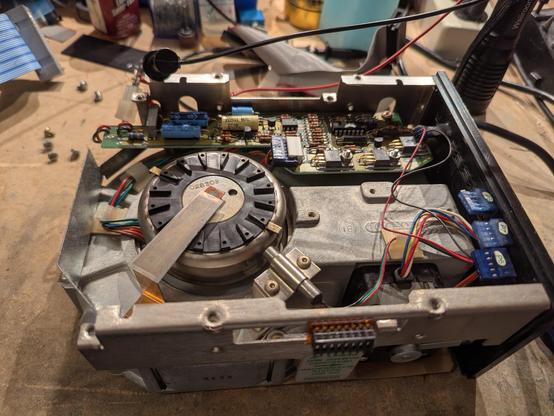
also the drive is running very smoothly now. a few days ago it was making horrible screeching sounds but i think that was the spindle bearing.
i've been running it upside down to allow the oil to warm up and drain back into the bearing.
People used to laugh when I said I'd fixed their squealing hard drive by oiling it.
Seagate used to have a grounding strip that sat atop a bearing on the end of the spindle (outside the drive) and at a push you could apply some graphite from a soft pencil to stop it being noisy.
Happy days.
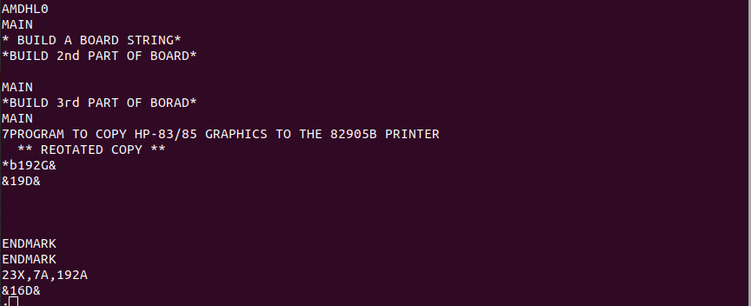
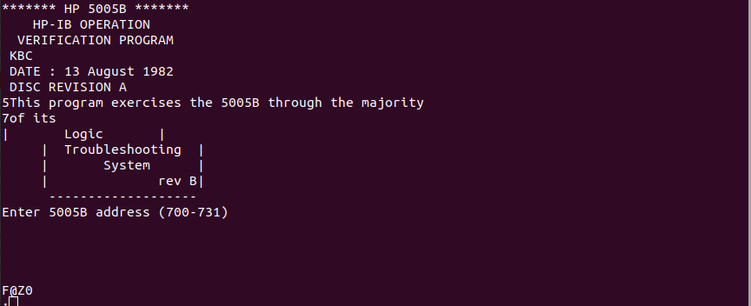
My AutoArchaeologist toolkit can turn the LIF filesystems into static HTML files so you can spelunk the contents.
Example:
https://phk.freebsd.dk/misc/fatfs/05/056ab17c6.html
Software:
I dont know how robust the LIF excavator is, I have only written/tried it on good images, but the general idea of AA is to handle whatever you throw at it, as well as possibe.
The fastest way to find out, is probably if you send me the image, but I can also walk you through the setup so you can run AA yourself.
(I've never finished the proper python packaging so it's a bit manual)
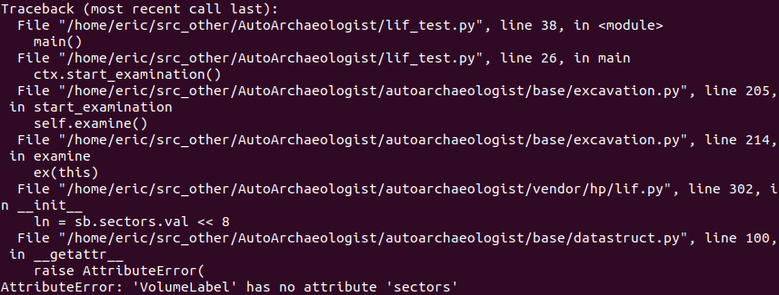
Traceback (most recent call last):
File "/home/eric/src_other/AutoArchaeologist/run_example.py", line 11, in <module>
from autoarchaeologist.container import argv
File "/home/eric/src_other/AutoArchaeologist/autoarchaeologist/container/argv.py", line 17, in <module>
import ddhf_bitstore_metadata
ModuleNotFoundError: No module named 'ddhf_bitstore_metadata'
Sorry forgot to mention that dependency, that repos is also on our codeberg account:
With some effort it may be possible to recover more if its just heads were pulled out of alignment when they were stuck.
https://www.pdp8online.com/mfm/microstep/index.shtml
If you want me to take a look at your transitions file to see if I think that method may work send me a private message.
@nblr @tubetime Probably regular disks? But the earliest ones (I think just the OA-D30V but I’m not sure) used disks with a latching shutter. https://www.jamiecraig.com/early-floppy-disks/
I’m pretty sure there was never a flippable 3.5” disk.
it was made by an OEM that spun off xebec
 Linker3000
 Briala
 Poul-Henning Kamp
 dgesswein
 Barry
Barry mbpaz
mbpaz Y⃒̸̷̝̜̙ͥͥͥngmar
 🇺🇦 haxadecimal 🚫👑
 SLeiBt
 DrScriptt
 Chip
Chip Dantali0n

 Marcin Wichary
 ~n
~n Stewart Russell
 bitsavers.org
 Neko May
 SnoopJ