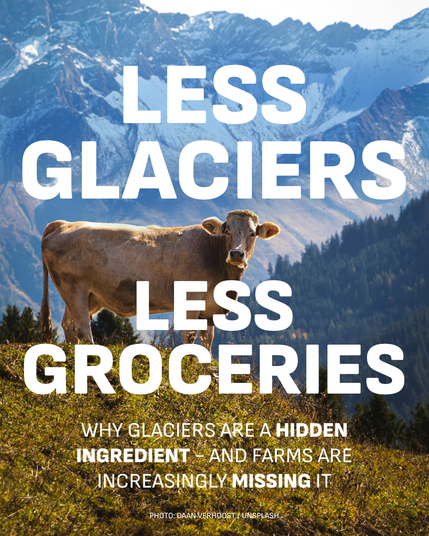
Less Glaciers, less Groceries
Why glaciers are a hidden ingredient - and farms are increasingly missing it

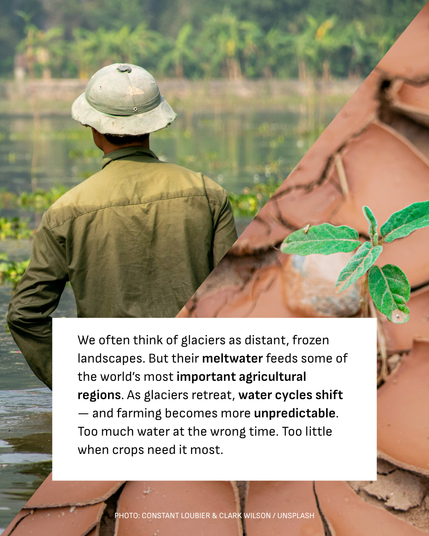
We often think of glaciers as distant, frozen landscapes. But their meltwater feeds some of the world’s most important agricultural regions. As glaciers retreat, water cycles shift — and farming becomes more unpredictable. Too much water at the wrong time. Too little when crops need it most.
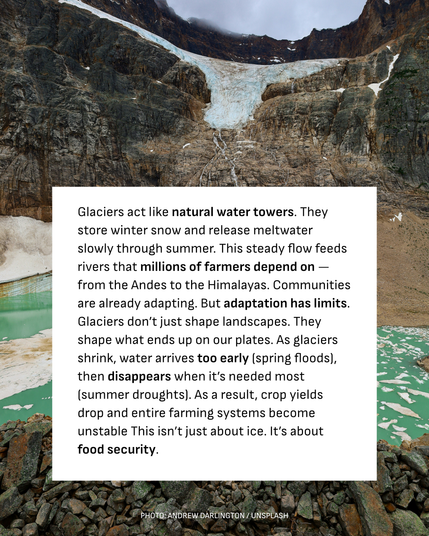
Glaciers act like natural water towers. They store winter snow and release meltwater slowly through summer. This steady flow feeds rivers that millions of farmers depend on — from the Andes to the Himalayas. Communities are already adapting. But adaptation has limits.
Glaciers don’t just shape landscapes. They shape what ends up on our plates. As glaciers shrink, water arrives too early (spring floods), then disappears when it’s needed most (summer droughts). As a result, crop yields drop and entire farming systems become unstable This isn’t just about ice. It’s about food security.
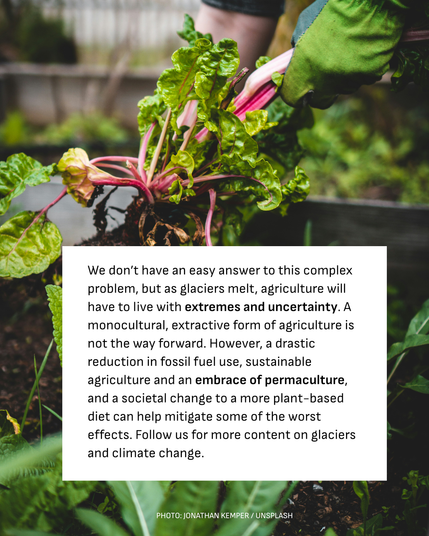
We don’t have an easy answer to this complex problem, but as glaciers melt, agriculture will have to live with extremes and uncertainty. A monocultural, extractive form of agriculture is not the way forward. However, a drastic reduction in fossil fuel use, sustainable agriculture and an embrace of permaculture, and a societal change to a more plant-based diet can help mitigate some of the worst effects. Follow us for more content on glaciers and climate change.